Your calendar invite is sent, your remote team has accepted, and now you're staring at the agenda thinking another round of awkward introductions won't cut it. People will join, smile politely, answer one icebreaker question, and check email while someone else talks. That's not connection. It's attendance.
These eight corporate team building games online fix that problem by giving people a shared goal, a reason to laugh, and something real to look forward to together. Each one is built around the energy of a Lake Travis lake day, so the fun on screen naturally builds toward a fully captained yacht, double-deck party boat, or premium pontoon outing your team can book.
That direction matters because remote work has thinned out everyday contact. A 2025 workplace report cited research that 61% of remote workers feel less connected to colleagues, and it also noted fewer spontaneous interactions for remote staff. A good game replaces some of that missing informal contact, but only if it's structured, short, and easy to join.
Every game below includes a clear use case, ideal group size, time commitment, and facilitation approach. You'll also get a natural booking moment for each one, the point where excitement peaks and a coordinator can share dates, vessel options, and a reservation link while everyone is already imagining themselves on the water. Pick one that fits your team and run it well.
1. Lake Day Trivia Showdown
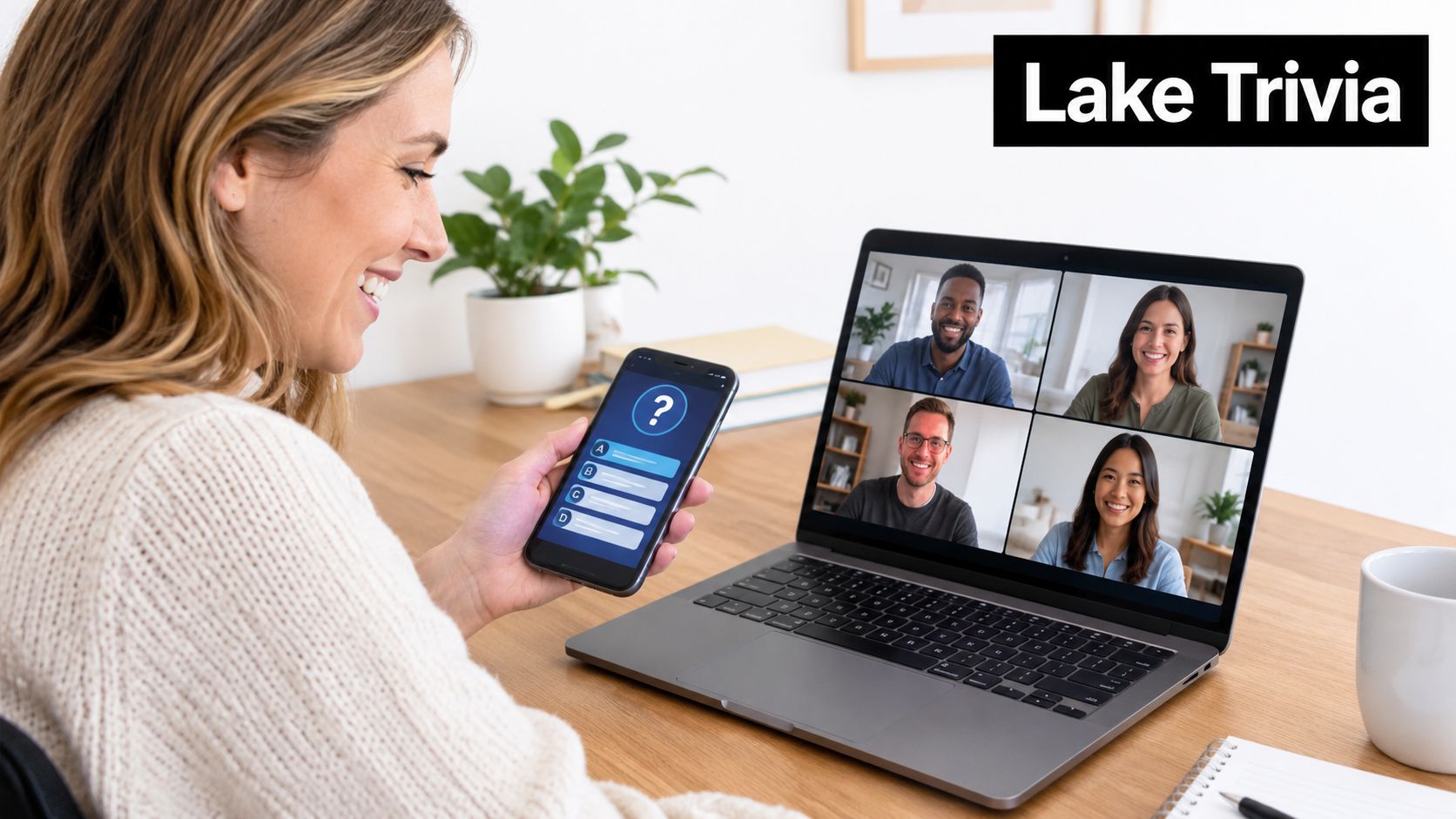
Trivia is the fastest way to get a quiet video call loud. Run it host led on a shared screen, put people in small teams, and let them submit multiple choice answers on their phones while a leaderboard updates after every round. Kahoot! popularized this phone based quiz format in classrooms and corporate training, and plenty of companies now run trivia hours as recurring bonding sessions because setup takes minutes.
How to Run It in Under 30 Minutes
Keep it to 10 to 15 questions across 3 to 4 categories, mixing boating basics, Lake Travis, Austin, and general knowledge. Give teams 20 to 30 seconds per question so debate stays snappy, then read the correct answer with one fun fact before moving on. It scales easily to dozens of players because nobody needs special software knowledge.
- Frame the prize: Offer the winning team a Lake Travis Yacht Rentals gift certificate or discount code for a future charter, and say the expiry date out loud.
- Use the break: Show a short photo gallery of a past corporate outing during the scoreboard pause so people see the rooftop deck, waterslide, and lily pad in action.
- End with action: Drop the booking link in chat while the winners are celebrating, not in a follow up email tomorrow.
Trivia also gives coordinators something measurable. A manager survey reported that 63% of leaders observed improved team communication and 61% reported better morale after team building activities, which is why a quick pre and post pulse check beats counting attendance alone.
If you're explaining the value internally, start with what corporate team building actually involves for modern teams and pair it with your trivia scores. Aim for at least 60% participation and compare post event scores against your baseline. When the leaderboard crowns a winner, you've got energy, data, and a perfect excuse to book a lake day before that prize expires.
2. Remote Lake Pictionary
Somebody draws a wobbly pontoon, three people shout "houseboat" at once, and suddenly your new hires are laughing with managers they've never met. That's why drawing games work. Pictionary, invented by Robert Angel in 1985, has been adapted for virtual play for years, and tools like skribbl.io make remote rounds simple across locations.
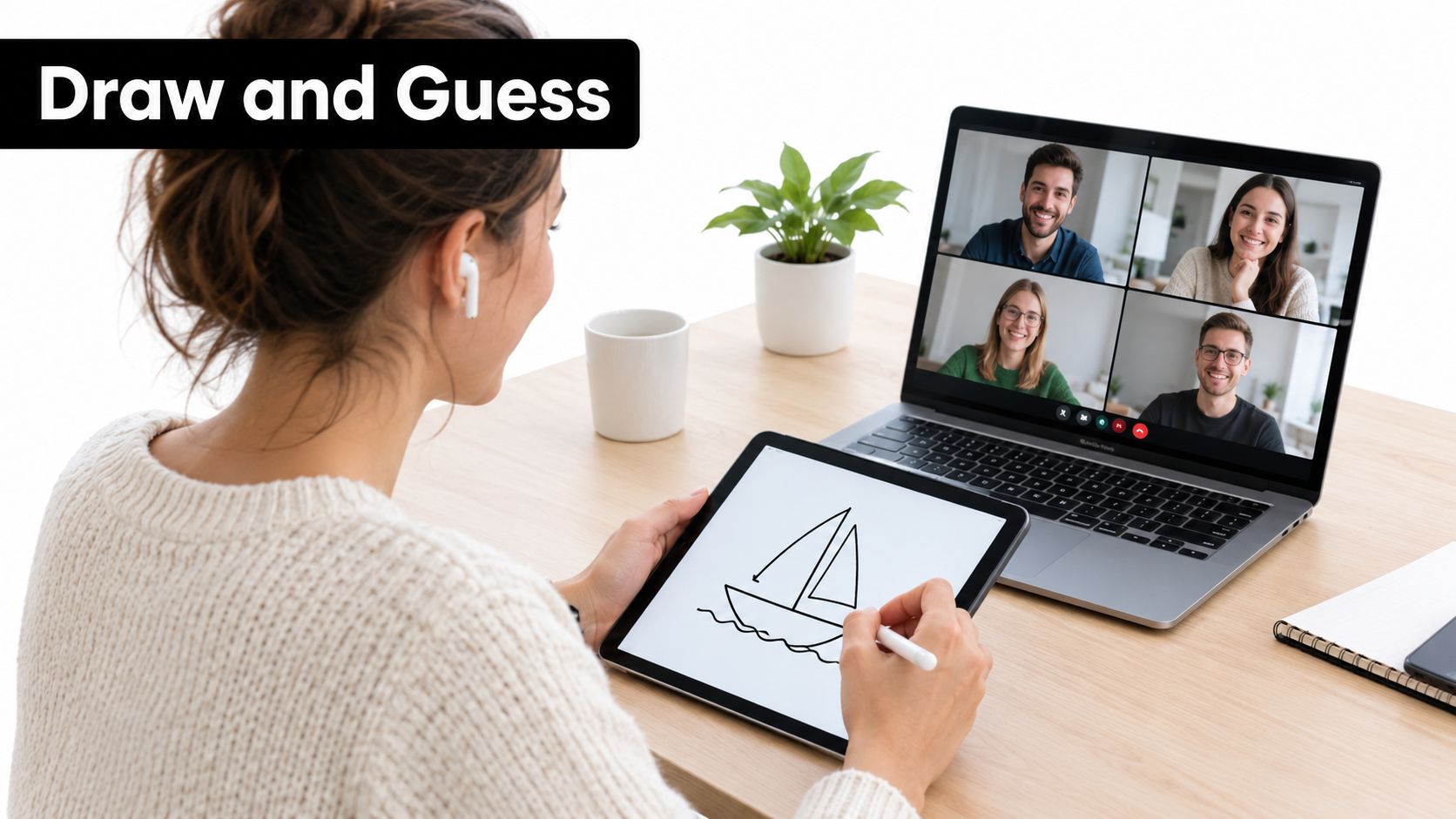
Build your word list from actual boat features so the theme does your selling for you. Use pool noodles, lily pad, waterslide, rooftop deck, cooler, and sunset cruise, then mix in a few easy wins like sunglasses or anchor. Limit each turn to 60 seconds, rotate drawers every round, and let guesses fly in chat and on voice at the same time.
Make It Work for Mixed Teams
Assign teams across departments on purpose. People who never work together have to interpret each other's clues, ask clarifying guesses, and build on half finished ideas. That practices exactly the skill distributed teams struggle with, since a 2023 study of global virtual teams found 50% of respondents found knowledge gathering somewhat difficult and 36% found knowledge sharing somewhat difficult.
Bad drawings are the point. The worse the sketch, the more the team has to talk, guess, and help each other get there.
For accessibility, let players guess in chat instead of speaking, share the word categories in advance, and never score drawing quality. Offer a pass option for anyone who doesn't want to draw live, and give that person the scorekeeper role instead.
Close with the reveal. After the final round, screen share a photo of a rooftop party deck at sunset and ask which drawn item people most want to try in person. You'll get a chat full of waterslide votes, and that's your moment to show available charter dates while the image is still on screen.
3. Virtual Lake Scavenger Hunt
This one gets people out of their chairs. Teams race through photo and clue based challenges from home, things like find something blue, spot a Texas symbol, or recreate a cannonball pose with a water bottle. Virtual scavenger hunts took off during the shift to distributed work after 2020, and city based photo hunts have long been a staple of corporate offsites.

Build a List That Rewards Creativity
Aim for 8 to 10 challenges across easy, medium, and creative tiers so every team banks early points. Award a bonus for any photo that includes a boat or lake view, and make the final mission a short team video filmed near water, a pool, or even a very committed bathtub backdrop. Set a firm deadline, use a shared folder or chat thread for submissions, and score publicly as entries land.
- Easy points: Something blue, sunglasses, a drink with ice.
- Medium points: A Texas symbol, a homemade paper boat that floats.
- Creative points: Your team recreating a boat safety poster or a sunset toast over video.
The structure matters more than the list. Research comparing virtual and in person conferences found that co attending a mini session raised the chance two unconnected people later collaborated from about 1.7% to about 11%, roughly a sevenfold increase, yet fewer disconnected pairs connected virtually than in person. Small teams with shared objectives and mutual dependence help close that gap.
Finish by posting the best submissions to your internal channel with the booking link attached. People will comment, tag teammates, and keep the lake conversation going long after the call ends. That thread becomes free momentum for locking in headcount and a date.
4. Captain's Confessions Two Truths and a Lie
No props, no downloads, no prep beyond thinking of three sentences about yourself. Each person shares two truths and one lie, the group interrogates, and then votes on the lie. It's a workplace onboarding staple because it surfaces stories nobody would put in a bio, and it runs beautifully in groups of 5 to 20 people.
Add the lake twist and it gets better. Require at least one water themed statement, such as a dream boat day, a favorite swim spot, or the wildest place you've jumped into a lake. Someone always reveals a secret talent for wakeboarding or a lifelong fear of fish, and those details give colleagues something to talk about on the actual boat.
Keep It Safe and Snappy
Give a clear opt out and tell people to keep statements work appropriate. Model the tone yourself first with something light, and keep turns to about 90 seconds when the group is larger than 10. If someone freezes, offer prompts like best sunset you've seen from the water or a food you'd bring in the cooler.
Adoption data shows this kind of low friction format fills a real gap. One survey found 59% of remote teams used virtual team building to address remote work challenges, while 36% of leaders managing remote employees named collaboration their biggest challenge. A personal icebreaker won't fix collaboration alone, but it makes the next collaborative game far easier.
Practical rule: End by asking who's actually been on a boat on Lake Travis and let one person share a favorite moment.
That single story does more selling than any brochure. Follow it immediately with two or three open charter dates and ask the group to react to their favorite. You're not pitching cold anymore. You're continuing a conversation the team already started.
5. Dream Lake Day Planning Challenge
Give teams a blank whiteboard, a fixed headcount, and one job. Design the perfect day on Lake Travis. They choose the vessel, timing, food, music, and activities, then present their plan while the whole group votes. Design thinking workshops use this same sprint, present, and vote rhythm, and offsite planners use itinerary building to align groups before real events.
This is the strongest option when a coordinator needs leadership buy in. The winning plan is basically a ready made proposal, complete with a vessel choice and a rough run of show. It also connects directly to other proven team bonding activities for work that build real connection if you're building a fuller program around the outing.
Set Constraints That Mirror a Real Booking
- Fix the inputs: Give every team the same guest count, such as 20 people, and the same per person budget so plans stay comparable.
- Force a vessel choice: Require teams to pick a double deck party boat, luxury yacht, or premium pontoon and defend the pick.
- Include logistics: Score plans that mention coolers, Bluetooth music, water toys, swim stops, and a sunset return.
Mention the compliance shortcut during presentations. Texas rules require anyone born on or after September 1, 1993 to complete a boater education course to operate a vessel, and renters must be at least 18 with a valid driver's license. With a captained charter, the captain handles operation, so your team just picks a date, boat, and passenger count.
Send the winning plan to leadership the same day with a booking request attached. Momentum fades fast, and a polished itinerary from the team itself is much harder to postpone than a coordinator's solo suggestion.
6. Virtual Escape Room Sink or Swim
A captain's logbook has vanished somewhere on a double deck boat, and your team has less than an hour to find it. That's the hook. Players split into roles, decode messages, cross reference a lake map, and argue productively over which clue matters. Companies book virtual escape rooms constantly for remote events, and mystery kit brands like Hunt A Killer helped popularize at home puzzle experiences.

Set a 45 to 60 minute limit with optional hints, and keep teams small enough that everyone holds a real task. Use a five minute briefing, then let teams work in breakouts while a facilitator drops in to unstick groups. End with a short debrief asking which puzzle forced the best communication, because that reflection is where the team building lands.
Design for Participation Equity
Fast talkers dominate escape rooms unless you plan against it. Provide captions, plain language instructions in advance, keyboard friendly tools, and roles that don't require a camera or microphone. That matters because a 2025 accessibility report found as many as one in four remote employees may have needs related to neurodiversity, and distracting interfaces create real cognitive barriers.
The most energetic game isn't always the most inclusive one. Predictable rules and multiple ways to contribute beat forced improvisation every time.
Hide your payoff in the finale. Make the final code reveal a message with a special charter offer, then let teams vote on the most creative puzzle while you share vessel photos. A team that just solved a lake mystery together is primed to go solve the actual thing, preferably with a waterslide involved.
7. Guess the Lake Virtual Location Challenge
Show a shoreline photo, start the timer, and watch three departments debate limestone cliffs like it's a championship final. Teams study landmarks, terrain, boats, and light, then pin their guess. GeoGuessr popularized location guessing online, and corporate trivia hosts lean on geography rounds because anyone can spot one useful clue.
Score by distance from the correct spot to keep tension alive even when nobody nails it. Mix famous Texas and world lakes early, then slip in five Lake Travis images featuring cliffs, marinas, coves, and sunset views. Reveal each answer with one short fact or a quick story from a past charter at that kind of spot.
Turn Curiosity Into a Shortlist
This format works mid event or standalone, and it's ideal for teams with lots of Austin newcomers. People leave knowing what the lake looks like, which makes a future visit feel like a discovery instead of an obligation. If you're planning the bigger picture, browse corporate team building events built for groups on the water while the images are fresh.
- Round design: Start wide with world lakes, narrow to Texas, finish on Lake Travis.
- Team talk: Give 60 to 90 seconds of breakout debate before each pin drops.
- Final image: Make the last reveal your booking screen with date, vessel, and group size options.
Don't let that interest drift. One Lake Travis rental policy requires a deposit and cancellations at least two weeks in advance, with every passenger signing a liability waiver, so preferred dates reward early action. Say that plainly, show the calendar, and invite the winning team to pick first.
8. Team Lake Playlist Battle
Every boat day lives or dies by its soundtrack, so let your teams fight over it in advance. Each group builds a playlist for a Lake Travis cruise, matching songs to moments like boarding, swim stop, dance deck, sunset, and cooldown. Shared playlist exercises are already common in remote team culture, and this version ties straight to a real amenity your group will use.
Set explicit content guidelines up front to keep everything workplace appropriate. Ask for a 60 minute sunset cruise playlist, require each team to defend its opening track and its sunset song, and let the whole group vote by category instead of crowning only one winner. That gives quieter music nerds a real lane to shine.
Make the Winning Playlist Real
Build the finalist lists in a shared streaming playlist during the call, not afterward. Play 20 second snippets for the big reveals, keep a running vote in chat, and name category winners like best opener and best cooldown. Then promise the winning playlist gets played first on board through the high powered Bluetooth stereos with subwoofers.
Booking moment: Send the finished playlist to the whole team with the charter invitation attached, so the music arrives with the plan.
That pairing is powerful because people can hear the event before it happens. Someone presses play during lunch, remembers their team's sunset pick, and asks if the date is booked yet. Cross department camaraderie is the stated goal here, but the shared artifact does the follow up work for you.
Keep the energy light and the ask clear. Share the top playlist, name the vessel type that fits your headcount, and invite RSVPs while everyone's still arguing about the perfect closing song.
8 Corporate Team-Building Games Online Compared
| Activity | Implementation Complexity | Resource Requirements | Expected Outcomes | Ideal Use Cases | Key Advantages |
|---|---|---|---|---|---|
| Lake Day Trivia Showdown | Low | Host, reliable internet, phones, quiz platform | Friendly competition and awareness of a lake outing | Large remote or hybrid groups | Quick to set up; scales easily |
| Remote Lake Pictionary | Low | Video call, browser-based drawing tool, themed word list | Laughter, participation, and informal connections | Small teams or new-hire icebreakers | Accessible, energetic, and customizable |
| Virtual Lake Scavenger Hunt | Medium | Challenge list, submission channel, moderator | Movement, collaboration, and shareable content | Distributed teams across locations | Flexible and encourages creativity |
| Captain's Confessions: Two Truths and a Lie | Low | Video call and optional prompts | Personal stories and stronger rapport | Small groups or meeting openers | No materials needed; easy to adapt |
| Dream Lake Day Planning Challenge | Medium | Shared document or whiteboard, budget and planning template | Collaborative itinerary and practical event plan | Teams planning or pitching a company outing | Produces a tangible deliverable |
| Virtual Escape Room: Sink or Swim | High | Puzzle kit or custom puzzles, video call, shared screens | Collaborative problem-solving and a memorable challenge | Small teams seeking an immersive activity | Builds communication and suspense |
| Guess the Lake: Virtual Location Challenge | Medium | Curated images or location-guessing platform | Discussion, deduction, and local interest | Mid-event activity or standalone session | Visual, low-pressure, and easy to customize |
| Team Lake Playlist Battle | Low | Shared music platform, playlist guidelines | Team expression and a playlist for a future outing | Casual cross-department activities | Low-pressure and creates a reusable playlist |
Turn the Winning Team Energy into a Lake Day
Choosing well starts with your objective, not with whichever game sounds loudest. Pick Captain's Confessions or Remote Lake Pictionary when new hires and cross department groups need quick, low pressure connection. Pick the Virtual Escape Room or Scavenger Hunt when you want deeper collaboration, role sharing, and problem solving under a shared deadline.
Choose the Dream Lake Day Planning Challenge when leadership needs a concrete itinerary before approving budget. Choose Trivia, Guess the Lake, or the Playlist Battle when pure excitement and friendly competition are the goal, especially for larger groups where small team breakouts keep participation balanced. Matching format to purpose is what separates a memorable event from another video call.
Treat the online session as the opening conversation for a larger Lake Travis experience, not as an isolated meeting. Replace a regular meeting slot instead of adding one, keep the agenda tight, and end with one work relevant reflection plus one clear next step. Measure a simple before and after pulse on connection, inclusion, and usefulness so you can show impact beyond attendance.
The business case is easy to state. A published summary citing Gallup research reports only 20% of employees worldwide were engaged in their jobs in 2025, while engaged teams produced 10% higher customer loyalty and 23% higher profitability in the business units studied. A boat outing alone doesn't guarantee those outcomes, but structured shared experiences are a credible investment in engagement.
At the final leaderboard, winning itinerary, escape room opening, or playlist reveal, introduce Lake Travis Yacht Rentals with its fully captained yachts, double deck party boats, and premium pontoons. Point to the Bluetooth sound systems, lily pads, pool noodles, water toys, large coolers, private restrooms, and rooftop decks with waterslides that your game just made everyone imagine.
Then remove every bit of friction. Because each vessel comes fully captained by background checked, drug tested captains, your group doesn't need to arrange a qualified operator. The easy online booking process lets a coordinator select group size, date, and vessel type in minutes, which is exactly what you want while excitement is still high.
Don't schedule the decision for later. Later is where lake days go to die, buried under budget threads and calendar drift. Pick the game, run it this week, and reserve the charter at the reveal moment while your team is still laughing, voting, and picturing that sunset from the top deck.
Your team just competed, collaborated, and planned its perfect lake day, so give that energy somewhere real to go with a fully captained yacht, double deck party boat, or premium pontoon from Lake Travis Yacht Rentals. Pick your date, group size, and vessel today, bring the winning playlist and trivia champions aboard, and let Bluetooth sound, water toys, and a Lake Travis sunset turn your online game into the outing everyone talks about all year.