You're probably doing what most Lake Travis planners do. You've got a group text going, half the group wants a party boat, the other half wants something that feels upscale, and everyone assumes “VIP” means the same thing.
It doesn't.
On this lake, a VIP Lake Travis boat rental is either a polished, successful day with the right captain, the right deck layout, and zero surprises, or it's an overpriced booking with loud marketing and sloppy logistics. I've spent years on this water. The groups that have the best day aren't the ones who chase the flashiest listing. They're the ones who match the boat to the group and lock down the details before they leave the dock.
Lake Travis is built for this kind of day. It's roughly 63.75 miles long, about 18,929 acres, with around 271 miles of shoreline, and history sources describe it as one of Central Texas's major boating destinations after Mansfield Dam created the reservoir in the early 1940s at a cost of about $27 million to $28.7 million. That scale is exactly why big social charters work here so well, from quiet cruises to full-tilt cove days on larger party boats, as outlined in this history of Lake Travis and its dimensions.
Picture Your VIP Day on Lake Travis
Late morning, the sun is already bouncing off the limestone cliffs, and your captain eases a clean, polished cruiser away from the dock. A few people claim the bow pads immediately. Someone connects to Bluetooth. The first drink cracks open before you're fully clear of the marina, and the whole group finally stops talking about planning and starts acting like they're on vacation.
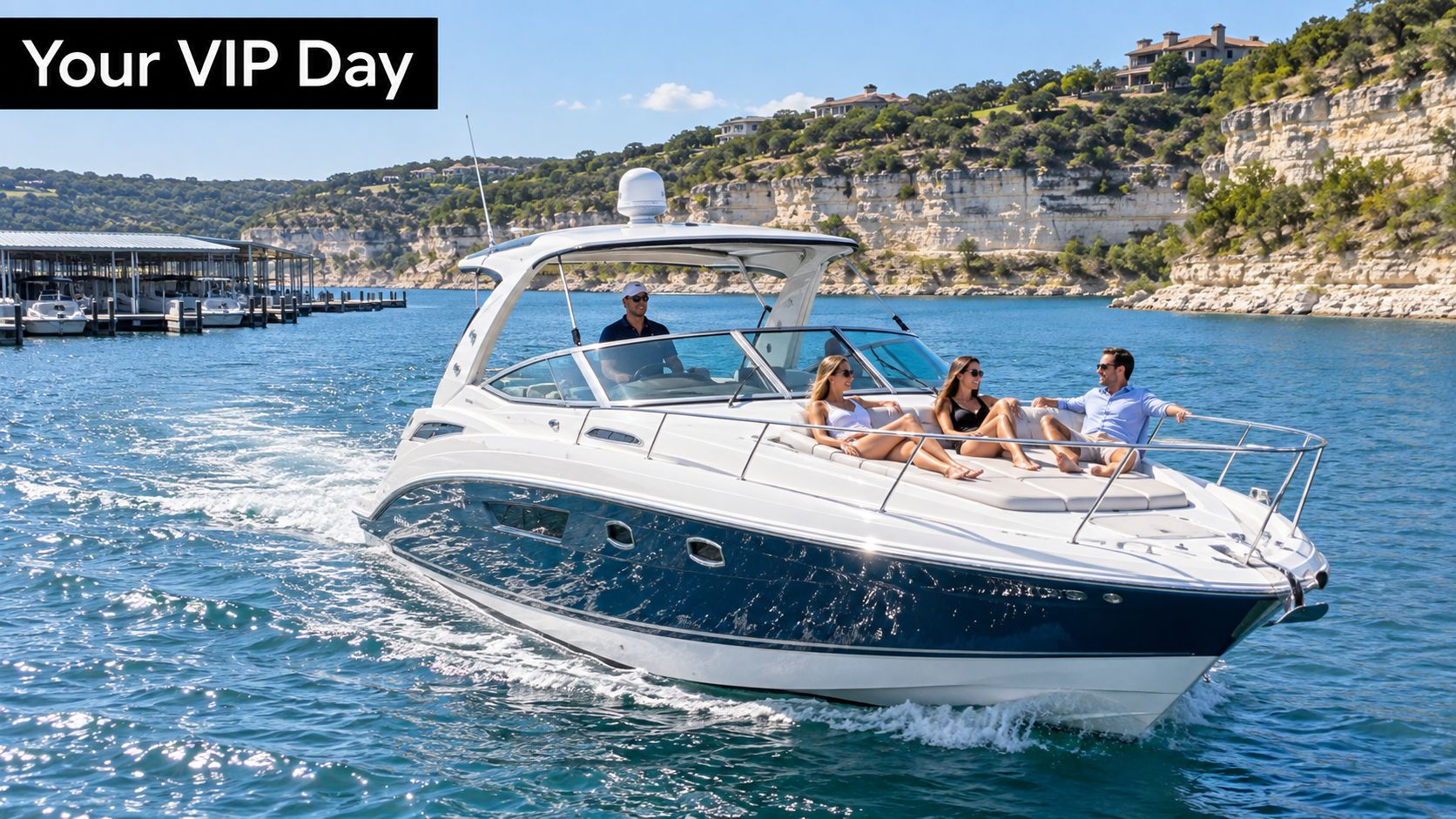
The route matters more than people realize. A smooth launch out near Hurst Harbor gives you room to settle in before the lake opens up. The first stop might be a cruise line past Starns Island, then a swing toward the Party Cove anchorage where the energy picks up and the water fills with every version of a Lake Travis weekend. If your crew wants swim time instead of just sightseeing, that floating mat in the water changes the whole mood fast.
The Day That People Actually Remember
The best charters build momentum. You start with movement, then anchor where the group can spread out, swim, eat, and reset. By the time lunch comes out, people have stopped checking their phones.
A catered spread on an upper deck hits differently when the boat is still rocking lightly and everyone's sun-soaked. Later in the afternoon, the music shifts. The aggressive playlist gives way to something smoother. The lake starts to glow. The boats thin out. That's when a VIP day stops feeling like a rental and starts feeling like an event people will talk about long after the weekend's over.
The strongest charter days on Lake Travis have an arc. Cruise, anchor, swim, eat, drift, reset, then finish with sunset energy.
At dusk, the LED lighting comes on, the air cools off, and even the rowdy groups get a little quieter for a minute. A night swim under the stars is the kind of move that separates a basic booking from a real one.
This lake isn't some tiny side-water. A Lake Travis economic impact report estimated 2.8 million visitor-days, $168.8 million in visitation-related spending, and 1.6 million boater-days in 2010, which tells you exactly what this place is. It's a serious leisure market with heavy boating traffic, not a niche local pond, according to the Lake Travis economic impact report.
What Makes a Lake Travis Rental Truly VIP
Most listings sell “VIP” with staged photos, a cooler, and a speaker. That's weak. If you want a real VIP Lake Travis boat rental, judge it on four things only.
Vessel Class
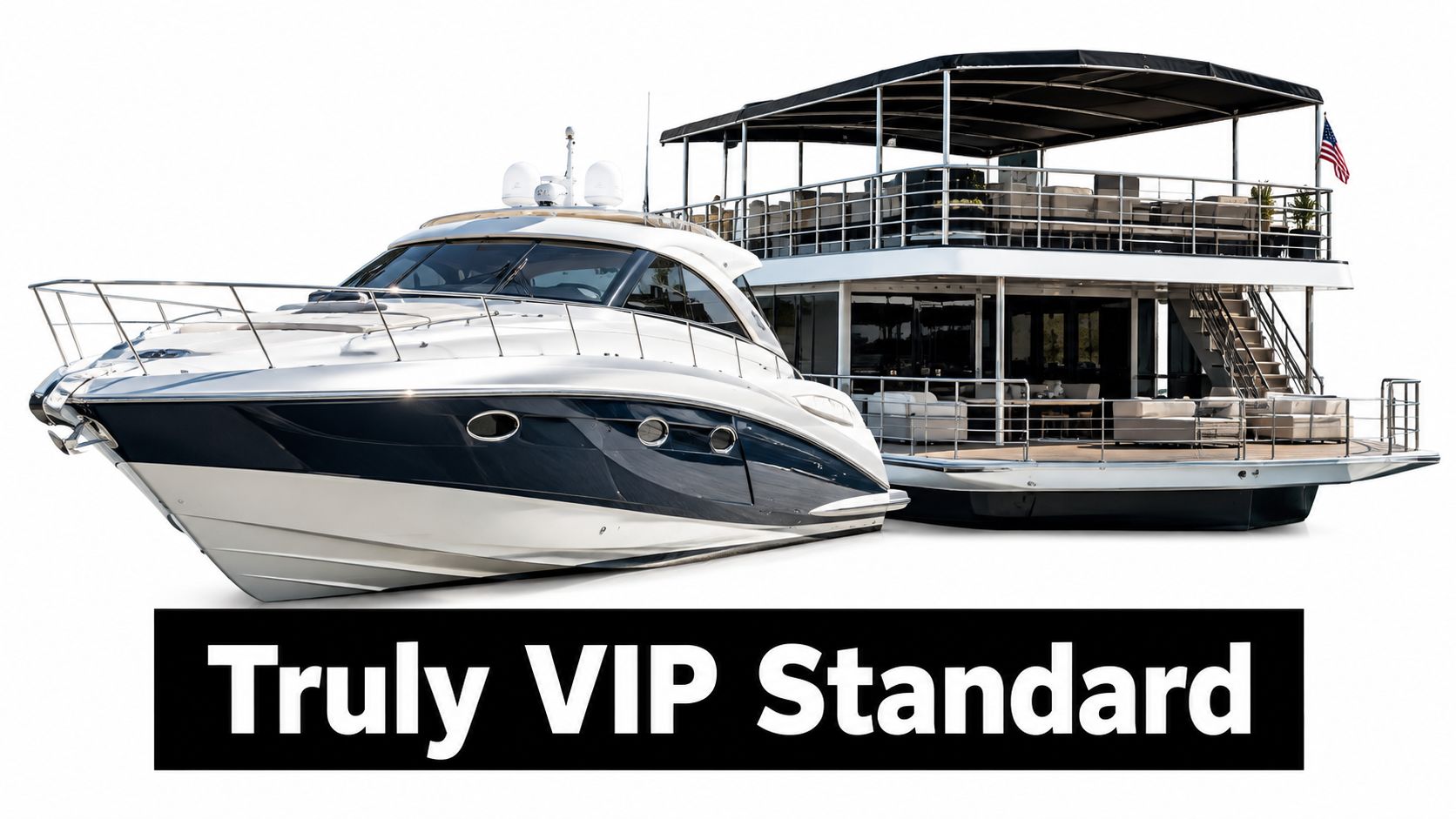
First, the boat has to look and function like a premium charter. That usually means a late-model cruiser, a double-decker party boat with real usable deck space, or a pontoon-style yacht with a cabin and proper social layout.
Older small craft don't suddenly become VIP because someone added a nice listing description. If the seating is cramped, the shade is weak, and the bathroom situation is bad, it's not premium.
Captain and Crew
Second, the captain matters as much as the hull. I'd take a strong local captain on a slightly less flashy boat over a careless operator on a prettier one every time.
You want a USCG-licensed captain who knows cove traffic, dock procedures, congestion patterns, and the little judgment calls that keep a day smooth. If there's crew support for cleanup, loading, guest flow, and reset, even better.
The Amenity Stack
Third, VIP means the amenities are useful, not decorative.
Look for these:
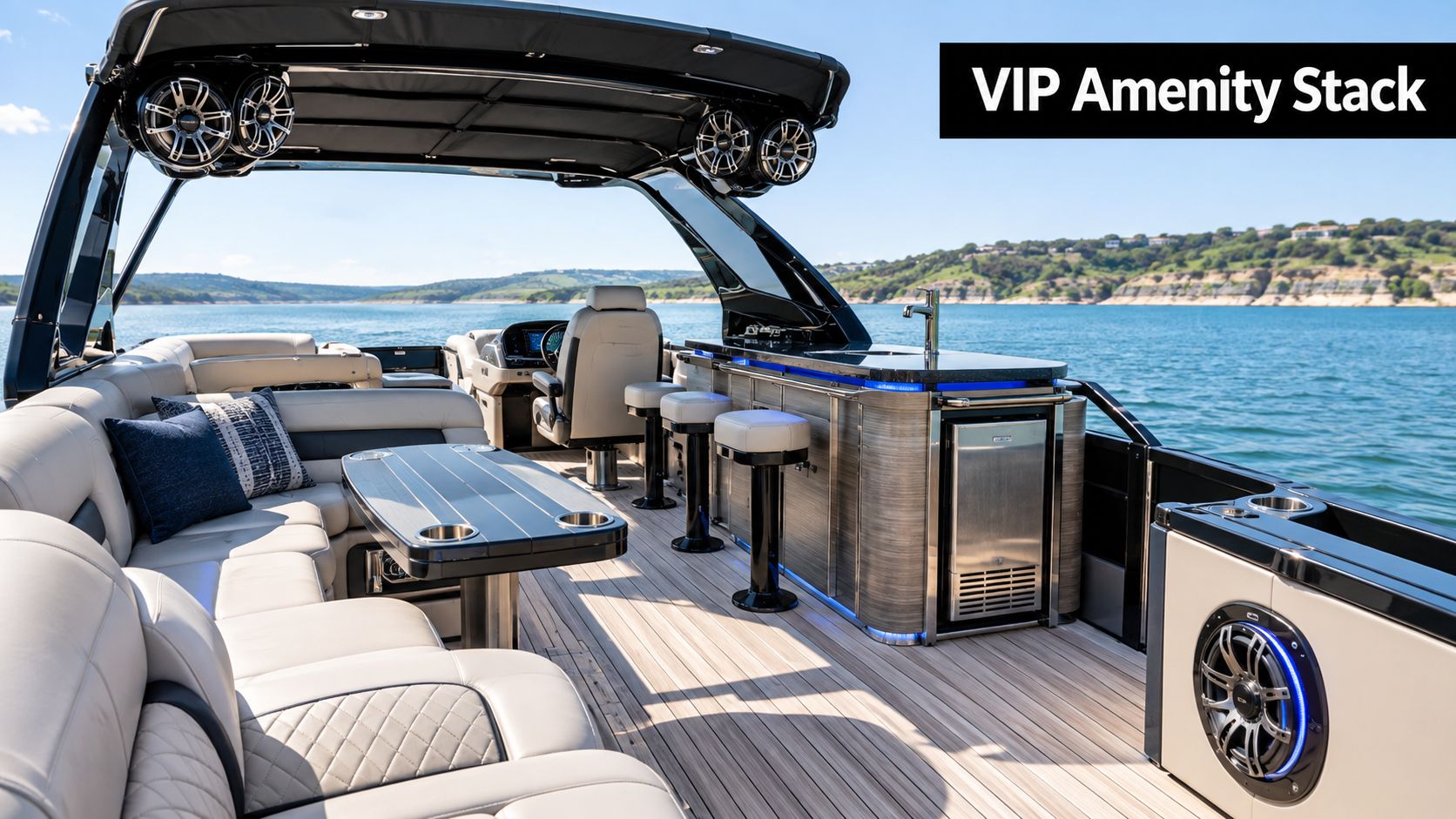
- Premium sound: Guests need clean Bluetooth audio that carries without distorting.
- Shade and restroom access: Those two things save trips.
- Swim setup: Lily pad, mat, ladder, easy reboarding.
- Guest comfort: Coolers, ice handling, dry storage, decent seating.
- Upper-deck usability: It should be a real social zone, not a gimmick.
Practical rule: If the feature list sounds exciting but doesn't make boarding, lounging, swimming, eating, or reboarding easier, it's probably brochure filler.
Booking Experience
Last, VIP starts before the boat leaves the dock. Premium service means one point of contact, clear instructions, transparent costs, and no games about timing or meetup logistics.
That part gets overlooked constantly. It shouldn't. Some renters on Lake Travis need a boater education card if they're self-operating and were born after Sept. 1, 1993, some launches require early arrival, late arrivals can lose water time, and at least one launch point adds a separate $5 per person fee payable in cash or check, based on this Lake Travis rental FAQ with launch and paperwork details. Even if you're booking a captained experience, those day-of logistics tell you a lot about how carefully an operator communicates.
Matching the Right Vessel to Your Group
People either nail the day or blow it. Don't choose the boat first. Choose the group experience first, then match the hull.
Three Boat Types That Actually Fit Most VIP Groups
Luxury cruisers and yachts fit smaller groups who want polish. Think corporate outings, milestone birthdays, or a bachelorette crew that cares more about comfort and photos than going wild in party cove traffic. These boats usually give you a quieter feel, better cabin shelter, and a more upscale flow.
Double-decker party boats are built for volume and energy. If your group wants dancing, loud music, rooftop time, and an obvious social setup, this is usually the right call. These are the workhorses for bachelor parties, bachelorettes, and big celebration groups.
Premium pontoons and tritoons are the underrated pick. Families, mixed-age groups, and daytime birthday cruises often do better on these because boarding is easier, movement feels simpler, and swim access is less of a production.
VIP Vessel Classes on Lake Travis Compared
| Vessel Class | Typical Capacity | Best For | Trade-Offs |
|---|---|---|---|
| Luxury cruisers and yachts | Smaller to mid-size groups | Corporate events, birthdays, smaller bachelorettes, upscale cruises | Less ideal if your group wants a loud, open-deck party atmosphere |
| Double-decker party boats | Mid-size to larger groups | Bachelor parties, bachelorettes, wedding groups, big birthday energy | More exposed to sun and wind, and the vibe is more social than intimate |
| Premium pontoons and tritoons | Small to mid-size groups | Families, mixed-age outings, relaxed swim days | Less visual wow than a yacht, less party impact than a double-decker |
My Straight Recommendation by Group Type
If you've got a group that wants to talk, snack, swim, and stay comfortable, book the yacht or premium pontoon. If you've got a group that wants to be seen, heard, and moving all day, book the double-decker.
Don't overbook your atmosphere. A group of mellow adults on a huge party platform can feel awkward. A loud celebration on a too-small cruiser feels compressed fast.
There's also a safety reason to stop obsessing over headline guest count. On party boats, legal passenger limits come from what the boat can safely handle by design, not what sounds good in a listing. Texas water safety rules say a party boat can't carry more passengers than it can safely accommodate, and federal guidance ties maximum passenger count to the most restrictive of rail length, deck area, fixed seating, and upper-deck stability, as explained in these Texas boating safety rules and passenger capacity standards.
Ask for the layout. Ask where people sit and stand. That's the answer.
The Amenity Stack That Defines VIP
The right amenities don't just make the day nicer. They change what kind of day you have.
Basic, Premium, and Ultra VIP
Here's how I break it down.
| Tier | What It Should Include |
|---|---|
| Basic | Captained ride, cooler space, simple sound, life jackets, ladder, restroom access |
| Premium | Strong Bluetooth stereo, lily pad or floating mat, shaded lounging, clean seating layout, quality crew support |
| Ultra VIP | Cabin comfort, polished hosting flow, premium audio performance, better food and drink setup, elevated social deck experience |
A lot of operators list “Bluetooth stereo” like that settles it. It doesn't. Bad sound kills the mood faster than people expect. If your group cares about music, pay attention to whether the system can handle open-air lake conditions. A proper setup with low-end support makes a bigger difference than another decorative seat cushion, and this breakdown on boat subwoofer and sound quality gets into why.
What's Worth Paying Extra For
Spend your money on things the whole group uses.
- Captain quality: This is the best upgrade on the list.
- Shade: Midday Lake Travis sun changes people's mood fast.
- Floating mat or lily pad: It turns an anchored stop into an actual activity zone.
- Bathroom quality: Guests always remember whether this was handled well.
- Crew help: Cleanup and guest support matter more than novelty add-ons.
Skip fluff if your budget is tight. Fancy wording around “luxury ambiance” means nothing if there's no real swim setup, weak speaker output, and nowhere comfortable to sit.
Safety Is Part of VIP
A premium charter should never act like safety is separate from the fun. It's part of the service.
Texas law requires a wearable U.S. Coast Guard-approved life jacket for each person on board a motorboat, and on vessels under 26 feet that are underway, every passenger under 13 must wear one, including motorboats carrying passengers for hire, according to Texas Parks and Wildlife guidance for Lake Travis boating safety.
Good charters make safety feel organized, not scary. The gear is there, the briefing is clear, and the day keeps moving.
If a company can't clearly explain life jackets, boarding, reboarding, and emergency basics, don't trust the rest of their “VIP” claims.
Pricing, Booking, and the Day-Of Workflow
First-timers get burned. Not because the boats are bad, but because they assume the quote tells the whole story.
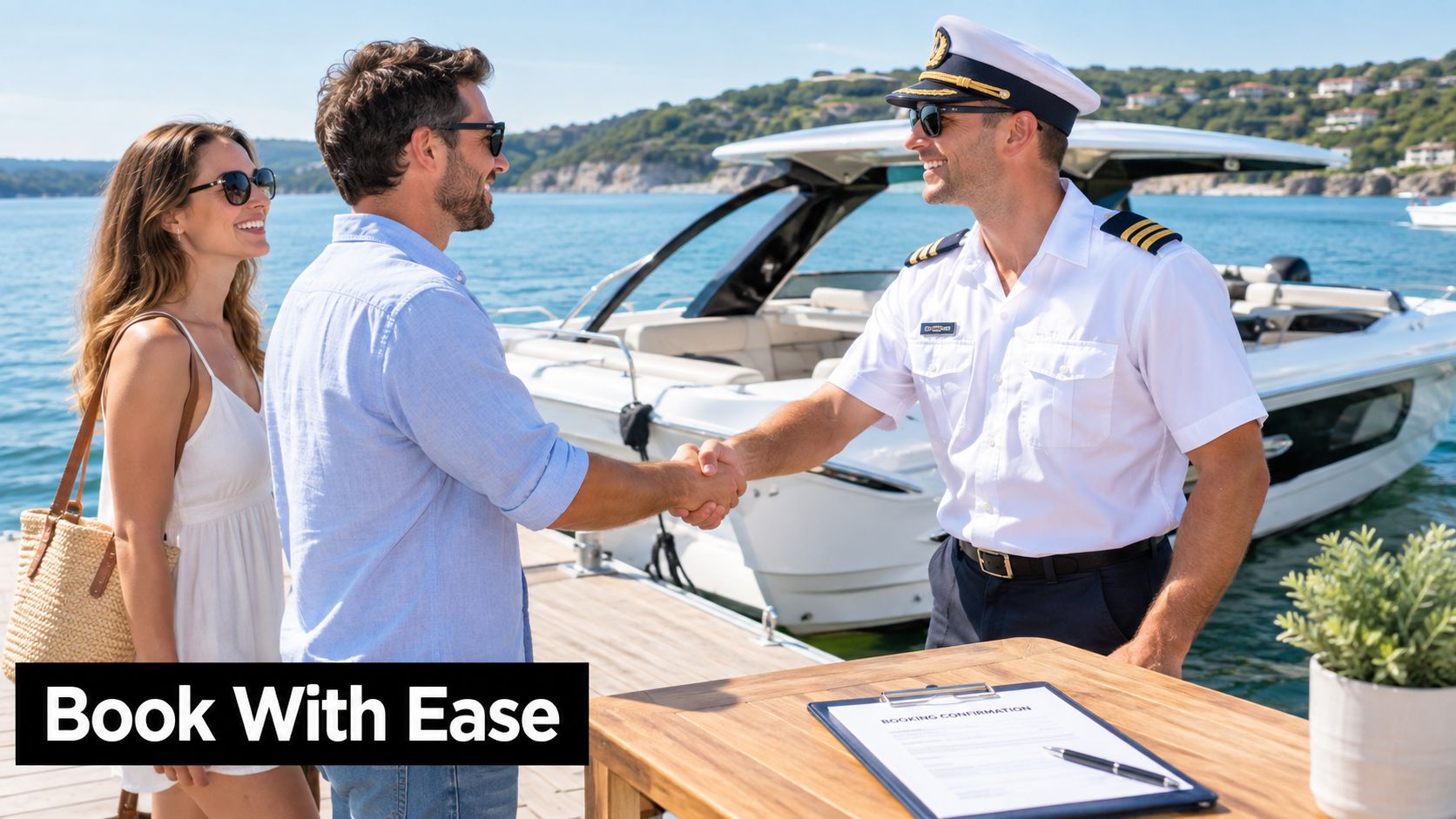
What to Confirm Before You Pay
You need the all-in number, not the teaser number.
Ask these questions in plain English:
- What's included: Captain, crew, fuel, ice, floats, cleanup, launch access.
- What's separate: Gratuity, marina fees, add-ons, catering, timing penalties.
- What happens if weather turns: Reschedule policy matters.
- When final headcount is due: This affects the vessel recommendation.
- Where exactly you board: Don't settle for vague marina directions.
One operator that's relevant in this category is Lake Travis Yacht Rentals, which offers captained yachts, double-deck party boats, and premium pontoons for Lake Travis groups. That matters if you want to compare a multi-vessel local fleet against smaller one-off charter setups.
The Booking Sequence That Works
The smoothest bookings usually follow this order:
- Send the date and rough headcount
- Get matched to the right vessel style
- Review the agreement and pay the deposit
- Confirm guest count and add-ons
- Pay the remaining balance
- Get exact day-of boarding instructions
If you want a cleaner process, book earlier than you think you need to. Summer Saturdays don't wait around. This guide on how to book your Lake Travis boat rental in advance is worth reading if your date matters and you don't want to settle for whatever is left.
Day-Of Logistics That Matter More Than Decor
Arrive early. Not “on time.” Early.
You need enough cushion for parking, finding the dock, unloading drinks and bags, signing anything outstanding, and getting your group physically onto the boat. If even one person in your group is habitually late, plan around that reality now instead of sacrificing charter time later.
Show up ready to board, not ready to organize. The dock is the worst place to discover someone forgot ID, ice, payment, or the final guest count.
If your route includes cove time, trust the captain on timing. Traffic shifts by the day, and a smart departure or anchoring decision saves you a lot more stress than trying to micromanage the route from Instagram posts.
VIP Rental Myths That Cost You Money
The worst Lake Travis mistakes usually start with a dumb assumption.
Myth One and Myth Two
Myth: VIP means you need to know how to drive a boat.
No. For captained charters, you're booking the experience, not volunteering to run the helm.
Myth: Alcohol is banned on the lake.
Also no. In Texas, passengers may consume alcohol on boats, but the operator on self-run rentals must stay sober and boating under the influence is illegal. That distinction matters, especially for party groups, and this Austin-area boating article on drinking and rental rules covers the basic framework.
The Expensive Myths
Myth: Bigger boat is always better.
Wrong. Some groups do better on a more agile, lower-stress boat with easier boarding and better swim flow.
Myth: The advertised rate is the final price.
Almost never the way you hope. You need clarity on every mandatory add-on and any trip-day costs.
Myth: Any captain will do.
Absolutely not. Lake knowledge matters. This lake has traffic patterns, anchoring etiquette, dock flow, and judgment calls that don't show up in a listing.
What Captains Will Shut Down Fast
There are lines guests cross every season because they assume “party boat” means anything goes.
Captains commonly stop behavior that creates obvious risk, especially on boats with high decks. Open-air upper decks need real edge protection. U.S. Coast Guard passenger vessel guidance requires rails to withstand a 200-pound point load and a 50 pounds-per-foot uniform load at the top rail, and many passenger vessel setups call for rail heights of at least 36 inches, according to these deck rail and guard protection requirements.
That's why good captains get strict about reckless movement up top. They're not being uptight. They're doing their job.
Your Top Lake Travis Questions Answered
The Fast Answers
Do guests need a license?
Not on a captained charter. The operator handles the boat.
Can kids come?
Yes, but minors count toward capacity, and safety gear rules still apply.
Can you bring alcohol?
Usually yes, but follow the boat's container rules and crew instructions. Don't assume every vessel allows the same things.
What should you bring?
Swimsuit, towel, sunscreen, valid ID, drinks, snacks, and whatever payment method the operator requires for remaining trip costs.
What the Captain Handles
The captain handles navigation, docking, anchoring, safety briefing, guest flow around swim stops, and the marina side of the operation. Your job is to show up prepared and not create preventable friction for the group.
For a broader checklist on what smart guests should verify before stepping onboard, this vessel safety check manual is useful.
The Rules People Forget
Lake Travis boating still sits inside real legal guardrails. Texas Parks and Wildlife says it's unlawful to operate a boat in a way that causes a hazardous wake or wash, which matters on crowded days, according to Texas boat operation and wake rules. On top of that, Lake Travis has zebra mussels, and boaters are warned to clean, drain, and dry boats, trailers, livewells, and bait buckets before moving to another water body, with draining required by law, as noted on the Lake Travis access and invasive species guidance.
If your group adds personal watercraft to the day, remember that anyone being towed on a PWC counts as an occupant and must wear a life jacket, and children under 13 can't operate a PWC unless accompanied by a lawful operator who is at least 18 years old, based on Texas personal watercraft rules.
Ready to Book Your VIP Lake Travis Adventure
If your date matters, stop browsing and start narrowing the decision. Group size and date are enough to get a useful recommendation, and once those two things are locked in, the right operator can match you to the right boat fast.
Local knowledge matters on this lake. The captain, the boarding plan, the cove choice, the timing, and the dock logistics all shape the day more than a glossy listing ever will.
Use this checklist:
- Pick your date
- Confirm your headcount
- Choose your vibe
- Decide on add-ons like catering or a lily pad
- Gather ID and payment
- Reserve the captain and vessel now
Don't wait until the good options are picked over. The best VIP Lake Travis boat rental isn't the one with the loudest ad. It's the one that fits your group cleanly and runs smoothly from dock to sunset.
If you want a captained VIP day with yachts, double-deck party boats, or premium pontoons on Lake Travis, Lake Travis Yacht Rentals is built for exactly that kind of outing. Check the fleet, match the boat to your group, and lock in your date before someone else takes the weekend you want.