You're organizing a bachelorette weekend, birthday, or company outing on Lake Travis, and the boat decision has suddenly become the hardest part. A basic pontoon looks affordable, a luxury tritoon looks exciting, and every search for “premier pontoon boats price” returns a different number. The real question isn't only what the boat costs. It's whether buying one makes sense for your celebration, or whether a captained rental gives your group the better day on the water.
For Lake Travis events, I recommend starting with the experience rather than the sticker. You need enough room for the group, comfortable seating, reliable shade and sound, and a captain who can handle the lake while everyone else celebrates. Premier pontoons sit in the premium tier because they combine the social layout of a party barge with the performance and stability of a tritoon. That combination is exactly why they work so well for bachelor parties, bachelorette groups, birthdays, family gatherings, and corporate outings.
Why Premier Pontoons Are the Hottest Way to Celebrate on Lake Travis
The group arrives at the marina with coolers, towels, birthday decorations, and one person still asking whether the boat has enough room. Within minutes, the right Premier pontoon settles that argument. Guests spread across plush seating, the Bluetooth stereo starts the playlist, and the captain points the bow toward open water instead of making the organizer manage docking, navigation, and safety.
A generic fishing boat can move quickly, but it doesn't give a celebration group the right social layout. A basic pontoon offers space, but it may not deliver the ride, storage, handling, or finish that makes a full lake day feel special. A Premier-style tritoon occupies the useful middle ground, with a broad deck for conversation and a performance-oriented hull for cruising, swimming stops, and tubing.
The practical test: If your guests will spend more time talking, eating, listening to music, and swimming than casting lines, choose the boat built around people, not fishing gear.
Lake Travis attracts visitors who want an experience that feels distinctly Austin without requiring a complicated itinerary. Texas recorded 62 million visitors in 2024, with $97.5 billion in visitor spending, $199.5 billion in total economic impact, and 1.3 million jobs supported, according to the Texas Governor's travel and tourism announcement. A captained lake outing fits naturally into that travel market. It gives tourists and local hosts a clear centerpiece for the day.
Why the premium layout matters
A Premier pontoon earns attention because it turns transportation into the event itself. Guests can stay together instead of splitting across small boats. The captain handles the route, while the group focuses on music, refreshments, swimming, and photos. That matters during a bachelor or bachelorette weekend, when the organizer should be enjoying the celebration rather than monitoring the helm.
The premium choice also gives you a stronger answer to three questions that usually cause booking stress:
- What should I expect to spend? Premium pontoons occupy a wide asking-price range, but the right benchmark depends on length, engine, hull, and equipment.
- What am I paying for? More power, better handling, capacity, storage, comfort, and service can change the experience more than a cosmetic upgrade.
- Should I buy or book? If this is an occasional celebration, a captained rental usually solves the problem with less ownership responsibility.
Start with the best luxury pontoon boats for Lake Travis celebrations if your priority is an exciting group day rather than owning another vehicle to maintain. By the end of your comparison, you should know the realistic price tiers, the features driving them, and whether reserving a boat now makes more sense than shopping for one.
What Premier Pontoon Boats Actually Cost in 2026
A single pontoon boat price is almost meaningless without context. The category includes small older recreational boats, practical mid-market models, luxury pontoons, and high-performance tritoons. Comparing all of them as if they were interchangeable creates bad buying decisions.
A MarineSource pontoon marketplace snapshot listed 13,327 pontoon boats for sale. Prices ranged from $1,745 to $1.3 million, and the average listing price was $61,119. The most common band was approximately $38,000 to $59,000. Those are asking prices, not verified transaction prices, so they're useful for understanding the market but not as guarantees of what a buyer will pay.
Three different markets hide inside one search result
The lowest listings generally represent older, smaller, or less-equipped boats. They may work for occasional personal use, but they don't establish a realistic benchmark for a new premium pontoon with a large outboard, upgraded seating, sound equipment, and a tritoon hull.
The middle of the market is where many practical recreational boats sit. These boats can offer useful capacity and comfortable cruising, but their price depends heavily on whether the engine, trailer, preparation, and options are included. A listing that looks attractive at first glance can change once those items appear on the final invoice.
The luxury tier includes larger pontoons and tritoons with more powerful engines, upgraded layouts, higher-grade upholstery, and performance-focused hulls. Premier belongs in that premium conversation. Its asking price should be compared with similarly equipped luxury boats, not with an older two-tube pontoon at the bottom of a marketplace search.
What the numbers mean for a Lake Travis renter
Ownership gives you access whenever the boat is available, but you also take on storage, maintenance, insurance, fuel, cleaning, registration, and scheduling. A captained rental separates the experience from those responsibilities. You pay for the outing you want, then leave the maintenance and lake logistics to the operator.
That distinction matters for a group planning one birthday, one bachelor weekend, or one family visit. The relevant comparison isn't only Premier pontoon boats price versus another purchase price. It's purchase cost versus the cost and convenience of reserving a polished, ready-to-use Lake Travis experience.
Premier Pontoon Models and What Each Price Tier Buys You
Premier's dealer listings show how quickly performance and capacity can reshape the purchase decision. A 22.4-foot Sunscape 220 RL with a 150-horsepower outboard and 13-person capacity was listed at roughly $59,974, while a 25.4-foot Intrigue 250 RF with a 300-horsepower engine and 17-person capacity was listed at $146,264, according to Skiers Marine's Premier listings. The gap is about $86,000, and it reflects more than a few extra feet of deck space.
| Model | Length | Engine | Capacity | Listed Price |
|---|---|---|---|---|
| Sunscape 220 RL | 22.4 feet | 150 hp | 13 people | $59,974 |
| Premier mid-tier configuration | Not specified | Not specified | Not specified | Not specified |
| Intrigue 250 RF | 25.4 feet | 300 hp | 17 people | $146,264 |
The Sunscape tier suits most celebration groups
The Sunscape 220 RL is the sensible reference point for a group that wants a premium layout without immediately moving into the highest-output configuration. Its 150-horsepower engine, 22.4-foot length, and 13-person capacity fit a typical birthday, family outing, or smaller wedding-weekend group.
That setup makes sense for cruising, music, swimming, and relaxed cove time. You're paying for a substantial social platform and useful capacity, not just raw speed. For many Lake Travis celebrations, that's the better value because guests remember the space, comfort, captain, and time together more than the engine badge.
The Intrigue tier is for larger groups and higher performance
The Intrigue 250 RF changes the equation with a 300-horsepower engine, 25.4-foot length, and 17-person capacity. Four additional passenger spaces can matter when the event includes a larger family, a corporate team, or a full bachelor or bachelorette group that doesn't want to split up.
The extra horsepower also suits buyers who prioritize stronger acceleration, watersports, and a more performance-oriented ride. It isn't automatically the right choice, though. If your group plans to anchor, swim, eat, and listen to music, the highest-output package may add ownership cost without improving the parts of the day your guests value most.
My buying rule: Pay for the capacity you need first. Buy extra horsepower only when your planned activities will use it.
For a one-day event, both tiers point toward the same practical conclusion. You can reserve the social layout and captain-led experience without committing to the full purchase price, especially when your group only expects a handful of lake days each year.
Six Cost Drivers That Move the Premier Pontoon Price
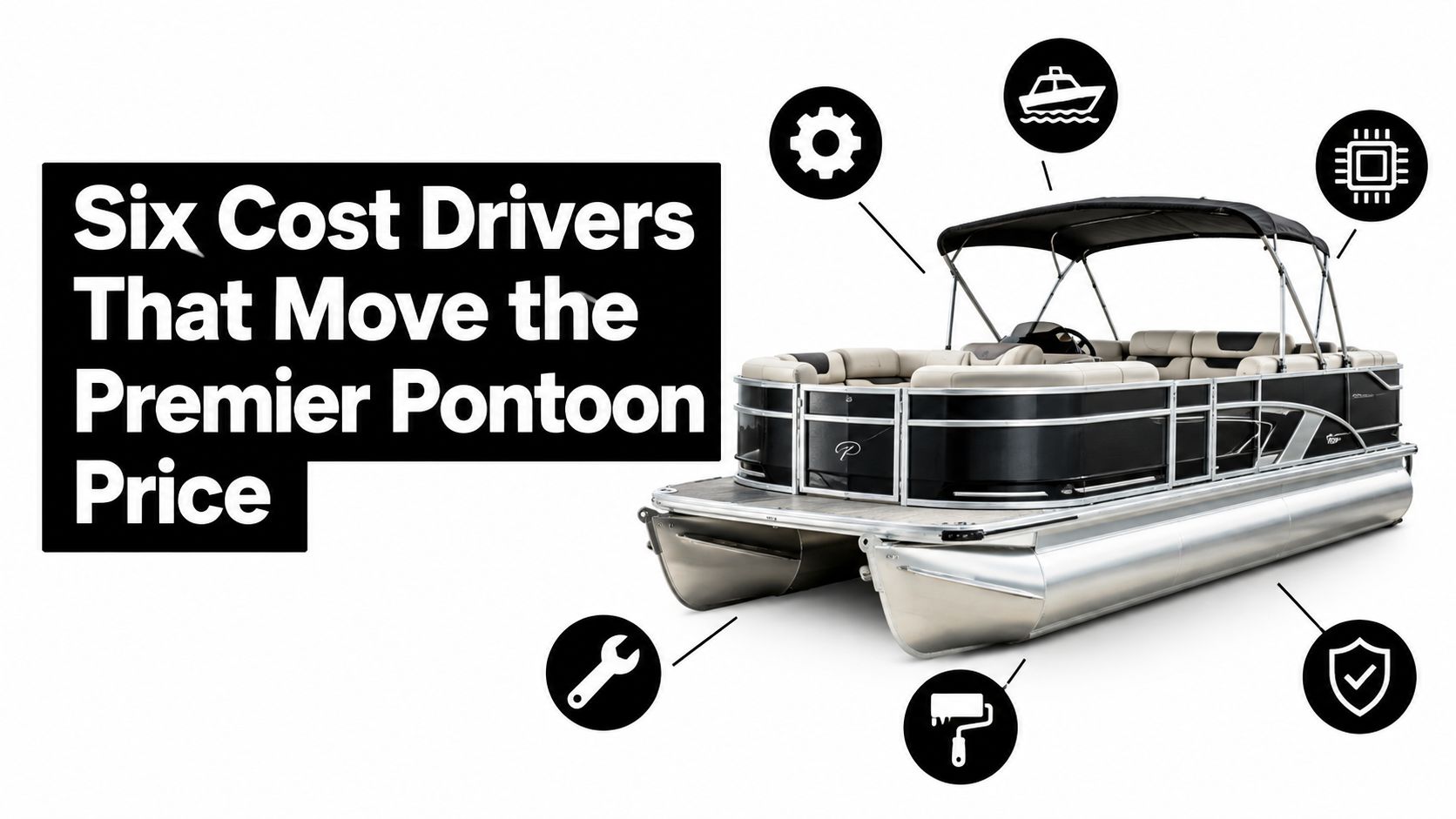
The final number changes because six decisions change the boat or the service around it. Buyers who compare only the advertised base price miss the items that shape the delivered cost. Renters should use the same framework to decide which features are worth paying for during a celebration.
1. Size and passenger capacity
A longer boat generally creates more room for seating, coolers, movement, and guests. Capacity matters more than length alone, though. A boat that technically fits the group may feel cramped once everyone brings food, bags, towels, and water toys.
2. Engine horsepower
The engine affects acceleration, cruising ability, watersports, fuel use, and the price of the package. A 150-horsepower setup and a 300-horsepower setup serve different priorities. Don't pay for performance your group won't use.
3. Hull design
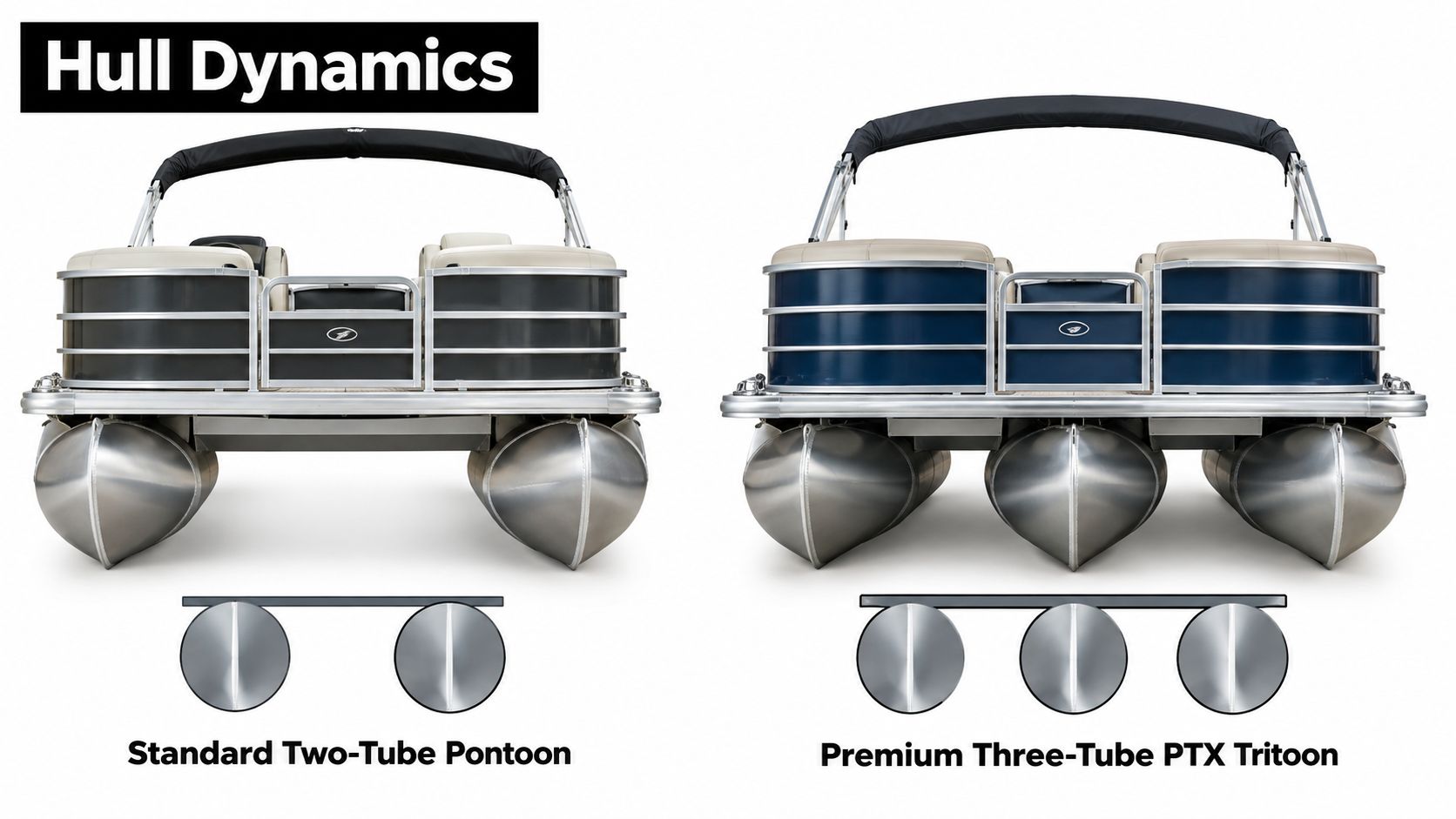
A conventional two-tube pontoon can handle relaxed recreation, while a performance tritoon is designed for greater stability and stronger running characteristics. The hull becomes especially important with a full passenger load, higher speeds, or repeated starts and turns.
4. Amenities and equipment
Premium seating, shade, stereo equipment, storage, swim accessories, restrooms, and upgraded entertainment systems can matter more to a celebration group than a small increase in top speed. Ask whether the package includes the equipment your guests will really use.
5. Timing and advertised discounts
Dealer pricing can sit well below MSRP. For example, Veurink's new Avalon and Viaggio inventory showed a 17-foot Avalon with a 50-horsepower Honda at $24,995 against an MSRP of $41,237. A 23-foot model with a 200-horsepower outboard was listed at $91,995 against an MSRP of $122,904.
Those comparisons show why buyers should record both figures and ask what the listed amount includes. A lower advertised price may not include freight, dealer preparation, taxes, trailer configuration, or optional features.
6. Captained service
A captain changes the product from a boat into an organized experience. You don't have to steer, dock, monitor safety, or assign one guest to stay sober and responsible for the vessel. If you're comparing ownership with a charter, include the value of your own time and attention.
For a fuller ownership checklist, review the cost to winterize a boat before treating the purchase price as the complete cost. The boat is only one line item.
Where Premier Pontoons Earn Their Premium Price
A premium pontoon has to justify itself on the water, not only in a brochure. Premier's PTX hull claims up to 15% higher top speed, up to 17% lower planing speed, up to 17% improved fuel efficiency, a 5% tighter turning radius, and up to 218% more center-locker storage than competing tritoon layouts, according to the manufacturer-focused Premier PTX overview.
Those figures are manufacturer-reported, not independently controlled test results. Buyers should compare boats with similar horsepower, propeller setup, passenger load, water conditions, and fuel-flow instrumentation before treating the claims as a direct promise.
Translate specifications into celebration benefits
Lower planing speed has an obvious practical appeal on a crowded, fully loaded boat. The hull can feel more responsive during acceleration, which matters when guests move around the deck or when the captain transitions from idle speed to cruising.
A tighter turning radius helps in coves and busy recreation areas. The captain can make controlled adjustments without treating the boat like a slow floating platform. More storage also has a direct event benefit. Coolers, bags, towels, floatation equipment, and party supplies need somewhere secure to go.
Fuel efficiency can matter during a long cruising day, although the actual result depends on load, throttle use, conditions, and setup. The strongest value comes from matching the hull to the way your group will use the boat, not from chasing every published performance figure.
Why premium rentals cost more than basic rentals
A 2025 market research report estimates that pontoon rentals are the fastest-growing boat-rental subcategory, with a projected 12.1% CAGR, and places typical pontoon and specialty-vessel rates at $200 to $900 per day. The same report estimates that premium positioning, crew inclusion, or destination location can create 35% to 50% price differences within the same category, as described in the boat rental service market report.
That pricing difference makes sense when the reservation includes a premium hull, professional captain, upgraded equipment, and a destination lake. You aren't only renting aluminum tubes and an outboard. You're buying a dependable setting for the event, with fewer tasks left for the organizer.
Renting vs Owning a Premier Pontoon
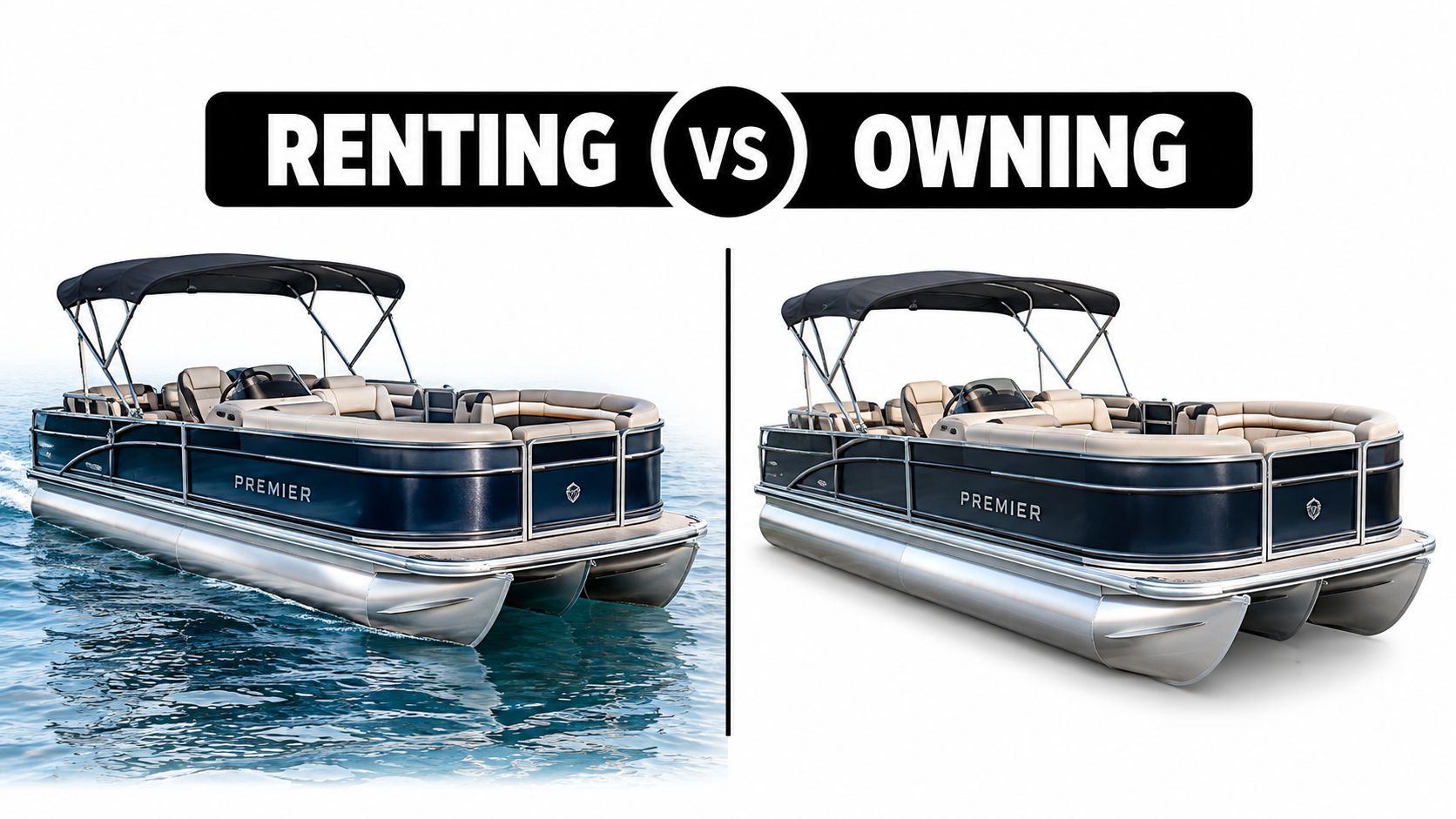
Ownership looks attractive when you imagine having a boat whenever you want. The calculation changes once you count the days you'll use it, plus insurance, storage, maintenance, cleaning, fuel, registration, preparation, and the time required to get it on and off the water.
A rental gives a two-to-four-event-per-year customer a simpler choice. You select the date, group size, boat style, and service level. A captain handles the operating responsibilities, and your guests experience the lake without turning the organizer into the boat manager.
Lake conditions affect the ownership equation
Lake Travis isn't a static venue. It reaches its conservation-pool level at 681 feet above mean sea level, while flood-storage operations can raise the lake to approximately 721.4 feet, according to Lake Travis level information. Water levels can change because the reservoir serves flood control, water supply, hydropower, and recreation.
Water temperature also changes the usefulness of a private boat across the year. Reported conditions range from a February minimum of about 54.4°F to an August average near 86.2°F, as documented by Lake Travis water-temperature data. Warm late-summer water supports swimming and floating, while cooler months may make a private boat less appealing for the activities that justify the purchase.
Compare the experience, not just the invoice
A rental removes the risk of paying for a boat that sits unused. It also lets you choose a larger or more capable vessel for a special event than you might justify buying for ordinary weekends. If your celebration requires room, sound, shade, swim equipment, and a captain, those features are available when you need them rather than occupying your budget year-round.
Use this test:
- Choose ownership if boating is a frequent part of your routine and you want the responsibility of maintaining and operating your own vessel.
- Choose a rental if your priority is a small number of organized celebrations and a predictable, hands-off day.
- Choose a premium captained rental if the group needs a polished experience but nobody wants to sacrifice the event to driving, docking, fueling, or supervising.
For a broader look at the obligations that follow a purchase, compare the costs of boat ownership before using the sticker price as your break-even point. The right answer depends on usage, but occasional celebration planners usually get more flexibility from booking.
Smart Ways to Save and When a Premier Day Pays for Itself
The best savings strategy is to buy only the experience your group will use. A smaller premium boat with enough capacity, a captain, and the right amenities can outperform a larger package loaded with features nobody requested.
Start with the date. Shoulder-season weekdays can offer more availability and may create better package options than peak weekend demand. Ask for the complete price, including the boat, captain, duration, fuel policy, equipment, and any add-ons. Dealer listings already show that advertised prices can sit far below MSRP, so buyers should always ask for the package price rather than accepting the first number as final.
Make the group work in your favor
Splitting a charter across the full group can make a premium day feel much more reasonable per person. A birthday host may spend less by booking the right capacity instead of paying for a vessel sized for an imaginary guest list. A corporate organizer can also compare the cost with other activities that require transportation, food, and venue coordination.
For Lake Travis, the experience has a strong tourism fit. Texas welcomed 62 million visitors in 2024, so a lake charter works as a recognizable Austin activity for visitors, not an obscure luxury add-on. The most effective booking question is simple: what boat and service package gives this group the best day on the water?
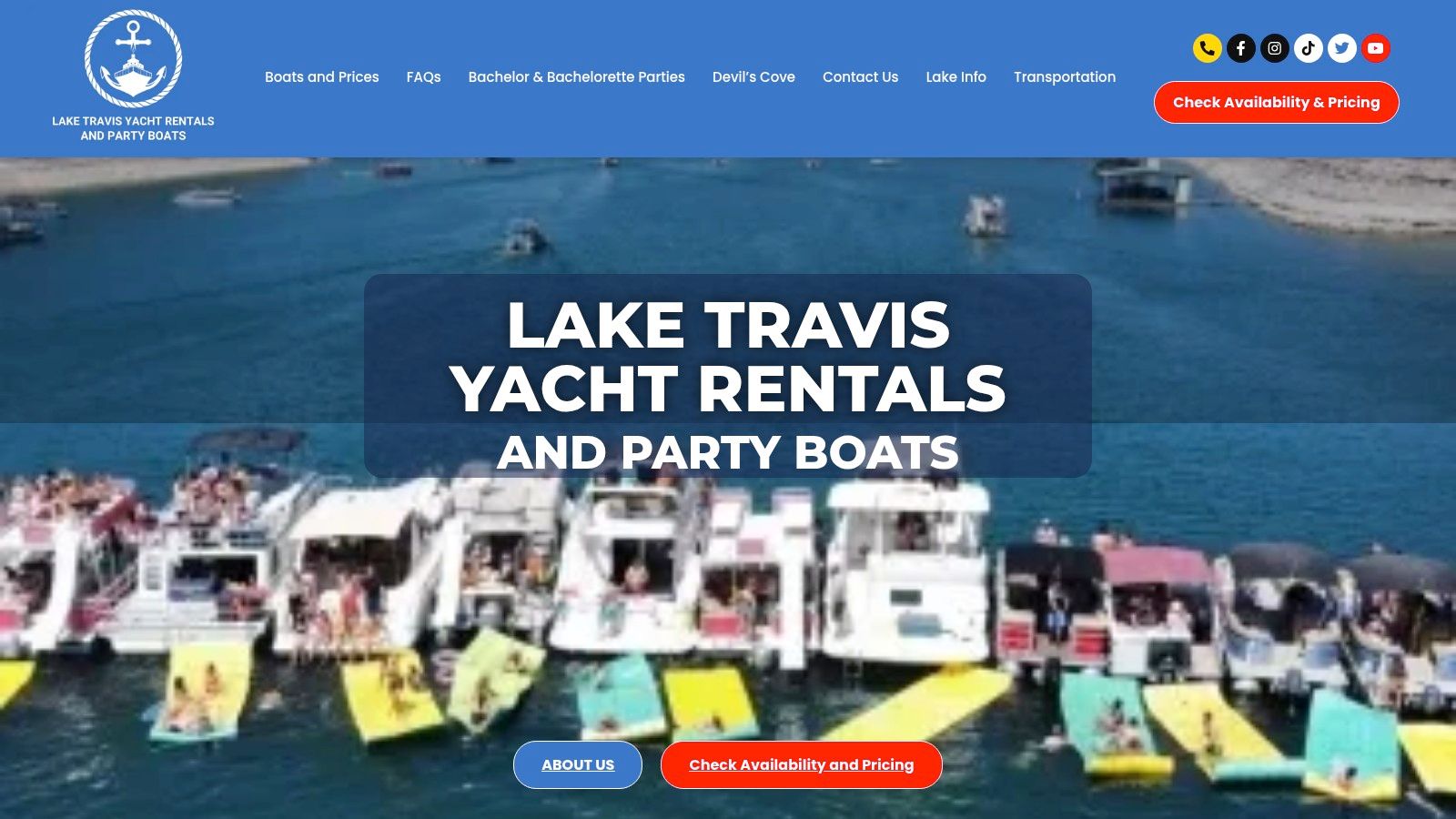
A premium pontoon day pays for itself when it removes the friction that threatens the celebration. The captain manages the boat, the group stays together, and the organizer gets to participate instead of troubleshoot. That's the value that a purchase-price comparison often misses.
Book now if you're planning a bachelor or bachelorette party, birthday, corporate gathering, family outing, or Austin visitor itinerary. Choose the date, confirm the group size, and reserve the captained Lake Travis experience before the calendar fills.
Lake Travis Yacht Rentals offers captained luxury pontoons, party boats, and yachts equipped for celebrations, swimming, music, and group time on the water. Visit Lake Travis Yacht Rentals now to match your group with the right boat and reserve your Premier-style Lake Travis day.