You're standing at the marina with a group of friends, coolers packed, speakers ready, and everyone eager to turn a Lake Travis afternoon into a story they'll retell for years. The engine type beneath the deck may not be the first thing anyone asks about, but it can shape the moments that matter, from a smooth departure through a busy cove to confident control near swimmers and docks.
The inboard vs sterndrive decision isn't just a mechanical comparison. It affects party flow, maneuverability, watersports, passenger safety, and the amount of attention a boat needs between outings. For most recreational celebrations, I favor the control and flexibility of a sterndrive. For larger vessels or activities that demand steady, centralized propulsion, an inboard can be the better call.
Setting Sail on Lake Travis
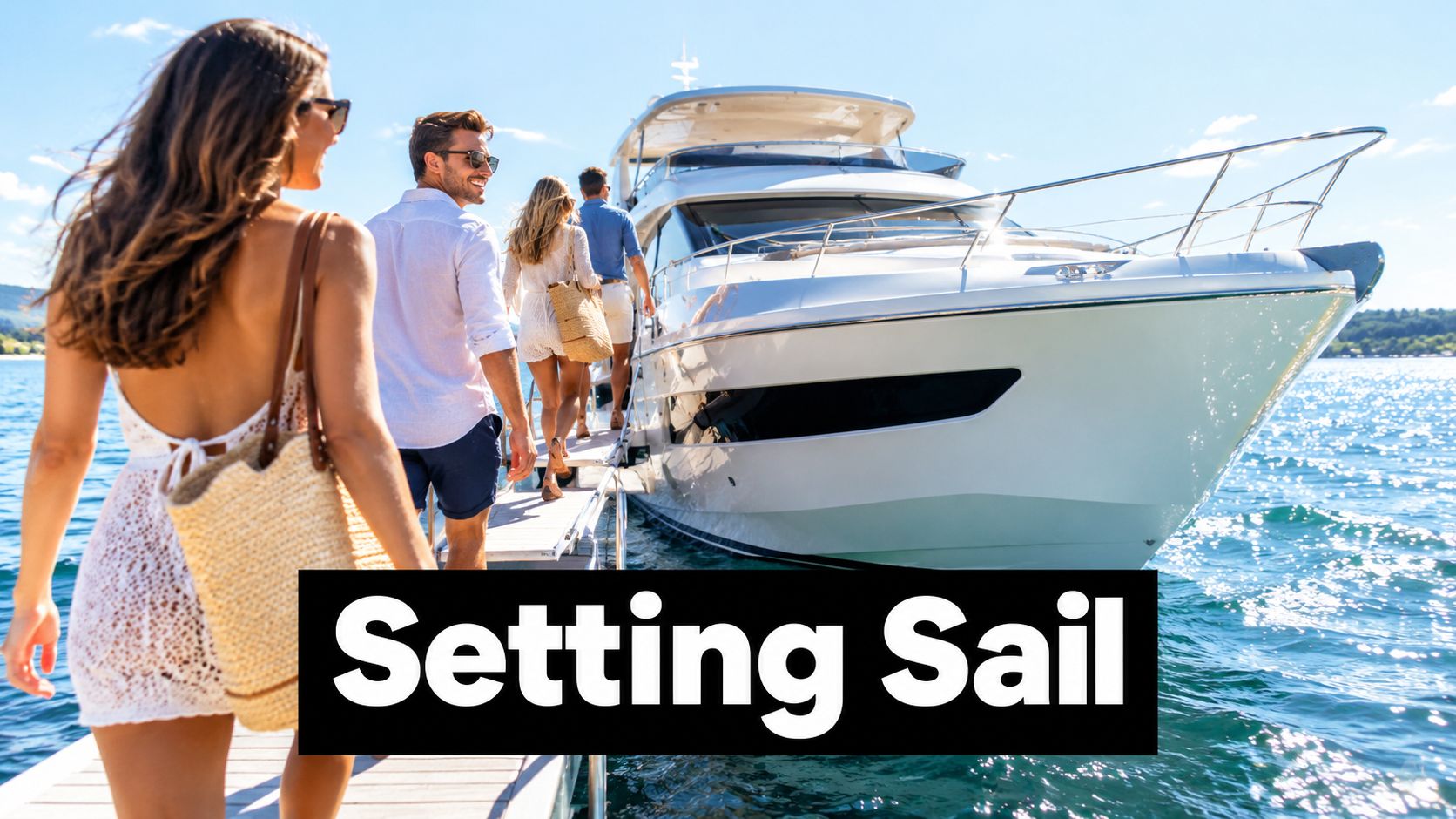
The afternoon starts with bright sun on the water and a dock full of energy. One friend is carrying a cooler, another is filming the boarding scramble, and the guest of honor is already choosing the best seat. Once everyone settles in, the captain eases away from the marina, points the bow toward open water, and the party finally begins.
That first maneuver tells you a lot about a boat. A vessel with responsive low-speed steering can slide away from the dock without drama. A boat with predictable power can bring a large group up to cruising speed without turning the departure into a noisy, jostling event. Nobody at the rail is thinking about propulsion architecture, but everyone feels its effect.
An inboard engine sits inside the hull and generally turns a propeller through a transmission and shaft beneath the boat. The machinery stays protected within the vessel, and the propulsion arrangement suits larger boats that need stable, centralized weight and dependable torque.
A sterndrive, also called an inboard/outboard or I/O, places the engine inside the hull but sends power through a steerable, trimmable drive unit mounted at the transom. That external drive can turn with the steering input and adjust its running angle, giving the captain more control in tight spaces and changing conditions.
For a Lake Travis gathering, the practical question is simple: what will your group do most? If the plan involves frequent docking, beaching, cruising between coves, and keeping a lively crowd comfortable, sterndrive control is hard to beat. If the boat is a larger cruiser built around substantial interior volume and consistent propulsion, an inboard deserves serious consideration.
| Party priority | Inboard | Sterndrive |
|---|---|---|
| Low-speed maneuvering | Predictable, but relies on a fixed propeller and rudder | Strong directional control from the steerable drive |
| Trim control | Fixed shaft angle | Adjustable drive angle while underway |
| Interior arrangement | Engine and drivetrain remain inside the hull | Engine is inside, drive passes through the transom |
| Best fit | Larger vessels and steady propulsion needs | Recreational boats, runabouts, and flexible day outings |
| Main maintenance focus | Shaft seals, bearings, transmission, cooling | Bellows, gimbal bearing, joints, steering, and shift components |
The right rental boat should make the celebration feel effortless. Nobody wants to spend the best part of the day worrying about whether the boat can turn cleanly, reach a shallow cove, or handle a crowded swimming area. Engine choice matters because smooth operation protects the fun.
Understanding Inboard and Sterndrive Engines
A crowded Lake Travis party exposes an engine layout's strengths quickly. The captain needs predictable control near docks, swimmers, and busy coves, while guests need steady movement and usable space. Engine placement affects how easily the boat handles those moments.
An inboard keeps its engine inside the hull, usually near the center. Power travels through a transmission to a fixed propeller shaft, and a rudder behind or near the propeller directs the boat. The propeller itself does not pivot, so turning depends on redirecting water flow rather than pointing thrust toward the turn.
That arrangement gives larger boats a centralized propulsion system and protects the propeller within the hull. It suits vessels built for substantial interior volume, steady cruising, and heavy-duty use. In a packed party boat, though, the fixed shaft demands more planning around docks and other boats.
A sterndrive keeps the engine inside while placing the drive leg and propeller outside the hull through the transom. The drive pivots, directing thrust into the turn, and its trim function changes how the boat runs. That combination gives the captain more control during busy event days, especially when guests are moving around the deck.
The modern sterndrive developed as a hybrid of inboard power and outboard maneuverability. Volvo Penta introduced the Aquamatic sterndrive commercially at the 1959 New York Motor Boat Show, followed by Kiekhaefer's MerCruiser outdrive at the 1961 Chicago Boat Show. By 1962, approximately 20 manufacturers were producing sterndrive systems, according to that historical account.
Why the hybrid design caught on
The engine stayed inside the hull, while the externally mounted lower unit remained steerable and trimmable. Recreational boats gained internal engine torque with outboard-style steering and trim control, a useful combination for runabouts and flexible day outings.
The format suited trailerable recreational boats during the late 1950s and early 1960s. Outboards were gaining power, while sterndrives delivered higher horsepower in compact packages. Mercury Marine took 24 years to sell its first million sterndrive units, then reached its second million in 10 years, according to this documented history of sterndrive adoption. That adoption gave sterndrives a lasting role in mid-sized recreational boating.
For a rental group, the choice is practical. An inboard provides stable, centralized propulsion. A sterndrive lets the captain aim thrust and adjust the hull's running attitude, which can make loading, repositioning, and party cruising easier. This inboard and outboard comparison also shows how engine placement changes the boating experience.
Performance and Handling Showdown
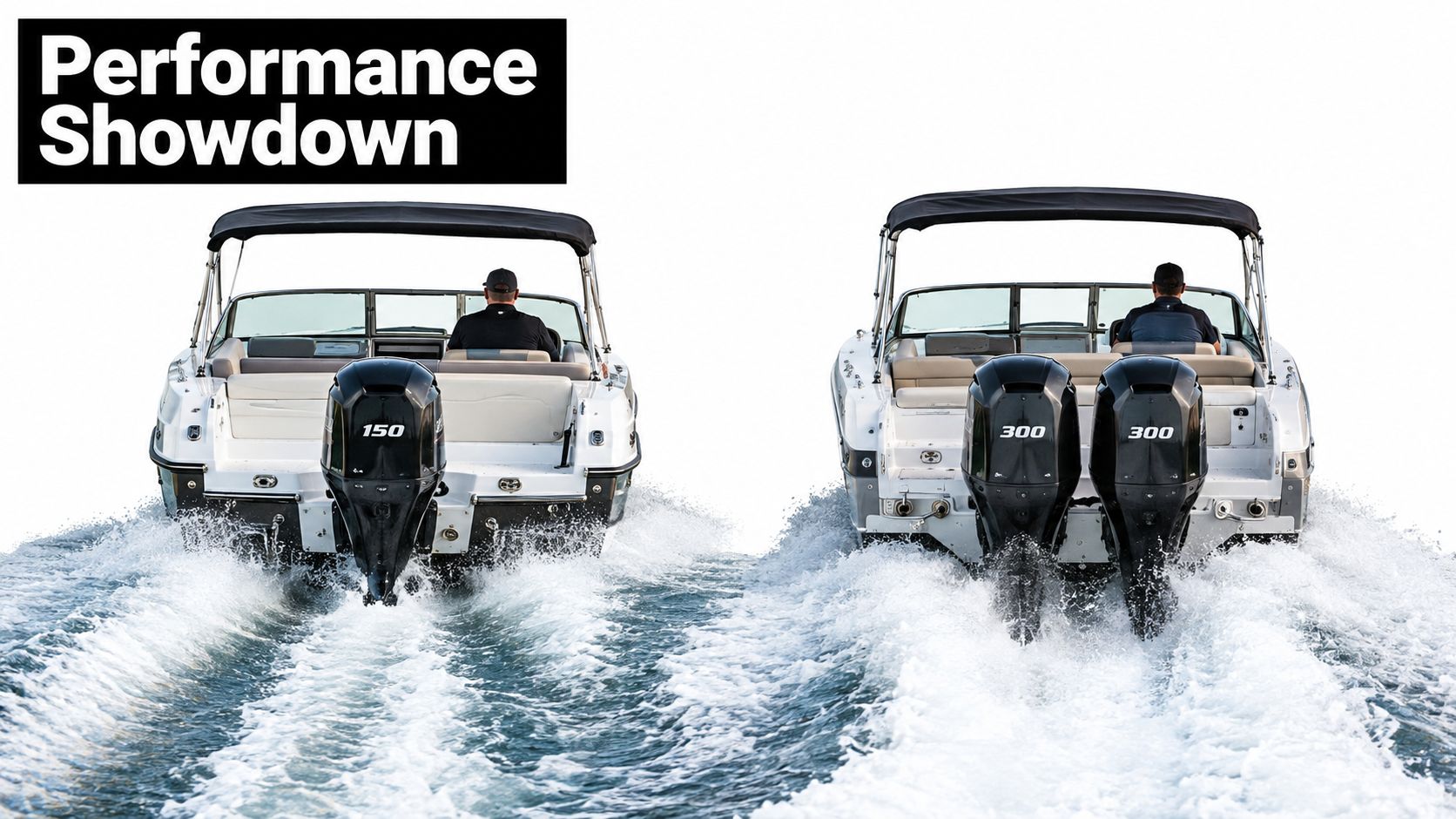
For a large party, handling matters most when the boat is moving slowly. Leaving a dock, approaching a floating platform, circling swimmers, and settling into a crowded cove demand precision rather than maximum speed.
A straight-shaft inboard produces thrust along a fixed line. The rudder redirects the water flow behind the propeller, but the captain can't point the propeller itself toward the turn. That setup can feel steady and predictable, especially on a larger vessel, but it may require more planning in tight quarters.
A sterndrive sends directional thrust from the drive unit itself. Because the drive pivots, the propeller helps pull the stern around during a turn. The result is typically sharper low-speed maneuverability than a conventional straight-shaft inboard using a fixed propeller and rudder, as detailed in this sterndrive technical guide.
Trim changes the party experience
A sterndrive's trim function changes the propeller thrust angle and the hull's running attitude. Raising the drive at planing speed can reduce wetted resistance, improve acceleration or top-speed efficiency, and reduce draft for shallow-water operation or beaching.
That flexibility gives a captain more options as the day changes. The drive can be adjusted for a fast run across open water, then repositioned for a controlled approach to a shallow shoreline. Guests may only notice that the boat feels smoother, quicker to plane, or easier to settle into a comfortable cruising posture.
The trade-off is hardware exposure. The gimbal housing, universal joint, bellows, and steering components sit at the transom and require careful inspection and corrosion control. Saltwater and brackish environments are especially demanding, although every sterndrive deserves disciplined service.
Captain's rule: Use trim as a running adjustment, not as a substitute for safe speed, proper lookout, or careful depth awareness.
An inboard can still be the superior choice when the boat's mission favors steady power and a protected propulsion system. Larger vessels, heavy-duty boats, and designs built around centralized weight often benefit from the fixed shaft arrangement. The shaft and propeller remain beneath the hull, and the engine stays inside the boat.
For recreational party use, though, I usually put maneuverability first. A captain who can control thrust direction and trim has more tools for managing a crowded anchorage and keeping a group's movement predictable. Read this guide to how fast boats go for broader context, but remember that an exciting day depends on control as much as speed.
Maintenance, Costs, and Safety Considerations
A rental boat must be ready before guests arrive, not merely powerful enough to move once it leaves the dock. Maintenance differences between inboards and sterndrives directly affect reliability, scheduling, and the chance of an avoidable interruption during a celebration.
Sterndrives have a distinctive service burden because the internal engine connects to an external drive through several wear points. These include rubber bellows, a gimbal bearing, universal joints, and shift components. Bellows typically require replacement every 4 to 6 years, and a combined bellows-and-gimbal repair commonly costs about $600 to $1,200, according to this maintenance comparison for inboard and sterndrive boats. Broader repairs can cost substantially more when bearings, joints, or cables also need attention.
Inboards avoid the transom-pivoting drive and therefore don't use sterndrive bellows. They still need care, however. Shaft seals, cutless bearings, transmission oil, and raw-water cooling systems all deserve regular inspection. A protected engine room doesn't eliminate maintenance. It changes which components receive the captain's attention.
| Aspect | Inboard | Sterndrive |
|---|---|---|
| Main inspection areas | Shaft seals, cutless bearings, transmission oil, raw-water cooling | Bellows, gimbal bearing, universal joints, steering, and shift components |
| Exposed underwater hardware | Shaft, propeller, and rudder remain beneath the hull | Drive hardware passes through the transom and remains exposed |
| Common rental concern | Access to internal components and shaft-system condition | Corrosion, bellows condition, and drive-joint wear |
| Service planning | Focus on shaft alignment and cooling-system reliability | Schedule drive inspections and replace worn connection parts |
| Best operational habit | Keep documented engine and shaft service records | Inspect the transom drive carefully before high-use periods |
Safety belongs in the engine decision
Federal U.S. boating guidance treats gasoline-powered inboard and inboard/outboard boats as a specific safety category. Those boats must have an approved backfire flame-control device, which helps prevent an engine backfire from igniting gasoline vapors in the engine compartment. BoatUS safety guidance also states that boats under 20 feet with an inboard, outboard, or sterndrive engine manufactured after November 1, 1972, must display a capacity plate showing safe loading limits under the Federal Boat Safety Act of 1971.
The party captain still has to manage the basics. Keep passengers within the vessel's stated capacity, distribute people sensibly, keep walkways clear, and make sure everyone knows where to sit during acceleration and maneuvering. The propulsion system supports safety, but it doesn't replace good judgment.
Rental standard: Ask about documented service, safety equipment, and the captain's operating plan before you focus on speakers, slides, or swim toys.
If you're operating or evaluating an inboard, this guide to recommended maintenance for an inboard boat provides a useful service perspective. The key takeaway is simple: both systems can serve a party well when the operator treats preventive maintenance as part of the experience, not as an afterthought.
Ideal Use Cases for Parties and Events
The best engine depends on what guests will do after boarding. A quiet sunset cruise, a full-day birthday gathering, and an active watersports outing place different demands on the hull, the cockpit, and the propulsion system.
For a large social group moving between coves, a sterndrive is often the more flexible choice. The steerable drive helps the captain make deliberate low-speed corrections around docks, swimmers, floating platforms, and other boats. Trim control also gives the helm more influence over acceleration, running attitude, and shallow-water approaches.
That flexibility matters during a party because people don't stay still. Guests stand, sit, take photos, move toward the swim platform, and gather around the music. The captain needs a boat that responds cleanly without turning every adjustment into a dramatic event.
When an inboard makes more sense
An inboard earns its place on larger vessels and boats designed around steady, centralized propulsion. The engine, shaft, propeller, and rudder arrangement can suit a substantial cruiser or a boat where protected underwater hardware and consistent power matter more than trim flexibility.
Inboards also make sense when the boat's primary activity depends on controlled, repeatable thrust rather than frequent shallow-water maneuvering. A captain may prefer the predictable feel of a fixed shaft when handling a larger vessel with a settled cruising rhythm.
When a sterndrive wins the day
Choose a sterndrive for a recreational outing that combines cruising, swimming, dock approaches, and changing locations. It's especially attractive for a group that wants an energetic day without giving up control.
The broader fleet context helps explain why these categories feel different in the market. An EPA regulatory record reports approximately 16 million recreational boats in use, with outboards representing 50% of the installed market, inboards 11%, and sterndrives 9%. The same record reports more than 3.5 million inboard engines, showing the substantial installed base behind internal engine layouts. See the EPA regulatory record on recreational marine engines for that baseline.
Don't choose by engine label alone. Match the boat to the guest list, the planned stops, the need for watersports, the available seating, and the captain's ability to manage the vessel. A spacious deck and a skilled operator often matter more to party satisfaction than a small difference in propulsion architecture.
Your Guide to Booking the Perfect Boat
Start with the event, not the engine. A birthday group that wants music, swimming, refreshments, and easy movement around the boat needs a different layout from a smaller crew planning a fast recreational run.
For most Lake Travis parties, my recommendation is direct: prioritize a well-maintained sterndrive when nimble handling and trim control are central to the day. Choose an inboard when you're booking a larger vessel whose design, stability, and steady propulsion match the group's plans.
Before reserving, ask the operator a few practical questions:
- Group fit: Does the seating and deck layout give everyone room to move comfortably?
- Party rhythm: Can the boat support swimming, cruising, music, and relaxed stops without constant repositioning?
- Captain coverage: Is the vessel operated by a qualified captain who knows the lake and the boat's handling characteristics?
- Safety preparation: Are capacity information, required safety equipment, and maintenance records handled professionally?
- Onboard convenience: Are coolers, restrooms, swim accessories, and sound equipment suited to the event?
A memorable outing doesn't come from chasing specifications. It comes from putting the right people on the right boat, with a captain who can manage the vessel smoothly and keep the group focused on the celebration. Ask about the propulsion system, but judge it alongside the boat's size, layout, condition, and intended use.
The strongest rental experience removes friction before the group even leaves the dock. Clear booking details, an appropriate vessel, experienced crew, and a plan for swimming and cruising let the organizer relax instead of troubleshooting every decision in real time.
Lake Travis Yacht Rentals offers captain-led luxury yachts, double-deck party boats, and premium pontoons suited to birthdays, bachelor and bachelorette parties, family gatherings, and corporate events. Visit Lake Travis Yacht Rentals now to match your group with a comfortable, well-equipped boat and reserve your Lake Travis celebration before your preferred date is gone.