The calendar invite says “team social,” but everyone knows the usual script. A rented room. A tray of sandwiches. A few polite conversations. People check their phones, drift into work talk, and leave without much changing.
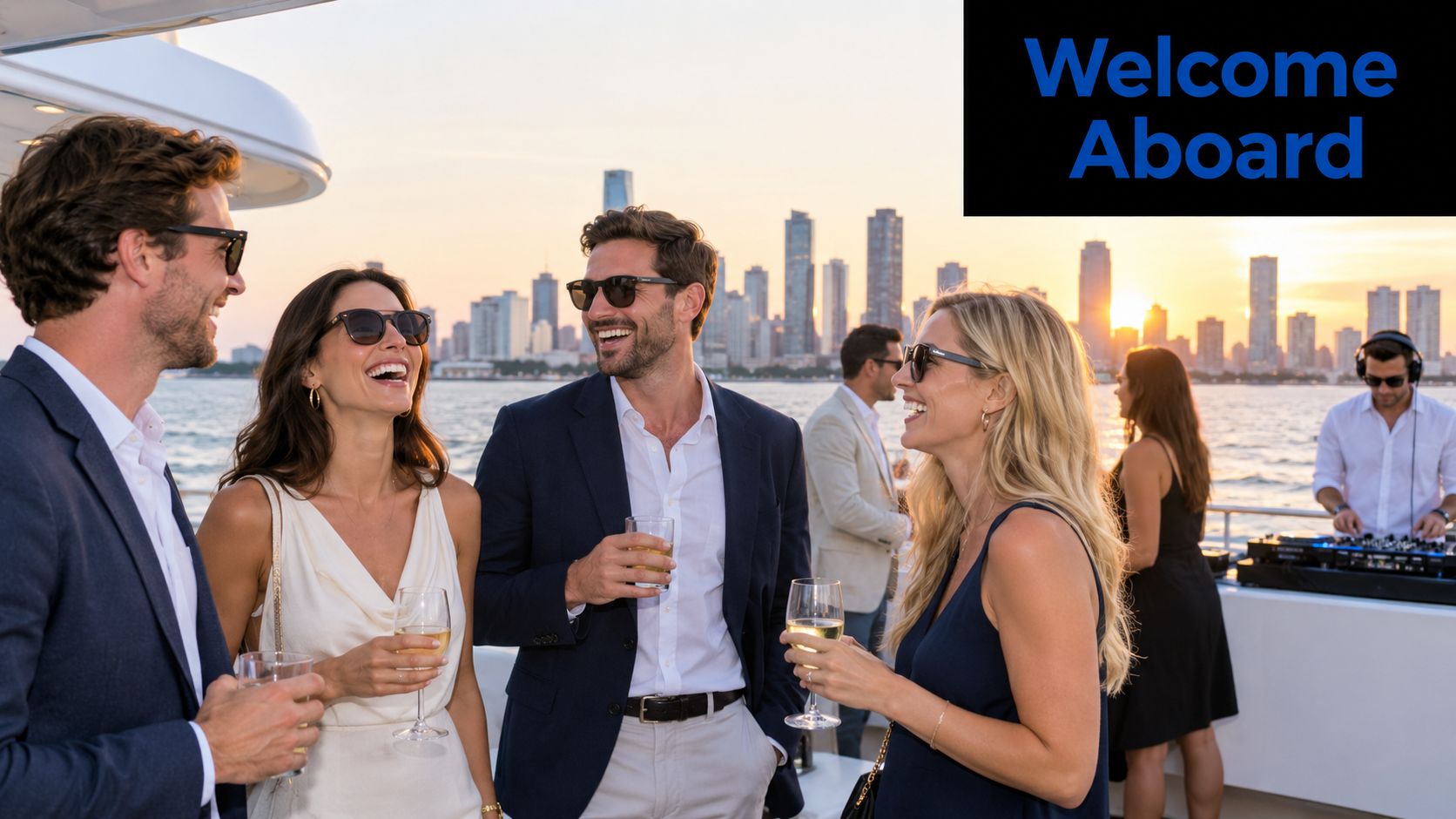
Now swap that setting for open water. Your guests step aboard, music is already playing, drinks are cold, the shoreline starts sliding by, and the stiff conference-room energy disappears before the boat leaves the dock. People who barely talk in the office end up laughing on the upper deck. The client you wanted more time with stays in the conversation. Your leadership team gets a setting that feels relaxed without feeling sloppy.
That's why a corporate boat cruise works so well. It isn't just a prettier backdrop. It's a floating venue strategy that changes how people interact, how long they stay engaged, and how memorable the event becomes.
This guide is for the planner sitting between excitement and logistics. Maybe you're organizing a client appreciation outing, a leadership retreat, a recruiting event, a holiday celebration, or a team-building day on Lake Travis. You want something fresh, but you also need it to be practical, compliant, comfortable, and easy to explain to the people approving the spend.
A lot of guides stop at “boats are unique.” That's not enough. You need to know when a boat beats land, which format matches your goal, what shapes cost, what passenger rules matter, and how to book without last-minute surprises.
Introduction to Your Next Corporate Boat Cruise Adventure
A good corporate boat cruise starts before anyone boards. It starts the moment your team realizes this won't be another forgettable event.
One group might come aboard for a sunset thank-you party after a big quarter. Another might use the cruise for a leadership offsite, with the first hour focused on strategy and the second turned into dinner, music, and open conversation. A third might want something looser, with swimming, a rooftop deck, and just enough structure to keep the day moving. Same category. Very different goals.
That range is part of the appeal. The cruise world is large enough to support polished group experiences at scale. The Cruise Lines International Association reported 31.7 million global ocean-going cruise passengers in 2023, up from 29.7 million in 2019, while 18.1 million of those passengers came from North America compared with 15.4 million in 2019. It also reported a record 34.6 million global ocean-going passengers in 2024 and projected 37.7 million in 2025 across 310 ocean-going vessels in its State of the Cruise Industry reporting.
Why this feels different right away
A land venue asks people to arrive, settle down, and wait for the event to begin. A boat creates movement from the first minute. Boarding feels like the opening scene, not administrative setup.
That shift matters for corporate groups because people loosen up faster when the setting already feels like an experience. You don't have to manufacture energy. The water, the views, the fresh air, and the private atmosphere do a lot of the heavy lifting.
A strong boat event doesn't feel like work with a better view. It feels like a reward with a purpose.
Who gets the most from it
Corporate boat cruises work especially well for:
- Team-building coordinators who want people interacting naturally instead of forcing icebreakers
- Executive hosts entertaining clients or partners in a setting that feels refined
- HR and culture teams planning milestone celebrations, recruiting events, or recognition outings
- Office managers and operations leads who need something memorable without turning logistics into a second job
If you're in that seat right now, you're not just booking a boat. You're choosing a venue that moves with your event instead of asking your event to fit a fixed room.
What a Corporate Boat Cruise Really Is and How It Works
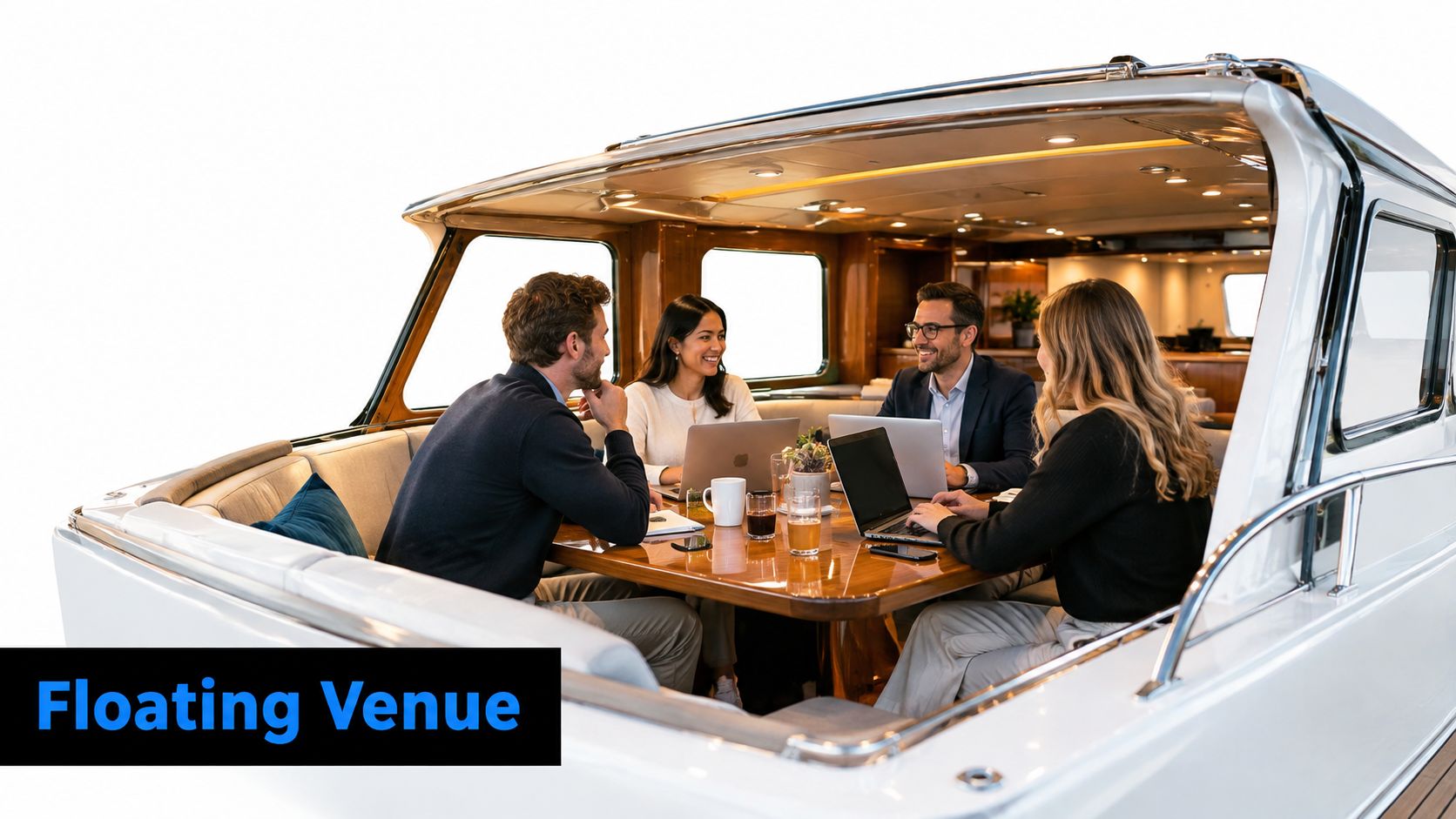
A corporate boat cruise is easiest to understand if you think of it as a private event venue that happens to float.
You reserve the vessel for your group, board at a scheduled time, and use the space the way you'd use a private room, rooftop lounge, or hospitality suite. The difference is that the venue itself creates the atmosphere. The scenery changes. The route adds rhythm. Guests feel like they're part of something unfolding, not just attending another booked space.
The simple venue analogy
A hotel ballroom is like a blank page. You bring the mood to it.
A corporate boat cruise is more like a stage set that's already alive. You still choose the guest list, timeline, food, music, and tone, but the lake supplies the backdrop, the movement, and the sense of escape.
That's why planners often use boat charters for events that need one of three things:
- Stronger attention
- Better mingling
- A more memorable thank-you or celebration
How the event usually flows
Most first-time planners worry the experience will feel complicated. In practice, it's usually straightforward.
Step one is boarding. Guests arrive, check in with the host, step aboard, and get oriented. On a fully captained charter, your team doesn't operate the boat.
Step two is settling in. People claim seats, connect to the vibe, and start circulating. Music, drinks, snacks, and introductions help set the tone.
Step three is the cruise itself. Depending on your plan, this might include casual networking, a short welcome talk, sightseeing, swimming time, dockside socializing, or a mix of all of them.
Step four is return and wrap-up. Because everyone leaves from the same point, endings tend to be cleaner than at sprawling land venues where people disappear into side conversations and parking lots.
Who does what onboard
Three roles matter most.
- Captain: Handles navigation, safety, and vessel operation.
- Crew: Supports boarding, onboard flow, guest comfort, and event rhythm where applicable.
- Charter host or event organizer: Manages the guest experience, schedule, communication, and any company-specific agenda items.
Practical rule: If you want your team to relax, make sure one person owns the event flow so the captain can focus on the boat and the organizer can focus on the people.
What's usually included
Inclusions vary by operator, but the concept becomes less mysterious once you know what to ask about. A charter may include seating areas, shade, a sound system, restrooms, coolers, float gear, or water toys. Some Lake Travis event boats are built for high-energy groups and include features such as rooftop hangout space or waterslides. Others are better for conversation-heavy outings where comfort and layout matter more than spectacle.
The key is not asking, “Is a boat enough?” The better question is, “Does this vessel support the way we want our guests to spend the day?”
Types of Corporate Cruises and Which Fits Your Goals
Not every corporate boat cruise should feel like a floating party. Some should feel polished and quiet. Others should feel celebratory, social, or adventurous. The right format depends on what success looks like when your guests step back onto the dock.
Matching the event to the boat
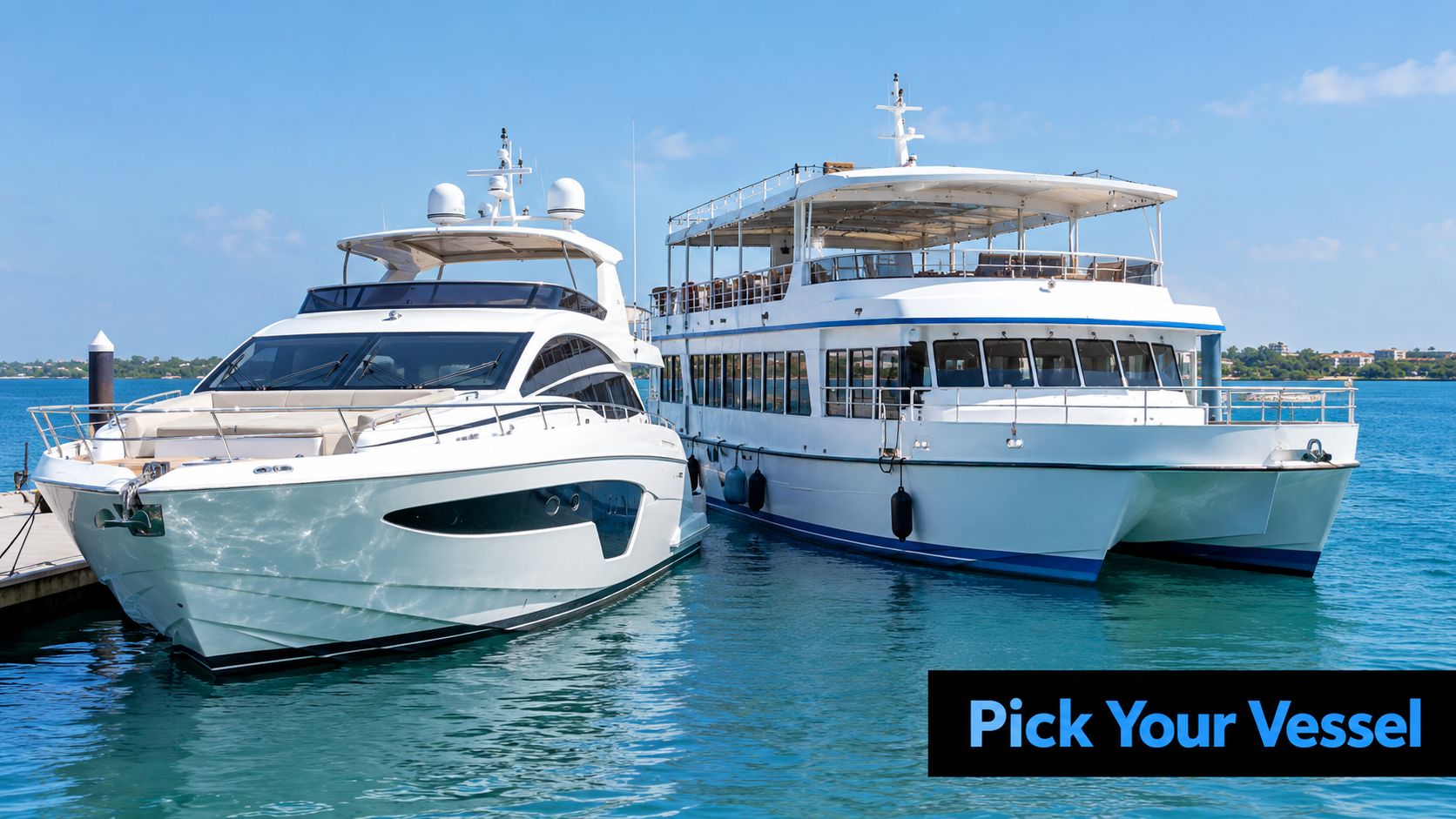
An executive retreat usually needs privacy, comfortable seating, and room for focused conversation. A client entertainment cruise leans harder on scenery, hospitality, and a polished atmosphere. A team-building outing may benefit from a double-deck layout, water access, and a looser timeline.
The trick is to pick the format based on behavior, not labels. Don't ask only what sounds impressive. Ask what you want guests doing most of the time.
| Choosing Your Corporate Cruise Format | Best For | Group Vibe | Ideal Duration |
|---|---|---|---|
| Executive retreat cruise | Leadership planning, partner discussions, strategy sessions | Calm, focused, private | Half day |
| Client entertainment cruise | Relationship building, hospitality, deal conversations | Polished, conversational | Sunset or evening |
| Team-building adventure cruise | Internal bonding, morale, company culture | Active, playful, social | Half day to extended outing |
| Sunset cocktail cruise | Celebrations, appreciation events, recruiting socials | Stylish, relaxed, upbeat | Evening |
| Dockside party option | Networking without as much motion, easy come-and-go feel | Casual, accessible, flexible | Short to medium event |
Quick decision filters
Use these filters when you're choosing.
- If conversation is the goal, choose a vessel with distinct seating zones and a smoother, quieter atmosphere.
- If celebration matters most, look for a bigger social deck, stronger audio setup, and space to move.
- If you want team bonding, pick a format that gives people shared moments to react to together, whether that's a cruise route, swim stop, or onboard activity.
- If some guests may be uneasy about motion, a dockside event or calmer cruise format can remove friction.
One overlooked option is the dockside party. U.S. Coast Guard charter guidance specifically includes charters such as fishing trips, sightseeing tours, dinner or sunset cruises, and dockside parties, while also noting that a vessel must be inspected to carry over six passengers when crew is provided in these charter settings, as outlined in this U.S. Coast Guard chartering guidance. That matters because some groups love the boat atmosphere but want less movement or simpler accessibility.
When water beats land
A boat usually wins when you want to compress distraction. People can't scatter across a giant property. They stay in the same shared environment, which naturally strengthens conversation density.
It also wins when your event needs a clean emotional shift. As soon as guests board, they know they're somewhere different.
If you're collecting ideas before locking your format, this roundup of unique corporate event ideas on Lake Travis can help you compare boat-based events with other group experiences.
Why Teams Love Trading Conference Rooms for Open Water
Some venues make people behave the same way they do at work. That's the problem.
A conference room keeps hierarchy visible. The senior team sits one way, everyone else reads the room, and conversation narrows. On a boat, people move around. They stand at the rail together. They react to the setting together. The social script softens.
The water changes the tone
Open water gives people something to share that isn't a spreadsheet or slide deck. That shared attention often makes conversation easier, especially for mixed groups who don't all know one another well.
A sunset, a cove stop, a great playlist, a toast on deck. Those moments create natural openings. Guests don't have to work as hard to connect.
People rarely remember the banquet chair covers. They remember the moment the whole team turned to watch the sun drop over the lake.
Real outcomes planners care about
The benefits aren't just emotional. They're operational.
- Better attendance energy: When the invitation itself sounds fun, people show up with more interest.
- Stronger cross-team mingling: A contained deck encourages movement and repeat interactions.
- Built-in entertainment: The venue does part of the hosting job for you.
- Employer-brand moments: Photos from the water look like your company values experience, not just obligation.
The boating and cruise sector also sits inside a serious service economy. CLIA reported over $168 billion in global economic impact in 2023 and about 1.6 million jobs worldwide, then reported $198 billion globally in 2024, 1.8 million jobs, and $60 billion in wages. It also said the U.S. cruise industry produced $75 billion in economic impact, supported 333,000 jobs, and generated more than $25 billion in wages, according to its 2025 cruise industry report. For corporate planners, that scale signals mature hospitality infrastructure rather than a novelty product.
Why novelty matters more than people admit
Novelty isn't fluff. It helps break routine.
When employees or clients step into a setting they don't expect, they become more present. They look up. They talk longer. They tell other people about it later. That afterglow matters if you're trying to reward a team, strengthen a relationship, or make your company feel more magnetic.
If your main goal is team connection, this guide to corporate team-building events on Lake Travis gives a useful lens for thinking about what kind of shared experience gets people interacting.
Capacity Pricing and What Shapes Your Charter Cost
Boat charter pricing feels mysterious when all you know is the event idea. It gets much simpler once you break it into moving parts.
The first driver is vessel type. A compact yacht, a premium pontoon, and a large double-deck party boat create very different experiences and require different operating setups. The second driver is guest count, because capacity affects both vessel choice and the rules your operator must follow.
Capacity rules that matter
Passenger limits aren't just a preference. They're part of charter compliance.
U.S. Coast Guard guidance says a vessel used as a charter vessel with no crew provided is limited to 12 passengers, while an uninspected passenger vessel under 100 gross tons may carry up to 6 passengers and an uninspected passenger vessel at 100 gross tons or more may carry up to 12 passengers, according to this U.S. Coast Guard requirements summary.
In Washington state, charter boats for hire carrying seven or more passengers fall under specific safety requirements unless they're already regulated by the U.S. Coast Guard. The rules also state that a person may not rent, lease, advertise, or arrange carriage of more than six passengers on a fee-based charter boat unless the vessel has a valid inspection certificate allowing it to carry more than six passengers, as stated in the Washington charter boat safety rules.
For a planner, the takeaway is simple. Guest count changes compliance, and compliance changes which boats are even options.
What else affects cost
After capacity, the main cost factors are practical:
- Duration: Longer charters generally mean more vessel time, crew time, and event complexity.
- Day and season: Prime dates usually disappear first, especially weekends and high-demand periods.
- Onboard style: A meeting-forward cruise has different needs than a swim-and-party outing.
- Food and beverage approach: Catered service, stocked coolers, and specialty requests change the quote.
- Add-ons: Features like waterslides, upgraded sound, float gear, or premium hospitality touches can shift the package.
Questions that keep budgeting clean
Before you commit, ask these in plain language:
- What's the legal passenger capacity for this specific vessel and setup?
- What's included in the charter base price?
- When is the deposit due?
- When is the final balance due?
- When do we have to guarantee the headcount?
One corporate charter operator in Vancouver states that tentative bookings can be held at no charge, but if a second request comes for the same date and time, a deposit is required within one working day to confirm. It also states that the deposit is generally one-third of the total charter rate or a flat $1,500, that the balance is due two weeks before the charter, and that the guest-count guarantee is due no later than five days before the cruise date, according to its corporate event booking details.
Budget tip: Ask for the timing rules as early as you ask for the boat. Deposit and headcount deadlines can shape your internal approval plan just as much as the event price itself.
How to Choose a Provider and Plan Logistics Like a Pro
A corporate boat cruise feels effortless for guests when the planner gets a few key decisions right. You separate a smooth charter from a stressful one.
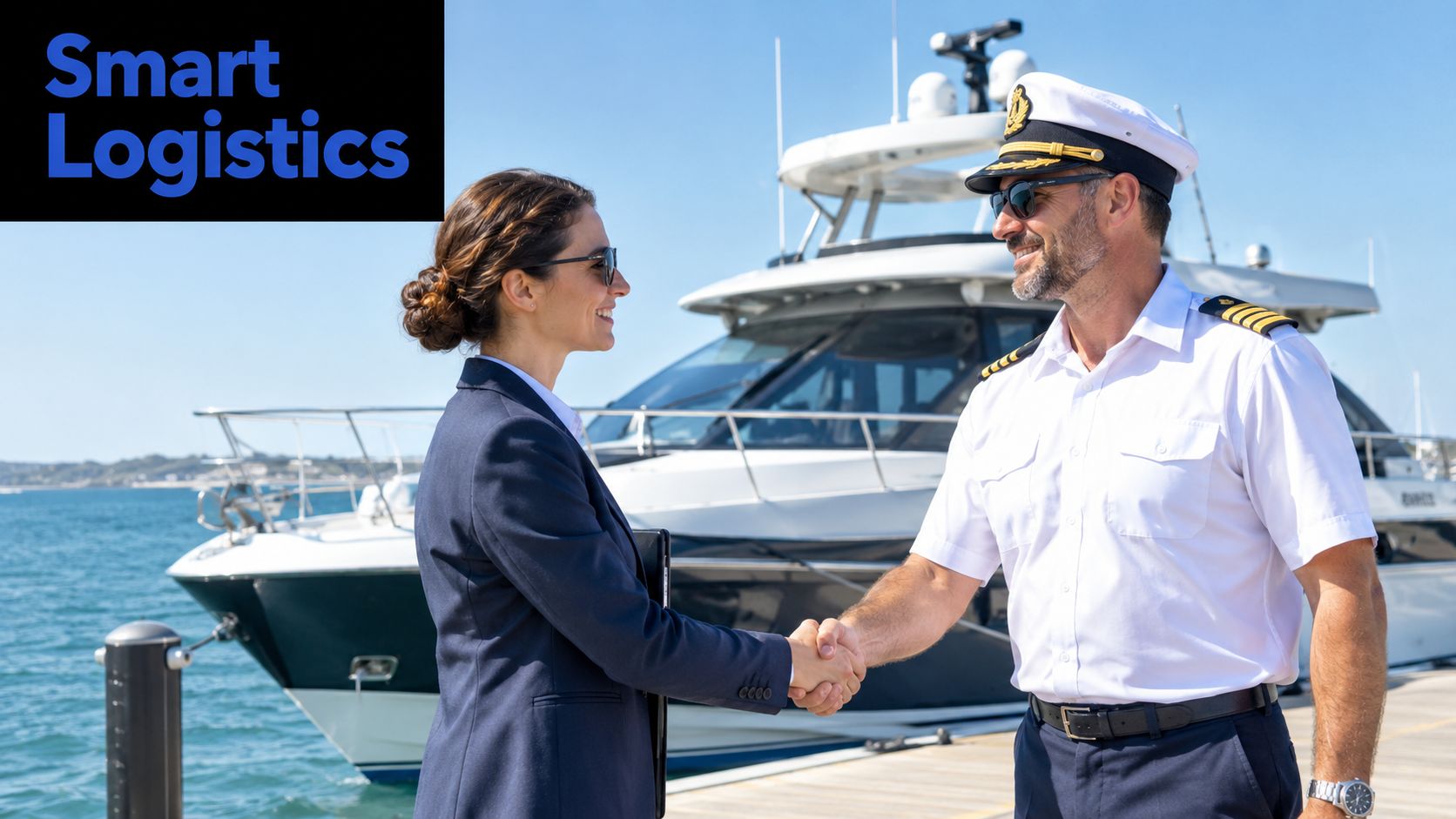
The provider checklist
Start with the people and the platform, not just the photos.
- Captains and safety standards: Ask who operates the vessels, how staffing works, and how the company handles guest safety.
- Fleet fit: Make sure they offer more than one style of boat so you're not forcing your event into the wrong format.
- Booking clarity: A clean online booking system and easy quote process usually signal better operational discipline.
- Transparent reviews: Look for detailed guest feedback about boarding, communication, and day-of execution.
- Event readiness: Ask whether the operator regularly handles corporate groups, not just leisure parties.
One option in this space is Lake Travis Yacht Rentals, which offers fully captained charters on Lake Travis with features such as Bluetooth stereos, private restrooms, coolers, and water toys across different vessel styles. That's useful if your event needs a provider with multiple onboard setups rather than one single boat model.
The logistics checklist
Planners usually overcomplicate things. Keep it simple and sequential.
Start with the timeline. Lock the date, then choose a start time that matches your event mood. Daylight works well for team-building and swim time. Sunset works beautifully for clients and appreciation events.
Then handle boarding. Share one clear arrival window, parking instructions, what to bring, and what guests should expect when they step aboard.
Next, pressure-test comfort. Ask about shade, restroom access, seating, motion sensitivity, and accessibility. A boat can be magical and still be the wrong fit for a guest list if those basics are ignored.
Sustainability filters people skip
Sustainability questions are showing up more often in corporate planning, and they should. Recent market research says 38% of charterers select eco-certified operators and that this segment commands a 12.3% annual growth premium. The same market framing points to hybrid and electric propulsion as an emerging trend in yacht charters, according to this global yacht charters market report.
You don't need to turn your event into an environmental white paper. You do want to ask smart questions:
- Is the operator eco-certified, and what does that certification cover?
- What onboard practices reduce waste or fuel impact?
- Would a greener vessel affect comfort, noise, or guest experience for our group?
Choose sustainability the same way you choose catering or layout. Not as a slogan, but as an operating decision that should match your brand and guest expectations.
If you want a practical run sheet before you book, this corporate event planning checklist is a strong starting point for dates, guest flow, and day-of details.
Your Unforgettable Corporate Cruise Starts Now
The best corporate events do two jobs at once. They make people feel appreciated, and they make your company feel intentional. A corporate boat cruise does both when you choose the right format, match the boat to the goal, and handle the logistics with a steady hand.
Maybe your event needs strategy time with fewer distractions. Maybe it needs client hospitality that doesn't feel stiff. Maybe your team just deserves a day that feels bigger than another catered room. Open water gives you a venue with built-in energy, stronger shared attention, and a natural sense of occasion.
Two sample agendas you can borrow
Half-day team-building cruise
- Arrival and boarding
- Welcome drink and quick kickoff
- Short group activity or team challenge
- Cruise and social time
- Swim or lounge break
- Return with snacks, music, and photos
Sunset client entertainment cruise
- Guest arrival and polished welcome
- Easy first round of drinks and introductions
- Scenic cruising during prime light
- Light bites and conversation windows
- Sunset toast
- Return to dock with a clean close
Recent market research also points to growing corporate demand in yacht charters. One report says corporate events account for about 21.3% of business-yacht revenues in 2025, while another places corporate charter applications at 23.8% of market share, valued at about $2.19 billion in 2025, according to the global business yachts market report. Those figures don't mean every company should book a boat. They do show that more event buyers are treating the water as a serious venue choice, not a side idea.
The right corporate cruise isn't just memorable because it's on a boat. It's memorable because the format, the guest list, and the setting finally line up.
If you're already picturing your crew on deck, don't let the idea sit in a draft folder. Good dates go quickly, and the best events usually start with one simple move. Check availability, choose the format that fits your goal, and get your charter on the calendar.
Lake Travis Yacht Rentals offers fully captained corporate boat cruise options on Lake Travis, including yachts, party boats, and pontoons set up for everything from executive outings to high-energy team events. If you're ready to turn “we should do something different” into an actual booked date, take a look at Lake Travis Yacht Rentals and lock in your event while your preferred schedule is still open.