You've got the cooler packed, the kids are asking when they can swim, and somebody has already forgotten where the sunscreen went. The question isn't whether Lake Travis can deliver a memorable family day. It can. The key question is which boat gives your crew enough room, shade, stability, swim access, and freedom from the helm.
After matching families to lake vessels for years, my advice is direct: don't buy a boat or tow one to the ramp before you know what your family needs. Book a captained charter first. You'll learn quickly whether your crew belongs on a pontoon, tritoon, deck boat, bowrider, or yacht, without spending the day navigating, docking, fueling, or managing a toddler near the swim ladder.
A Saturday Morning on Lake Travis With Your Family
At around nine on a Saturday morning, the marina is already humming. Your coolers are loaded, the kids have their life jackets on, and a captain is waiting at the dock instead of handing you a checklist and pointing toward a trailer.
The family steps aboard. Someone claims the shaded seat, the teenagers head toward the swim platform, and the youngest child laughs when the first little spray reaches the stern. Then the captain eases away from the slip, and Lake Travis opens ahead, calm and bright in the morning light.
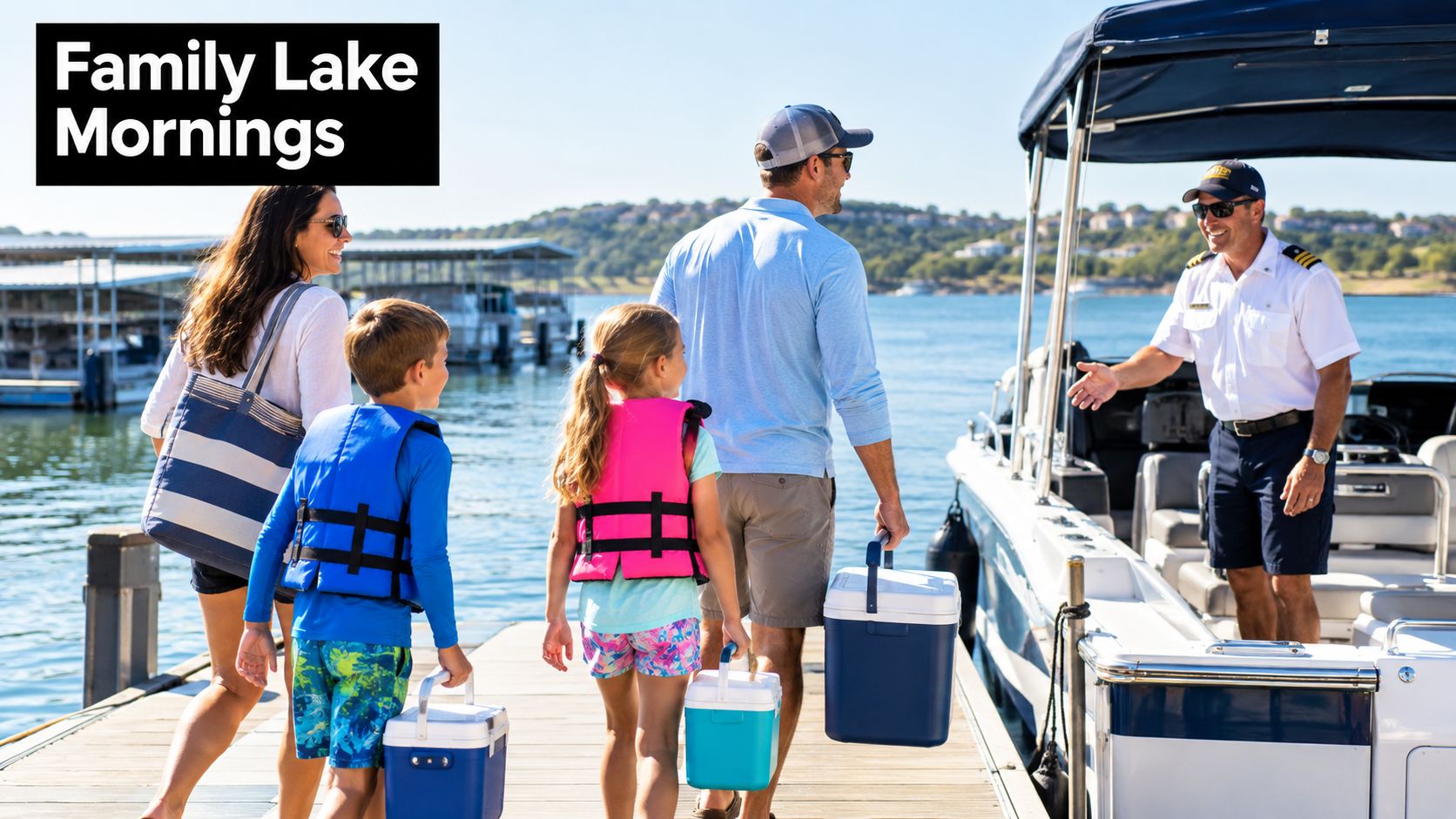
That first push-off changes the entire day. Nobody has to argue over navigation. Nobody has to reverse a trailer while children wait in the car. Nobody has to choose between watching a toddler and checking the chartplotter. Your captain handles the boat while you keep your attention on the people who came with you.
A wakeboard thumps against the water in the distance. Wake spray flashes behind a passing vessel. Your teenager asks about tubing, a grandparent settles into the most comfortable seat, and the toddler's laughter carries across the deck. The boat becomes the setting for the day, not another responsibility.
The best family boat is the one that lets the adults enjoy the family.
That's why the best lake boats for families aren't defined by horsepower alone. They're defined by how easily everyone can board, move, swim, cool off, find shade, and settle in. A captained Lake Travis rental gives you the right platform for the group you brought, with a professional already responsible for the operational details.
Book first, compare later. Once your family has experienced an easy charter, you'll have a much clearer idea of what you'd want to own, if ownership still appeals at all.
The Main Types of Family Lake Boats Explained
Family lake boats serve different crews. Choose by age mix, preferred activities, and how much space your group needs. A toddler-heavy crew needs easy boarding and stable walkways. Teens may want tubing and faster runs. A multigenerational group usually values shade, seating, and simple movement above all else.
Pontoons favor space and easy movement
A traditional pontoon places two tubes beneath a broad, mostly flat deck. The result is stable social seating, open walkways, and straightforward boarding. Toddlers, grandparents, non-swimmers, and families planning relaxed cruises with swimming stops usually fit this profile.
Pontoons generally suit calm-lake cruising at about 18 to 28 mph, according to this pontoon and tritoon family comparison. Choose one for shade, lounge seating, storage, and easy access. It is the practical recommendation for families who want everyone comfortable rather than focused on speed.
For first-time boaters, this guide to a pontoon boat for beginners explains why this format is approachable.
Tritoons add speed and control
A tritoon adds a third tube beneath the deck. That extra support improves handling and ride comfort as conditions get rougher, particularly with a larger group or heavier engine.
With 200 to 300 horsepower, a tritoon can reach 40-plus mph, carry 10 to 14 passengers, and tow more effectively. It is my choice for mixed-age families that want stable seating for younger passengers but also expect tubing, longer runs, or faster cruising. Book this format when your crew wants more activity without giving up the open social layout.
Deck boats balance room and maneuverability
Deck boats pair a relatively open bow with a hull that feels more responsive than a traditional pontoon. Families get forward seating, a practical swim area, and handling suited to cruising and towing.
They work best for families with older children and teens who want activity without losing social seating. Choose another format if maximum deck width, all-day lounging, or effortless movement for a large multigenerational group is the priority.
Bowriders keep active crews engaged
A bowrider places seating in the open forward section and usually uses a single engine. The layout feels lively and connected to the water, making it a strong fit for smaller crews interested in tubing, cruising, and quick changes of direction.
A 20 to 21 foot bowrider typically fits 6 to 8 people, while 22 to 23 foot models accommodate 8 to 10, according to this bowrider capacity guide. Larger models can reach 10 to 12-person capacity, though they may require more substantial towing or a slip-based setup.
Small luxury yachts prioritize comfort
A captained yacht gives families the most complete day on the lake. Depending on the vessel, expect a cabin, enclosed restroom, multiple seating areas, large coolers, a private swim platform, and broader shade coverage.
Yachts suit toddlers, long outings, multi-family groups, and crews that rank comfort above speed. You are booking a floating day base with a captain, not managing a motor, trailer, and seats yourself.
Side by Side Comparison of the Top Family Boat Types
The table below is designed for the decision families face at the dock. Capacity is only one factor. A boat that technically holds your group may still feel cramped once you add coolers, towels, toys, and wet swimmers.
Family Lake Boat Types Compared
| Boat Type | Capacity | Kid Stability | Swim Access | Shade & Cabin | Tubing/Wake | Typical Charter Price |
|---|---|---|---|---|---|---|
| Pontoon | Family-sized group, vessel-specific | Best for easy movement | Low, open boarding and swim areas | Shade commonly available, no cabin on standard layouts | Suitable for relaxed tubing | Varies by vessel and operator |
| T pontoon | 10 to 14 passengers on suitable models | Strong stability with better rough-water control | Broad stern access, often with generous swim space | Shade available, cabin uncommon | Best pontoon-style choice for towing | Varies by vessel and operator |
| Deck boat | Mid-sized active crew | Stable, with more responsive handling | Good swim-platform access | Shade available, cabin uncommon | Strong choice for tubing and active cruising | Varies by vessel and operator |
| Bowrider | 6 to 8 people at 20 to 21 ft, 8 to 10 at 22 to 23 ft | Good for smaller groups | Good stern access, space depends on hull | Bow shade possible, cabin limited | Strong tubing and cruising option | Varies by vessel and operator |
| 40 to 55 ft captained yacht | Large group, vessel-specific | Best overall comfort for mixed ages | Dedicated swim platform and easier supervised boarding | Strongest shade, cabin, and restroom potential | Activity depends on vessel and captain | Varies by vessel and operator |
A pontoon wins the easy-entry contest. If your priority is a toddler stepping through a gate, a grandparent moving without climbing over seats, or a group spreading out with coolers and towels, it's the practical leader.
A tritoon wins the versatility contest. It preserves the pontoon's open layout while giving an active family better performance for towing and rougher water. A deck boat or bowrider wins for teens who want movement, faster cruising, and repeated tubing runs.
The yacht wins on amenities and capacity. A cabin, restroom, shaded seating, larger deck, and captained operation can turn a potentially exhausting family outing into a comfortable basecamp on the lake. The tradeoff is simple: you're choosing premium comfort over the casual simplicity of a smaller open boat.
Don't treat the charter price as a universal fixed figure. Vessel length, date, duration, captain, fuel, and included equipment all affect the quote. Ask for the exact boat and inclusions before you compare offers.
Safety Features That Actually Matter for Families on the Water
Family boating safety begins with the boat's layout, not with a reassuring sales label. In 2023, recreational boating incidents in the United States involved 564 fatalities, and 75% of those deaths were drownings, according to this boating safety overview. Of those drowning victims, 87% weren't wearing a life preserver, and 80% of all fatalities occurred on small boats near land.
That last point matters on a lake. Serious risk doesn't require offshore conditions or dramatic weather. Families need a stable deck, clear rules, proper flotation, and an adult who knows what's happening around the boat.
Start with correctly fitted flotation
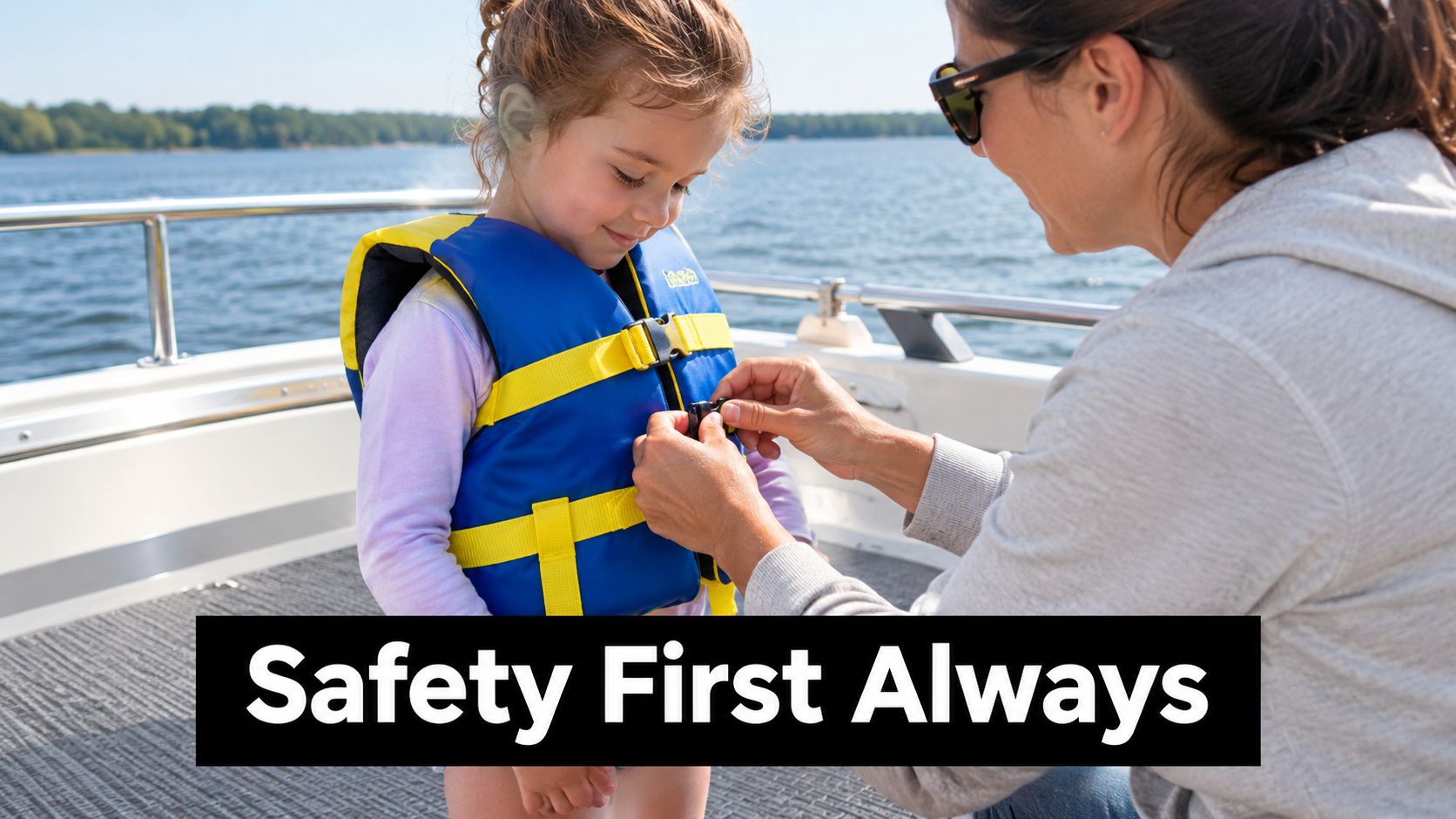
The U.S. Coast Guard says adult life jackets may not work for children, and child-sized options are available. A jacket needs to match the child's size and fit, not just be present somewhere onboard, as explained in the Coast Guard's life-jacket guidance.
On a moving vessel, children under 13 must wear an appropriate U.S. Coast Guard-approved wearable life jacket unless they're below deck or inside an enclosed cabin. The Coast Guard also says inflatable life jackets are generally intended for people over 80 pounds and over 16 years old, so they aren't a general substitute for child flotation gear. Review the Coast Guard life-jacket requirements before your trip.
HealthyChildren.org recommends that children wear life jackets whenever they're on a boat or near the water. The American Academy of Pediatrics life-jacket guidance also notes that requirements vary by state and that required equipment must be onboard in applicable waters.
Inspect the deck before you settle in
Look for non-slip flooring, secure railings, high freeboard, an uncluttered walkway, and a swim ladder that a child can use with help. Pontoon and tritoon fencing should feel substantial, while every boat should keep throwable flotation and fire equipment accessible rather than buried under luggage.
The engine should be off before anyone enters or exits the water. Keep the swim ladder clear, establish a no-running rule, and assign one adult to watch swimmers.
Water Watcher rule: One adult watches the water only. No texting, reading, fishing, drinking, or socializing.
A pediatric safety guide from Children's Health on boating and lake safety recommends a dedicated Water Watcher and touch supervision, meaning an adult stays within one arm's length of young children and weak swimmers.
A captained charter adds practical control. Your captain can manage no-wake areas, select calmer anchorages, brief the children, and keep the boat positioned for safer boarding. That doesn't replace parental supervision. It removes the navigation workload so parents can provide it.
Matching the Right Boat to Your Family's Age Mix
The best boat for your family depends less on the brochure than on who will spend the day onboard. Toddlers need containment and shade. Teenagers need activity. Grandparents need simple boarding and a ride that doesn't punish the body.
Toddlers and preschoolers
Choose a captained luxury yacht when the group includes very young children. A shaded cabin, enclosed restroom, deeper interior spaces, and steady low-wake cruising create a calmer environment for children who tire quickly or need breaks from the sun.
The deciding amenity is the enclosed head. You can stay out longer without turning every bathroom need into a trip back to shore, and parents get a real retreat when the youngest passenger needs quiet.
Mixed-age crews with elementary children
Choose a tritoon for a family that wants cruising, swimming, and play in the same outing. The broad deck gives younger children room to move under supervision, while older kids can use the second swim area, Bluetooth sound system, or slide when the captain approves the activity.
The deciding amenity is the water-access setup, especially a ladder and swim platform that make repeated reboarding manageable.
Teen-heavy groups
Choose a deck boat or bowrider if the day centers on tubing, energetic cruising, and time in the water. These boats feel more responsive and keep the bow social, while a cooler-friendly layout gives teenagers a practical place to spread out.
The deciding amenity is the tow setup matched to the boat and activity. A captain should handle speed, positioning, and passenger communication rather than treating towing as an afterthought.
Multigenerational crews
Choose a pontoon or tritoon when grandparents, adults, children, and friends are all aboard. The flat ride, wide entry, step-through gates, and flexible seating reduce the awkward climbing and squeezing that quickly wears out older passengers.
The deciding amenity is easy movement from the dock to the seating area and from the deck to the swim ladder.
Family Profile to Boat Type Match Guide
| Family Profile | Best Boat Type | Capacity Range | Deciding Amenity |
|---|---|---|---|
| Toddlers and preschoolers | Captained luxury yacht | Vessel-specific | Shaded cabin and enclosed head |
| Mixed-age crew | Tritoons | 10 to 14 passengers on suitable models | Swim platform, ladder, and optional slide |
| Teen-heavy group | Deck boat or bowrider | 6 to 8 in smaller bowriders, 8 to 10 in larger models | Tow setup and active layout |
| Multigenerational crew | Pontoon or tritoon | Vessel-specific | Wide entry and step-through gate |
My booking rule: Choose the layout that solves your youngest or least mobile passenger's needs first. Everyone else can enjoy the extra features.
Why a Captained Charter Beats Owning a Family Boat
Ownership looks attractive until the family day starts before the boat reaches the water. You're dealing with a purchase, trailer, insurance, storage, maintenance, fuel, launching, loading, and cleanup. If your family only boats on occasional weekends, that pile of responsibility can turn a leisure activity into another household project.
A captained charter removes most of the friction. You arrive at the marina, board a prepared vessel, meet the captain, and spend your time on the lake instead of preparing to get on it.
Ownership creates work before and after the fun
A family boat needs somewhere to live, a tow vehicle capable of moving it, and a plan for repairs and seasonal care. It also ties you to one format. If you buy a bowrider for the teenagers, you may have the wrong layout when grandparents visit. If you buy a pontoon for large gatherings, you may wish you had the sharper handling of a deck boat for active days.
Chartering lets the crew determine the boat. That's a better arrangement when one outing means swimming and lounging, while the next calls for tubing or a larger celebration.
A fleet gives your family more useful choices
A Lake Travis operator such as Lake Travis Yacht Rentals' captained boat rental service can match the reservation to the group and occasion. Their offering includes captained pontoons, double-deck party boats, and luxury yachts with features such as Bluetooth audio, private restrooms, lily pads, pool noodles, water toys, and large coolers.
That variety matters. You don't have to force every family member into the same compromise each time you go out.
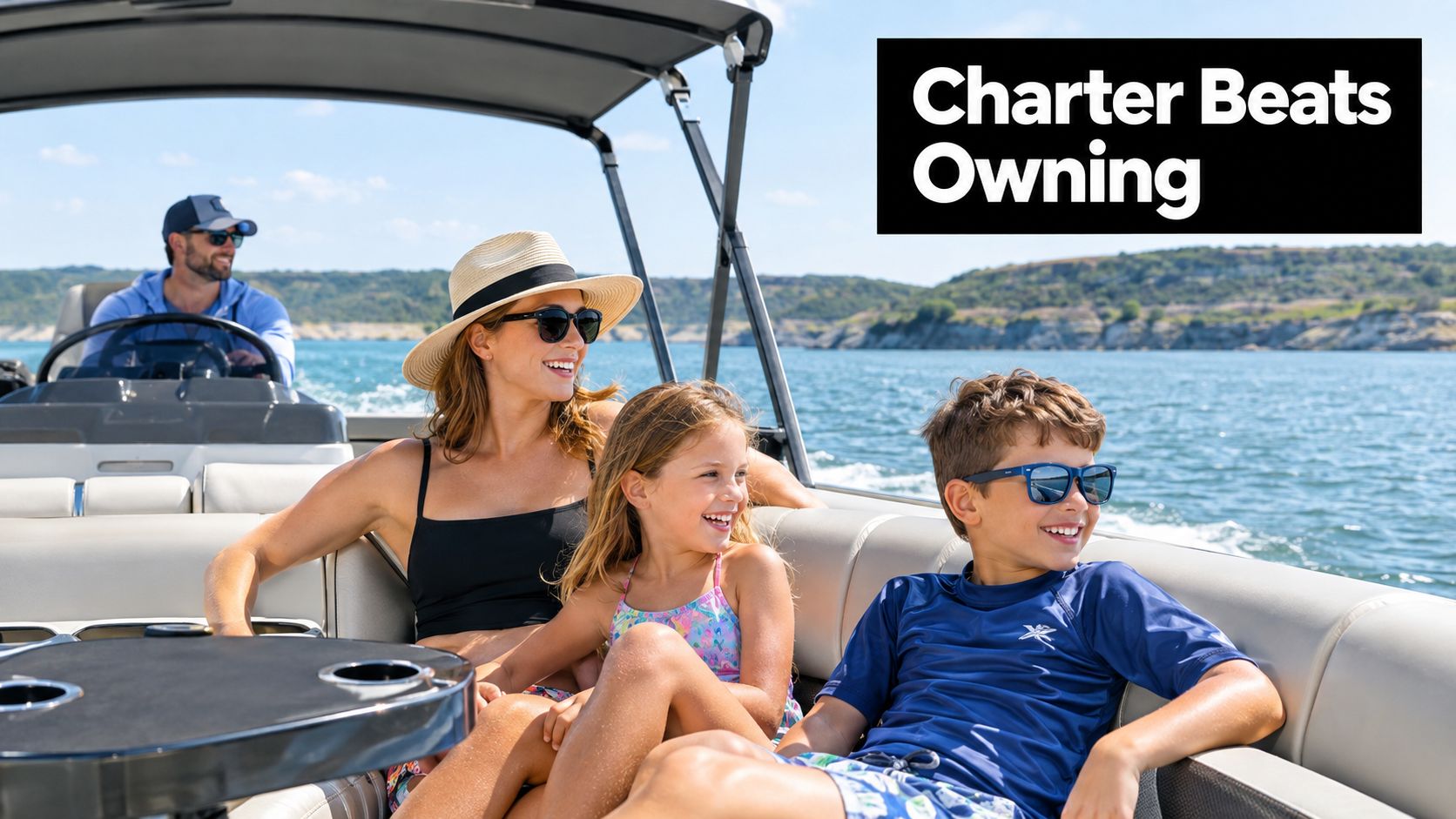
A captain also eliminates the pressure of being the designated driver on the water. Parents can sit with the children, help with swimming, serve lunch, and enjoy the scenery while a professional handles navigation and docking.
For families still deciding between ownership and rentals, the cleanest test is a charter. Spend one day on the vessel type you think you want. Notice where everyone sits, how often people need the ladder, how much shade matters, and whether your group uses the features you thought were essential.
How to Book Your Family Lake Boat in Minutes
Start with the date, not the boat. Pick the day you want, then count every passenger, including children and grandparents. Your headcount determines whether a compact open boat, a pontoon, a tritoon, or a larger yacht will feel comfortable.
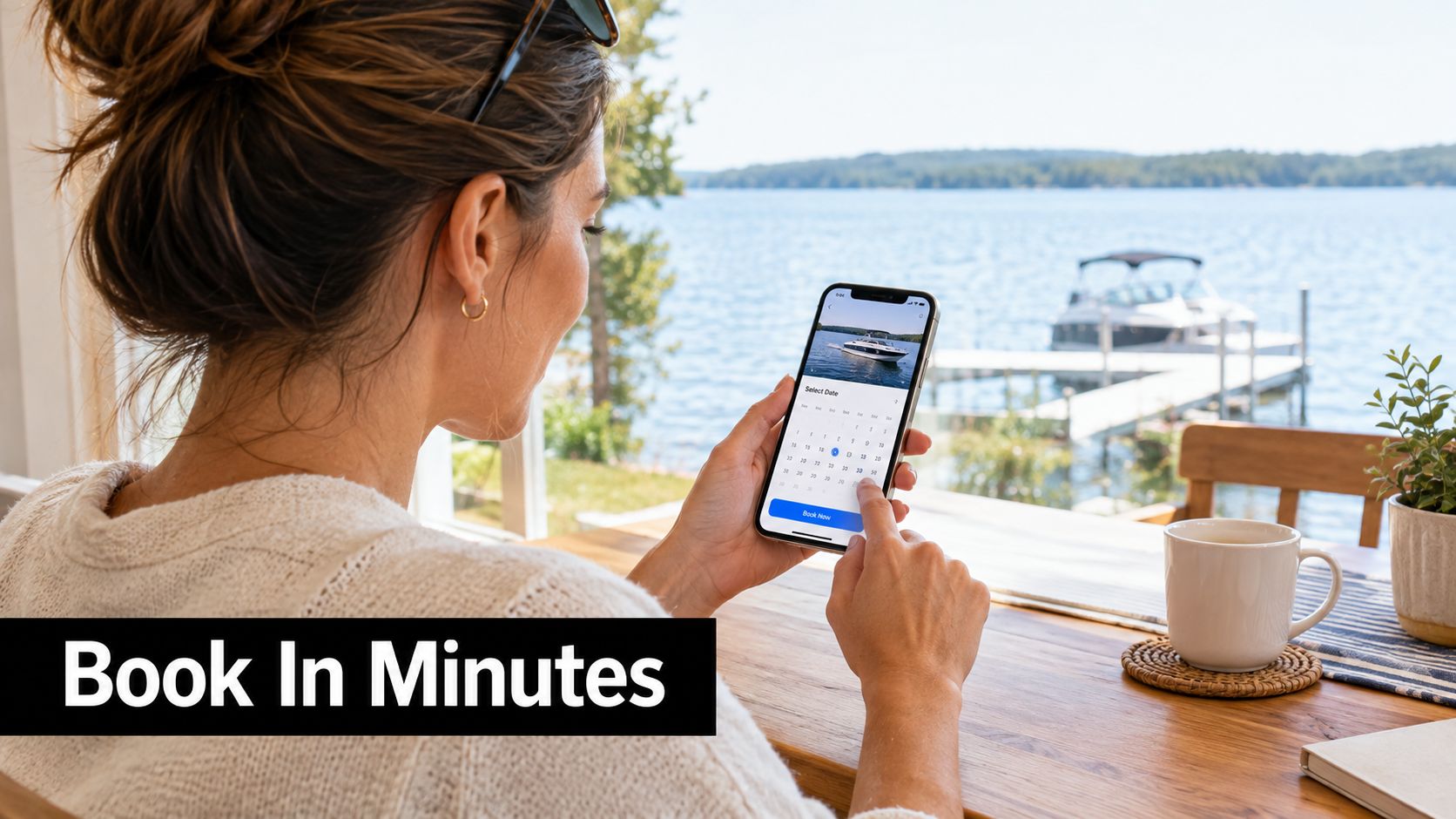
Use this booking sequence:
- Choose the date and group size. Tell the operator about toddlers, swimmers, non-swimmers, grandparents, and anyone who needs easier access.
- Select the vessel type. Ask whether a pontoon, tritoon, deck boat, bowrider, or yacht best fits your planned activities.
- Pick the duration. A four-hour half-day works well for a first family outing. An eight-hour full day gives you more time for swimming, lunch, and relaxed cruising.
- Add the activities. Ask about water toys, lily pads, noodles, tubing equipment, or other accessories before confirming.
- Confirm the captain and inclusions. Verify fuel, ice, safety gear, coolers, restroom access, and the meeting point.
- Pay the deposit online. Keep the confirmation email. It should show the date, departure time, vessel, captain information, meeting instructions, balance, and cancellation terms.
Peak summer dates deserve early attention. Reserve one to two weeks ahead when demand is high, while shoulder-season availability may be possible with 48 hours' notice, depending on the fleet.
Pack sunscreen labeled SPF 50, reusable water bottles, swimsuits under clothes, soft-soled deck shoes, motion-sickness bands for children who get queasy, a dry bag for phones, and a light jacket for the ride home. Arrive 15 minutes early so the captain can complete the safety briefing, which commonly takes 10 to 12 minutes.
For young families, prioritize shaded coves and shorter activity blocks. Older children may enjoy a swim stop or a visit near Devil's Cove, while a sunset cruise add-on can give multigenerational groups a gentler finish.
Family Boating Myths That Stop Parents From Booking
Myth one, boats are automatically unsafe for children. Poor supervision and incorrect flotation choices create danger, not the mere presence of a boat. Modern family charters can provide child-sized approved life jackets, stable layouts, accessible ladders, and captains who establish rules before departure.
Myth two, a toddler will hate the experience. Some children need shade, a quieter seat, and a gradual introduction to the water. A stable pontoon or a shaded yacht gives parents more ways to manage naps, snacks, and sensory overload than a cramped open layout.
Myth three, seasickness is guaranteed. Lake Travis isn't an ocean passage. A captain can choose a calmer route, adjust speed, and reduce unnecessary pounding when a child starts feeling uncomfortable.
Myth four, one parent has to drive all day. A captained charter puts a qualified operator at the helm. Parents can remain available for swim supervision, snacks, sunscreen, and the inevitable lost pair of goggles.
Myth five, boating is only for wealthy families. The right comparison isn't a luxury purchase. It's the value of a prepared, captained outing that gives your group a complete lake experience without ownership obligations. Ask for the exact half-day vessel and inclusions, then compare the experience rather than assuming every charter carries the same cost.
The best lake boats for families are already available. Don't wait until the children are older, the weather changes, or the preferred Saturday disappears from the calendar. Choose the crew, select the boat that fits them, and reserve the day.
Lake Travis Yacht Rentals offers captained pontoons, double-deck boats, and luxury yachts with family-ready features such as swim access, water toys, coolers, Bluetooth audio, and private restrooms. Visit Lake Travis Yacht Rentals now, share your group size and ages, and book a vessel that lets your family enjoy Lake Travis from the moment you step onto the dock.