The best man usually plans the bachelor party, with groomsmen and close friends sharing the work. The groom keeps the final say on the guest list, timing, destination, and activity style.
Your group chat probably already has a lake-day suggestion, competing weekend dates, and someone asking what everyone owes. That's the moment to give people clear jobs, not add another open-ended poll. A Lake Travis celebration should feel exciting before anyone reaches the dock, and that starts with a coordinator who can turn everyone's enthusiasm into a bookable plan.
Who Plans the Bachelor Party and Who Decides
The best man runs the logistics, not the groom's preferences. The traditional arrangement described by The Art of Manliness puts the best man in charge of organizing the celebration, supported by the groom's friends.
Who Plans Each Part of a Bachelor Party
| Role | Typical Person | Main Duties | Decision Power |
|---|---|---|---|
| Lead organizer | Best man | Coordinates logistics, collects payments, talks to attendees and vendors | Runs the plan day to day |
| Co-planners | Groomsmen and close friends | Share ideas, availability, deposits and execution support | Vote on budget and dates |
| Decision maker | The groom | Approves guest list, timing, destination and activity style | Final say on major choices |
| Backup planner | Brothers, cousins or other close friends | Takes over when the best man is unavailable or the group is large | Shares the lead role |
That division fits how groups organize celebrations: 41% of respondents said friends planned the bachelor party, while 39% named the best man, according to The Knot research summarized by Junebug Weddings. Treat those findings as directional, not as an etiquette rule that overrides your groom's wishes.
Say the best man starts a conversation about a Lake Travis afternoon. One friend wants a lively party, another wants swimming and conversation, and someone else starts inviting extra guests. Without clear authority, the loudest suggestion can become the plan before the groom has weighed in.
The roster prevents that. Friends contribute ideas and constraints, the coordinator handles comparisons, and the groom decides whether the proposed experience feels right.

Give the Groom a Shortlist, Not Homework
The groom is the requirements authority. Ask what he wants to do, who he wants there, and what would make him uncomfortable. Don't mistake his willingness to delegate for permission to ignore those answers.
A relaxed afternoon on the water and a high-energy celebration with music and a waterslide call for different vessel choices, guest expectations, and spending. Neither is the correct bachelor party by default. The right choice is the one he'll enjoy with the people he wants beside him.
Build a shortlist with three options, showing price per person, duration, and fit with his comfort level. Include practical trade-offs, such as a shorter outing that preserves the dinner budget or a different departure day that works for an important guest.
Planning rule: One coordinator runs the plan. The groom approves the big calls.
If the best man can't take on the work, hand the job to a willing brother, cousin, or close friend. Whoever accepts it needs explicit responsibility, not an honorary title and a group chat full of unanswered questions.
How Costs and Duties Split Across the Group
Average spending was $1,500 per attendee in a 2023 survey cited by The Knot, covering approximately 500 U.S. respondents and bachelor and bachelorette celebrations, according to Aisle's planning guide. That source reports spending $440 higher than in 2019, typical events of about two days with roughly 10 attendees, and 17% lasting four days or longer.
For a hypothetical group of 10 spending that reported average, the combined budget would be about $15,000. That's an illustration, not a Lake Travis charter quote, and it makes the point: the best man shouldn't bankroll everyone's weekend.
Assign availability collection to an organized friend, bookings to someone comfortable checking terms, and transportation to someone who'll confirm pickup details. Let attendees approve the budget and proposed guest list together, subject to the groom's final approval. Coordination is a job; paying everybody else's share isn't.
Four Questions to Settle Before Anyone Pays
- Who has decision authority? Name the person authorized to confirm the agreed booking. Require renewed approval if the price or scope changes.
- Who pays deposits? Identify the payer and collect the agreed contributions before that person commits money on everyone's behalf.
- Who collects reimbursements? Use a shared Google Sheet with amounts due, payment status, and expenses. Keep receipts accessible.
- What happens when someone can't afford the preferred plan? Offer a less expensive version, shorten the activity, or let them decline without pressure.
Affordability deserves a private conversation, not a public challenge. In a 2025 Credit Karma survey reported by Fortune, 56% of Gen Z and millennials surveyed felt obliged to attend wedding-related events even when doing so would cause financial strain. Ask for an honest spending ceiling before presenting the most expensive option as a settled decision.
Put the Agreement in Writing
Record payment deadlines, cancellation terms, and what happens if someone drops out. Don't promise a refund unless the booking terms or a replacement guest support it.
Review our accepted payment methods before deciding how the organizer will submit payment. The practical booking contact is often a planning committee led by the best man, so everyone handling money should work from the same written agreement.
How to Run the Planning Process Step by Step
Use a designated point person, structured group input, and a final groom check. Harry & David's bachelor-party planning guidance recommends that someone explicitly take the coordinator role, poll the group, and present the results to the groom for a decision.
Keep the working details in a shared document rather than scattered across text messages. You want a plan someone can act on, not a conversation they have to reconstruct.
Turn Group Input Into a Booking
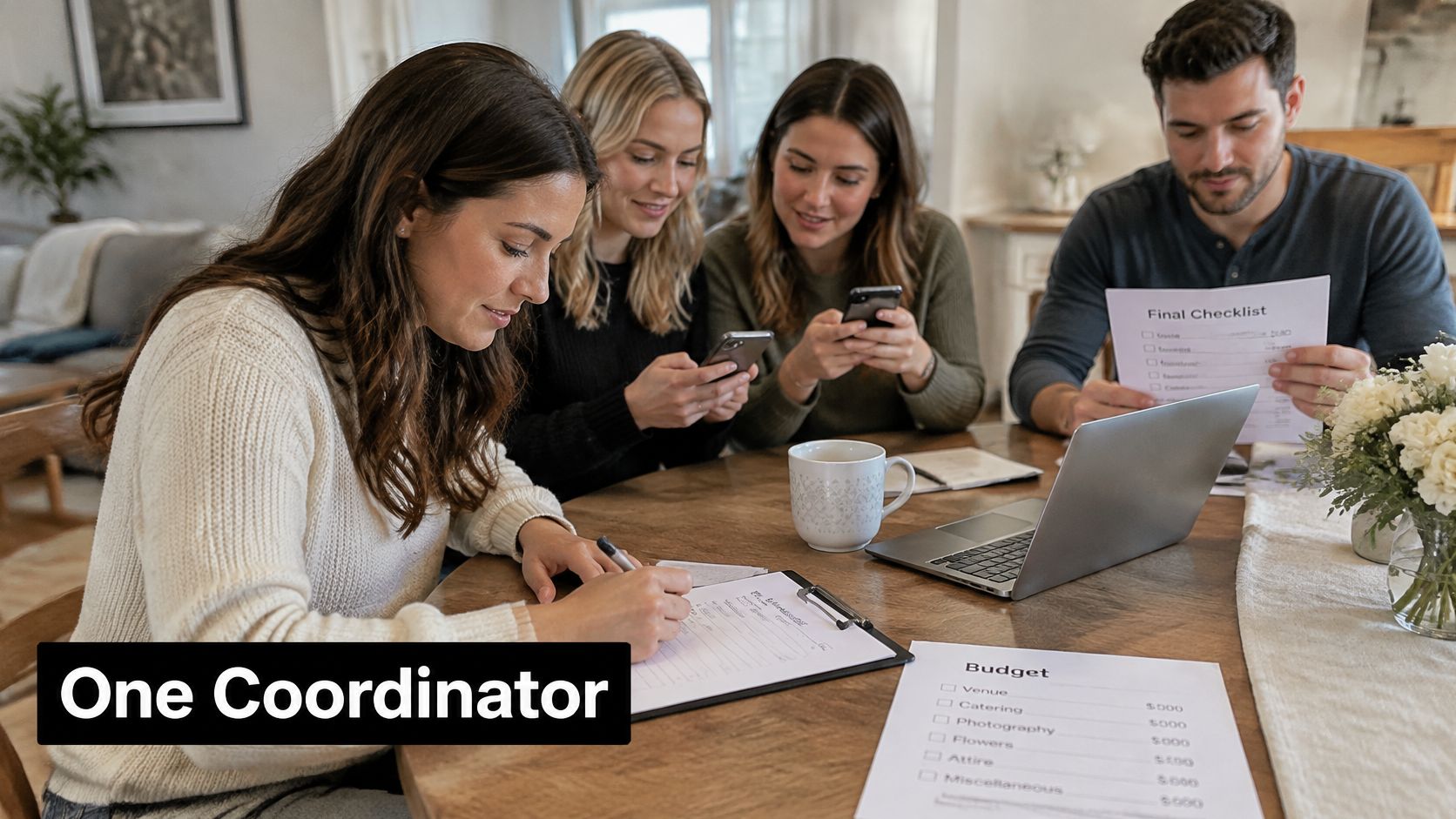
Name the coordinator in writing. Pin their name and responsibilities in the group chat. Everyone should know who can request quotes and confirm reservations, preventing duplicate bookings.
Run a short poll. Use Google Forms or a scheduling poll to collect available dates, budget ceilings, activity preferences, and travel tolerance. Give attendees a clear response deadline so silence doesn't hold the group indefinitely.
Collect hard constraints privately. Ask for maximum spend, likelihood of attending, preferred duration, food and drink needs, and comfort with water activities. Separate a genuine limit from a preference that someone is happy to compromise on.
Compare feasible options. Cut anything that exceeds the agreed budget or excludes an essential guest. Keep the remaining shortlist small enough that the groom can make a meaningful comparison.
Get the groom's decision. Send the shortlist with the relevant trade-offs and record his choice in the planning document. Don't reopen the decision every time another friend suggests something different.
Confirm the financial agreement. Have every attendee acknowledge the payment schedule and cancellation terms. A thumbs-up to the activity isn't automatically agreement to a nonrefundable expense.
Reserve the boat as a priority. Establish the main experience before attendees commit to flights and lodging around an assumed departure time. Then build transportation and meals around the confirmed reservation.
Keep the Date Flexible Where You Can
Saturday and Sunday are our busiest days for bachelor and bachelorette parties, but we also book many on Wednesday, Thursday, and Friday. Include those days in the initial poll if the group's travel schedule allows.
Don't assume the groom needs the most conventional date to have the best time. A workable weekday can be a better choice than a weekend that forces an important friend to miss out.
The payoff is a decision based on actual availability and spending limits. You can request a useful quote, give attendees a clear commitment, and start looking forward to the lake instead of negotiating endlessly.
Common Planning Mistakes and How to Avoid Them
Don't leave the boat until everything else is booked. The 2024 Batch travel report found that bachelor parties typically began planning about 3.6 months before departure, but booked their first major experiences only about 5.5 weeks ahead; it also identified July 28, 2024, as the busiest single date at 4% of celebrations, with May and August together accounting for 28.8%.
Those are historical group-travel findings, not a live Lake Travis availability calendar. They're still a good reason to stop treating the main activity as something to squeeze into whatever time remains.
Planning Mistakes, Their Impact and Fixes
| Mistake | What It Costs the Group | Fix |
|---|---|---|
| Booking the boat last | Popular summer dates fill and the group loses its preferred vessel | Reserve the boat as a priority before flights and lodging |
| No single point person | Duplicate bookings and missed deadlines | Name one coordinator in writing before any quote |
| Organizer fronts every deposit | Unequal risk and resentment over refunds | Agree the payment schedule and cancellation terms up front |
| Ignoring the groom's limits | Activities the groom dislikes take over the plan | Screen every option against his preferences |
Read the table as a prepayment checklist, not damage control. A coordinator who waits for every casual suggestion to settle may eventually face an urgent booking decision, then feel pressured to cover the deposit personally.
That's avoidable. Resolve the authority, affordability, and approval questions while everyone still has room to make a calm choice.
An exciting itinerary isn't a confirmed itinerary. Don't ask guests to arrange their travel around an unreserved boat.
Don't Let the Supply Run Create a Fee
Someone should own the shopping list as deliberately as someone owns the booking. Otherwise, well-meaning guests may bring decorations or drinks that aren't permitted on board.
Silly string, glitter, jello shots, and red wine are prohibited on our boats. Bringing them results in a minimum $200 cleaning fee. Put that rule in the attendee message before anyone buys supplies, not in a reminder sent while they're already heading to the dock.
Use a shared checklist for allowed refreshments, food, water, and personal items. Ask guests to mark what they're bringing so the organizer isn't guessing whether essentials are covered.
A good planner doesn't need to police every detail throughout the weekend. They settle the consequential details early, assign the remaining jobs, and give friends enough information to arrive ready for a good time.
Vessel Safety and Who Is Responsible On Board
Don't appoint an inexperienced friend to operate the boat while everyone else celebrates. Texas Parks and Wildlife's boating facts report that, where instruction was known, 70% of boating deaths occurred on boats whose operators hadn't received boating-safety instruction, while 79% of fatal boating-accident victims with a known cause of death drowned, and 86% of drowning victims with reported life-jacket information weren't wearing one.
The state's 2024 boating-incident summary recorded 169 boating incidents and 24 water fatalities, including 22 involving people who weren't wearing life jackets; it also reminds boaters that children younger than 13 must wear a U.S. Coast Guard-approved life jacket while underway on recreational vessels under 26 feet.
A captain doesn't remove passengers' responsibility to behave safely. It does mean the organizer doesn't have to recruit a friend to steer while also managing guests, music, and refreshments.
Run These Checks Before Departure
- Confirm who operates the vessel. All our boats are captained by our own staff, with no exceptions. Our staff are licensed, background checked, and drug tested regularly.
- Account for life jackets. Confirm an appropriate life jacket is available for every guest and check sizing for any children. Tell the captain about fit concerns before leaving the dock.
- Brief the group on conduct. Make sure everyone listens to the captain's instructions, understands boarding procedures, and knows to ask before entering the water.
Use our vessel safety check manual to prepare your questions and attendee message. Don't assume a confident swimmer or frequent lake visitor can skip the safety briefing.
Respect the Captain's Authority
The coordinator manages the guest group; the captain manages navigation and on-water safety. If a passenger is uncomfortable, feels unwell, or needs assistance, tell the captain promptly rather than trying to keep the schedule unchanged.
Weather decisions belong to the captain, too. Our captain cancels the charter for lightning, heavy rains, or dangerous winds.
Onboard responsibility: Your job is to bring a prepared group. The captain's job is to make the operating decisions.
That separation gives the best man a manageable role once the celebration starts. You can help friends follow instructions without becoming the person responsible for running the vessel.
Lock In Your Lake Travis Charter Before the Date Fills
Make the lake the part of the weekend everyone can look forward to, then request a quote for the groom-approved choice. Send the date, group size, and preferred vessel so the booking conversation starts with a usable plan.
We've hosted well over 7,000 bachelor and bachelorette parties. That experience means your coordinator doesn't need to invent the booking process or figure out every detail alone.

Make the Next Decision Concrete
Review how to book in advance and get the agreed option ready for confirmation. If your group needs a custom itinerary or a larger multi-boat event, call us so we can work through the arrangements directly.
All our captains are registered with the state of Texas and have completed the Texas Boater's Safety Course and/or are registered Party Boat Operators. The coordinator can focus on assembling the group rather than finding someone willing to take the helm.
A $400 deposit secures the booking and is applied to the total charter amount. The final balance is charged on the Monday before the charter, so make sure attendee contributions are ready for that charge rather than expecting to settle everything at the dock.
Finish the Admin and Start the Countdown
Before submitting payment, share the quoted total and cancellation terms with the attendees who are committing. Keep the confirmation somewhere the transportation lead and other co-planners can access it.
Then send a concise departure message covering the meeting details, what guests should bring, and who to contact with questions. You don't need another sprawling planning conversation once the reservation is settled.
Send the groom's shortlist today and aim to reserve the boat this week while you still have choices. A confirmed lake day gives the whole group something tangible to get excited about.
Lake Travis Yacht Rentals offers fully captained party boats and yachts for bachelor celebrations, so the best man can coordinate the group without taking on the helm. Bring your groom-approved date, headcount, and preferred experience to Lake Travis Yacht Rentals, request your quote, and secure the boat for your celebration.