You've got the swimsuits packed, the group chat is buzzing, and someone is already asking who's bringing the cooler. At the marina, though, six groomsmen hauling matching duffels, a cooler rattling with seltzers, and a captain waving everyone toward the gangplank can create a problem if the wrong gear shows up at the dock. A bag that seemed harmless in the parking lot can become an obstacle on the swim platform.
The good news is that onboard baggage rules for a Lake Travis yacht are simple, practical, and much friendlier than airline baggage rules. Pack for sun, water, movement, and celebration. Leave anything sharp, fragile, oversized, or unsafe at home. Do that, and your group can step aboard ready for music, swimming, and a day that starts smoothly from the first minute.
Why Onboard Baggage Rules Matter for Your Lake Travis Day
A Lake Travis charter should feel exciting before the boat even leaves the dock. Nobody wants that energy interrupted by a hard cooler that can't be stowed, loose bags blocking the walkway, or glass containers that need to be carried back to the car. A quick packing check prevents those small problems from becoming the only thing your group remembers about boarding.
The crew has loaded hundreds of coolers, beach totes, dry bags, and float bags, so they know what works in real conditions. The goal isn't to limit the fun. It's to keep walkways clear, protect the yacht's gel coat from scuffs, and give everyone room to move between the seating area, swim platform, and ladder.
The dockside problems worth preventing
A group can pack perfectly for a road trip and still pack poorly for a boat. Road-trip bags stack in a trunk. On a yacht, they need to fit around seats, storage compartments, guests, drinks, towels, and water toys. A rolling suitcase with rigid corners may be manageable on land but awkward on a narrow deck.
Watch for these common trouble spots:
- Oversized coolers: They consume valuable seating and may shift when the boat turns.
- Loose personal bags: They can block stairs, walkways, and access to the swim ladder.
- Glass containers: Broken glass creates a serious risk for barefoot guests and the crew.
- Unsecured electronics: Phones and cameras can slide, splash, or distract guests while the yacht is moving.
- Too many separate pieces: Small items scatter quickly when everyone is swimming, eating, and changing locations.
Practical rule: Pack as a crew, not as a crowd. Group shared items together, label the bags that matter, and make sure every piece has a reasonable place before you leave the parking lot.
That preparation makes boarding faster and keeps the captain focused on welcoming your group instead of solving a cargo puzzle. It also gives guests confidence. Once the bags are stowed, the music can start, the drinks can be arranged, and everyone can get into the lake-day mindset.
A smooth departure starts before arrival
Give one person responsibility for the group gear. That lead booker can confirm the guest count, organize coolers, separate dry items from food and drinks, and remove anything that doesn't belong onboard. Guests should arrive with swim-ready clothes, towels, sunscreen, and a plan for protecting phones and wallets.
The reward is immediate. Your group walks down the dock without dragging a collection of awkward cases, the crew can place everything quickly, and the captain can get underway without last-minute reshuffling. The best baggage rule is the one that lets you forget about baggage as soon as you step aboard.
What Onboard Baggage Means on a Lake Travis Yacht
On a Lake Travis yacht, onboard baggage means anything your guests physically bring onto the vessel. That includes a backpack, tote, beach bag, dry sack, soft cooler, instrument case, Bluetooth speaker, or inflatable float that arrives folded or deflated.
It isn't the same as airline baggage. There's no overhead bin, weight tag, or security line. The crew isn't measuring every bag to create a fee. Boat rules exist because people need clear paths, stable storage, and enough open space to move safely around a moving vessel.
Sort your gear into three useful groups
The easiest way to pack is to divide everything into personal bags, group gear, and consumables. Each category has a different job and should have a different place onboard.
Personal bags hold the items individual guests need throughout the day:
- Phones and wallets
- Towels and sunscreen
- Sunglasses
- A swimsuit or change of clothes
- Small personal medication or comfort items
Keep these items in soft bags or dry sacks. Soft-sided gear can be tucked beside a seat or placed below deck without creating hard corners that catch on people or surfaces.
Group gear belongs to everyone and should be consolidated whenever possible. This category includes shared coolers, Bluetooth speakers, water toys, float bags, and camera equipment. One labeled gear bag is much easier for the crew to place than several loose cases spread across the deck.
Consumables cover the items your group will use up during the charter, such as ice, sealed beverages, snacks, and meals. Keep food and drinks together so guests aren't opening every personal bag whenever someone wants water or a snack.
Pack for placement, not just arrival
A captain may ask you to move a bag below deck, beside a seat, or into a storage compartment. That isn't a judgment about what you brought. It means the bag fits better in a location that protects the walkway and keeps the deck comfortable.
Large floats should arrive folded or deflated when possible. A dry sack should be closed before boarding. Speakers should have a secure case or padded protection. Group gear should stay together so the crew can make one organized loading decision instead of repeatedly moving individual items.
The right question isn't “Can I carry this onto the boat?” It's “Where will this live once everyone is onboard?”
That mindset makes the rules easy to follow. Pack compactly, use soft-sided containers, and give every item a purpose. You'll have more room for swimming, sunbathing, and celebrating without treating the deck like a storage unit.
Allowed and Prohibited Items for Your Charter
Your charter can accommodate a generous celebration kit, but the contents need to match the realities of sun, water, bare feet, and a moving boat. The fastest approach is to compare what belongs onboard with what should stay in the car.
For beverage planning and other charter details, review the beverage service information before your group shops. Then use the checklist below to make the final call on each item.
Allowed vs Prohibited Items on Lake Travis Yacht Rentals
| Category | Allowed Onboard | Prohibited Onboard |
|---|---|---|
| Coolers and bags | Soft-sided coolers, insulated bags, beach totes, dry bags, and compact personal bags | Glass-lined containers, hard coolers with sharp edges, or bags so large they block passage |
| Swimming gear | Swimsuits, towels, water shoes, inflatable floats, pool-friendly accessories, and properly packed water toys | Loose gear left across the swim ladder, sharp accessories, or bulky items that prevent safe movement |
| Sun protection | Reef-safe sunscreen, sunglasses, hats, and a change of clothes | Items that shed loose pieces or create a slippery mess on deck |
| Food and drinks | Light snacks, sealed alcoholic beverages for guests of drinking age, water, mixers, and properly packed meals | Glass containers, open flames, grills, or excessive loose ice that can shift underfoot |
| Electronics | Bluetooth speakers, GoPro-style action cameras, phones, and cameras in secure or padded cases | Unsecured electronics left near the edge, speaker stands near the helm, or equipment that needs shore power |
| Safety and legal items | Personal essentials that support a comfortable, responsible outing | Illegal substances, firearms, grills, open flames, and anything the captain identifies as unsafe |
The celebration starter kit
Bring soft-sided coolers, insulated bags, beach totes, towels, water shoes, reef-safe sunscreen, swimsuits, a dry bag for phones, and a change of clothes. A Bluetooth speaker and action camera can add to the day, provided guests secure them when the yacht is moving quickly across open water.
Inflatable floats work well when they arrive folded or deflated. Light snacks are easy to manage when packed in reusable containers or soft bags. Sealed alcoholic beverages belong in the group cooler, and every guest should follow the applicable drinking-age requirements.
The items that stay ashore
Glass containers don't belong on the boat. One dropped bottle can leave dangerous fragments where guests walk barefoot, so choose cans, plastic, or other non-glass options instead.
Leave grills, open flames, firearms, illegal substances, and hard coolers with sharp edges at home. Don't fill the deck with loose ice that can slide during movement. A cooler should contain its contents, not turn the walking area into a wet obstacle course.
Electronics deserve a little care even when they're allowed. Phones and cameras should go into a dry bag or secure case when possible. When the yacht picks up speed, follow the captain's direction and stow anything that could slide, splash, or distract the person operating the vessel.
Size Weight and Storage Realities on Deck
Lake Travis boat baggage rules have practical soft limits, even when nobody is standing at the dock with a measuring tape. A standard day group of 14 passengers already uses the swim platform, bow pads, seating areas, and storage compartments. Your gear needs to support the day without taking over the space guests came to enjoy.
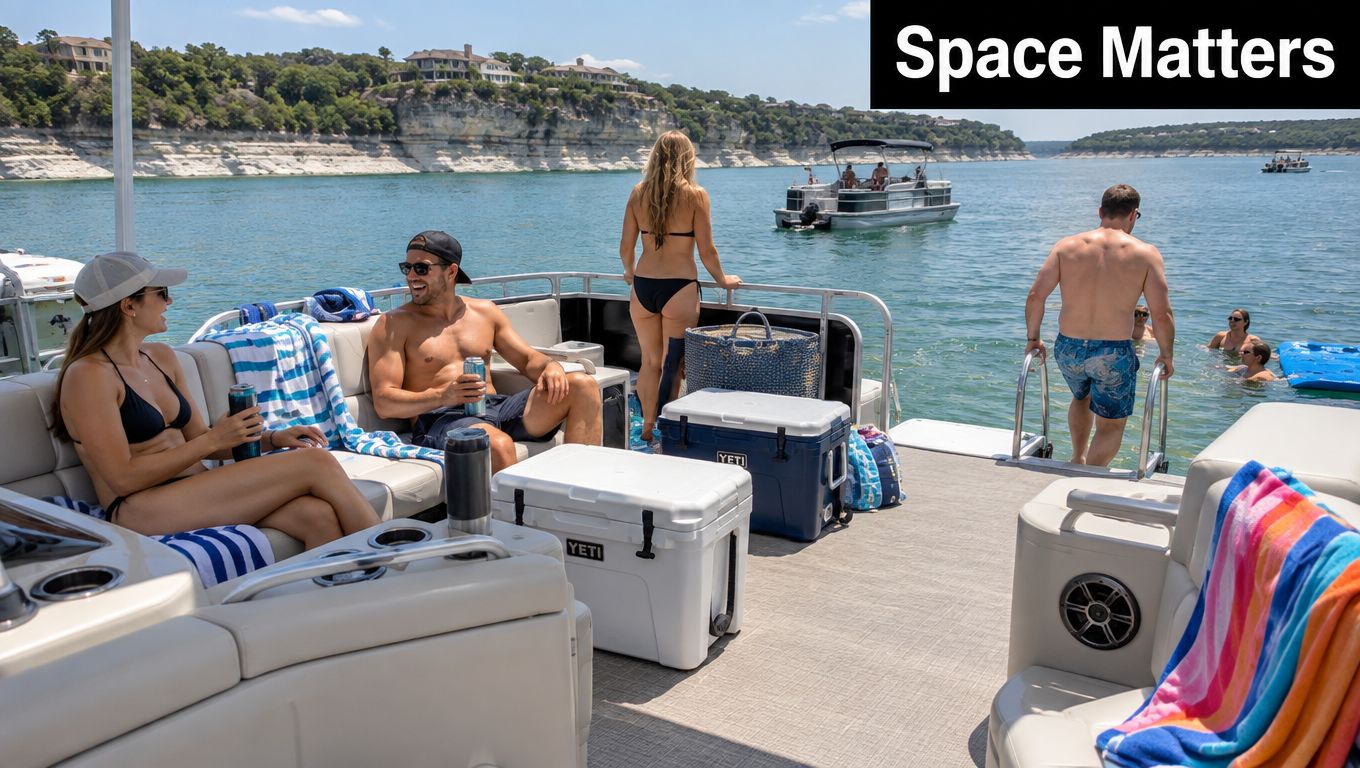
A cooler footprint of roughly 36 quarts is a comfortable target for easy placement between bench seating. Soft-sided coolers are especially useful because they can collapse flat when empty or stack neatly in a cabin. A single 70-quart rolling cooler may hold plenty, but its size and shifting weight can make it harder to secure when the yacht turns.
Split the load before the dock
Two smaller coolers often work better than one massive container. Two 36-quart coolers can divide drinks, food, and ice while leaving more flexible room for floats and personal bags. They're also easier for the crew to move and easier for guests to access without opening one giant container in the middle of the deck.
Use the storage areas with intention:
- Under-bench compartments: Best for compact soft bags, towels, and personal gear.
- Bow cuddy lockers: Useful for items that need protection from sun and spray.
- Open bow nets: A practical spot for towels and lightweight soft items.
- Beside seating: Suitable for a small cooler or bag that won't obstruct movement.
- Cabin areas: Helpful for collapsible bags and items that don't need immediate access.
Keep the traffic lanes open
Hallways, stairways, and the swim ladder must stay clear. Those areas serve as the movement system for the whole boat, especially when guests are climbing out of the water, carrying towels, or responding to the captain's direction. Don't use a walkway as temporary storage, even if you expect to move the bag later.
For groups, a simple rule of thumb works well: one tote per two guests keeps the deck breathable and the captain happy. That doesn't mean every guest needs to share a single tiny bag. It means the group should consolidate loose items instead of bringing a separate bulky case for every person.
Pack the gear you will use, choose containers that can flex, and let the crew decide the final storage location. The boat will feel bigger, safer, and more enjoyable when the floor remains open.
Packing Smart for Different Trip Types
The right packing plan depends on the kind of celebration waiting at the dock. A bachelor party needs quick access to drinks, music, and swim gear. A family outing needs comfort items, kid-friendly organization, and easy access to essentials for several generations.
A bachelor party that boards without clutter
For a bachelor party of 14, the lead booker brings two 36-quart soft coolers. One holds seltzers, while the other carries mixers and snacks. Separating them means guests can grab what they need without digging through a single overloaded container.
The rest of the setup stays focused: a dry bag for phones, a Bluetooth speaker in a padded case, matching swim trunks, sunscreen, and a small first-aid kit. The group brings floats that can be folded or deflated, skips glass entirely, and avoids speakers that need shore power.
Labeled coolers make the captain's job easier. A simple label such as “drinks” or “snacks” saves time when the crew is arranging gear and helps guests avoid opening every container on the swim platform.
A family outing built for easy access
A family group with children and grandparents needs a different rhythm. One large cooler can hold lunches and waters, while a separate tote carries the life jackets the children picked out. Add a beach blanket, shade hats, water shoes, and a waterproof phone pouch.
That setup keeps comfort items together and gives adults a quick way to find what children need. Grandparents can keep a light change of clothes or towel within reach, while the larger cooler stays in a stable location instead of moving around the deck throughout the day.
Birthday charters often blend both styles. Use one labeled “kids” tote and one “celebration” cooler so swim-platform traffic doesn't turn into a search party.
Packing Comparison by Trip Type
| Trip Type | Cooler Setup | Bags & Gear | Tone & Priority |
|---|---|---|---|
| Bachelor party | Two 36-quart soft coolers, one for seltzers and one for mixers and snacks | Dry bag, padded speaker case, matching swim trunks, sunscreen, small first-aid kit, folded floats | Fast access, music, swimming, and clean organization |
| Family outing | One large cooler for lunches and waters | Kids' life-jacket tote, beach blanket, shade hats, water shoes, waterproof phone pouch | Comfort, easy access, shade, and family safety |
| Birthday charter | One labeled celebration cooler plus a separate kids cooler if needed | Kids tote, towels, phone protection, snacks, and party accessories | Keep celebration supplies separate from family essentials |
The strongest plans have one person in charge of each category. One guest manages drinks, another handles the dry bag and electronics, and someone else keeps track of kid-focused gear. That small bit of coordination prevents a dozen people from placing bags wherever they happen to stand.
Safety Liability and Captain Guidance
Every baggage decision affects how the captain operates the yacht. The boat moves, guests change positions, and wet surfaces create different conditions than the dock. A bag that feels stable while everyone is standing still may shift when the vessel accelerates or turns.
Glass containers are the clearest liability trigger. One dropped bottle can cut a barefoot guest and may create a serious safety response, including the possibility of a Coast Guard citation. That's why the no-glass policy isn't a suggestion for certain groups. It applies to everyone.
Why the captain controls the layout
Loose items can become projectiles at planing speed. Soft bags should be stowed, and hard coolers should be secured or placed where they can't slide. Speaker stands near the helm, overstuffed totes blocking the swim ladder, and bags sitting in front of an exit all create problems that the captain must correct before departure.
The captain has final say on deck layout and can refuse any item that blocks egress or creates an unsafe condition. That authority protects guests, belongings, and the crew. It also keeps the safety briefing focused on the actual trip rather than an argument about where a cooler should sit.
Read the emergency procedures guidance before arrival so your group understands why clear access matters. Then follow the captain's instructions during boarding and whenever the yacht is underway.
A well-packed group doesn't slow down for repeated rearranging. Guests know what belongs in each bag, the crew can secure the heavier items, and the captain can leave the dock with confidence. Safety rules don't take the celebration away. They protect the celebration you came to have.
Your Pre-Departure Packing Checklist and Booking Next Steps
Use the final day before departure to turn a pile of gear into a clean boarding plan. Confirm the guest count first, then choose the cooler setup that matches your group instead of bringing every container in the garage.
Your 24-hour checklist
- Confirm the group: Verify who is coming and assign one person to manage shared gear.
- Choose the coolers: Use soft-sided options and split a large load when two smaller coolers will stow more easily.
- Pack swim layers: Bring swimsuits, towels, water shoes, and a change of clothes.
- Protect from the sun: Add reef-safe sunscreen, sunglasses, hats, and shade gear.
- Secure electronics: Place phones and cameras in a dry bag or waterproof pouch.
- Pack refreshments: Organize sealed drinks, snacks, mixers, and ice without bringing glass.
- Add basic care items: Include a small first-aid pouch and any personal essentials.
- Label the bags: Mark kids' gear, celebration supplies, food, and drinks so everyone can find them quickly.
Leave valuables that aren't needed for the water at home. Keep the swim ladder, hallways, and stairways clear. Arrive 20 to 30 minutes early at the marina dock so the crew can load gear, answer questions, and complete the pre-departure briefing without rushing.
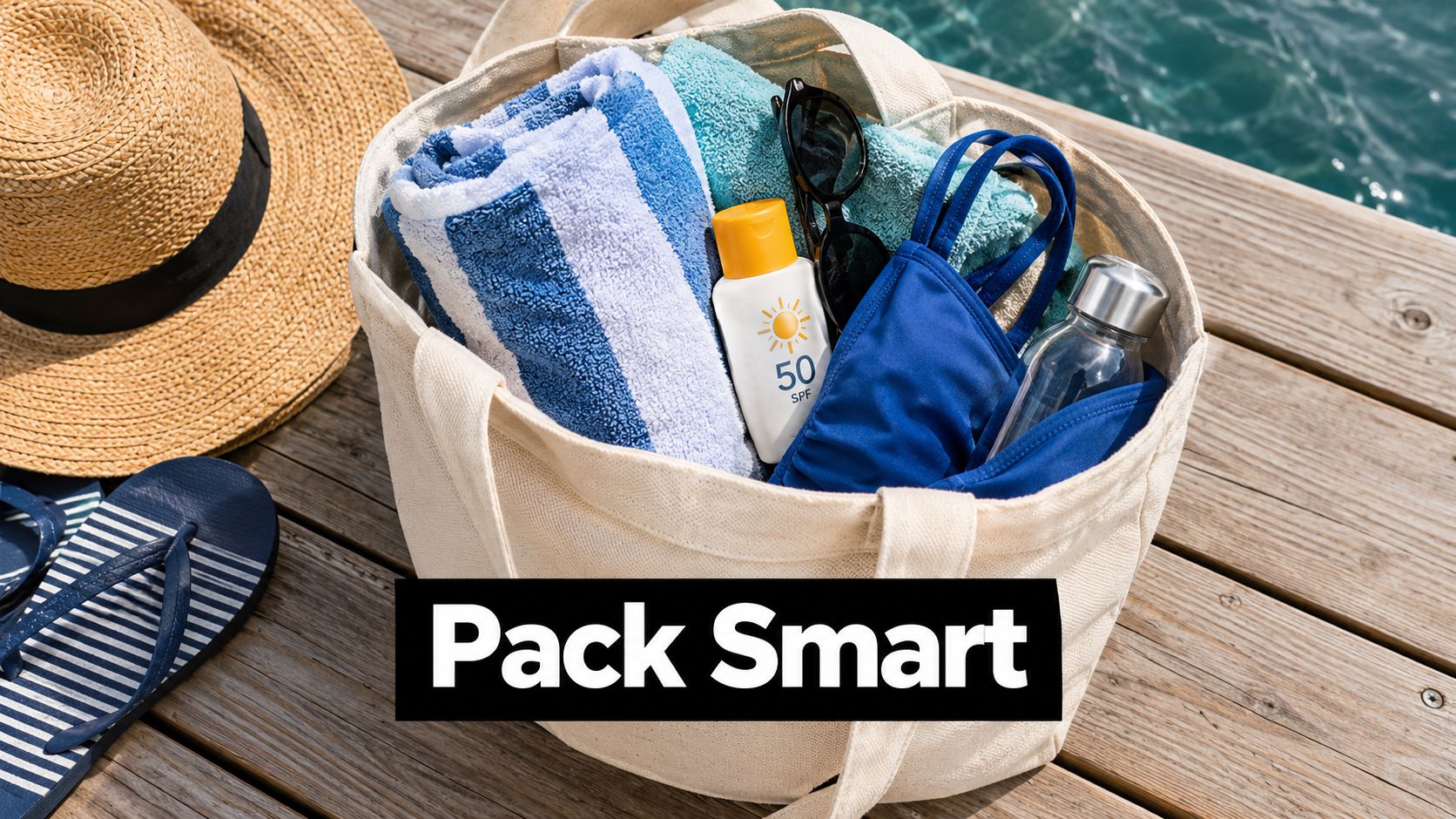
For a few more practical ideas, use this Lake Travis trip packing list while your group shops and assigns responsibilities. Then choose the experience that fits your day, whether that's a daytime family cruise, a sunset charter, or a party-ready boat with room for the whole celebration.
Lake Travis Yacht Rentals offers captain-led yacht, party boat, and pontoon charters for family cruises, sunset outings, and group celebrations, with crew members available to answer last-minute packing questions. Visit Lake Travis Yacht Rentals now, choose your preferred date and boat, and reserve your Lake Travis day while your group is still excited.