You're organizing a day on Lake Travis, the guest list is growing, and someone has asked the practical question nobody wants to leave until the boat is underway: is there a bathroom? The answer depends on the boat, and “bathroom” can mean anything from a private cabin head to a portable toilet or no restroom at all.
The right choice isn't just about whether a toilet is onboard. Privacy, space, guest count, trip length, and how the boat handles waste all affect whether the restroom will feel like a welcome convenience or an awkward bottleneck.
Which Boats Have Bathrooms at a Glance
Boats with real bathrooms are mostly cabin yachts, sailboats, and houseboats. Open pontoons, tritoons, and small runabouts usually don't have one. But listings use “bathroom” to describe different setups, so check what's included before you book.
| Boat type | Restroom included | Typical setup | Best fit |
|---|---|---|---|
| Luxury cabin yacht | Yes, usually private | Enclosed marine head with holding tank | Smaller groups, long full-day trips |
| Sailboat with cabin | Often yes | Compact enclosed head, sometimes composting | Couples and small crews |
| Houseboat | Yes, usually full bathroom | Toilet, sink and often a shower | Multi-day stays |
| Double-deck party boat | Varies by operator, check listing | Enclosed head where installed | Large celebrations with a sundeck |
| Pontoon | Usually no | None, or a portable toilet at most | Day cruises and sandbar stops |
| Center console or bowrider | Rarely | Portable toilet or none | Fishing and quick trips |
A private enclosed head is a dedicated space with a door, usually connected to the boat's sanitation system. A compact cabin toilet may also be enclosed, but the space can be very tight and the sink or storage may be minimal. A portable toilet is a separate unit, sometimes tucked behind a curtain. It can help in a pinch, but it doesn't offer the same privacy or convenience as a fixed head.
Read the table against your actual outing. A day with 15 guests and hours on the water calls for a restroom people can reach and use with reasonable privacy, even if they have to take turns. A small group heading out for a short sandbar afternoon may be comfortable with fewer onboard amenities, especially if everyone understands the plan.
Quick rule: If a listing says “bathroom,” confirm the type before booking. That detail shapes privacy, odor, and how easily the group can use it.
If you're comparing smaller cabin boats, the center console boats with cabin options can help you understand what that style of boat offers. Use the table as your first filter, then compare specific listings for the restroom setup that fits your group.
Privacy, Capacity and Upkeep
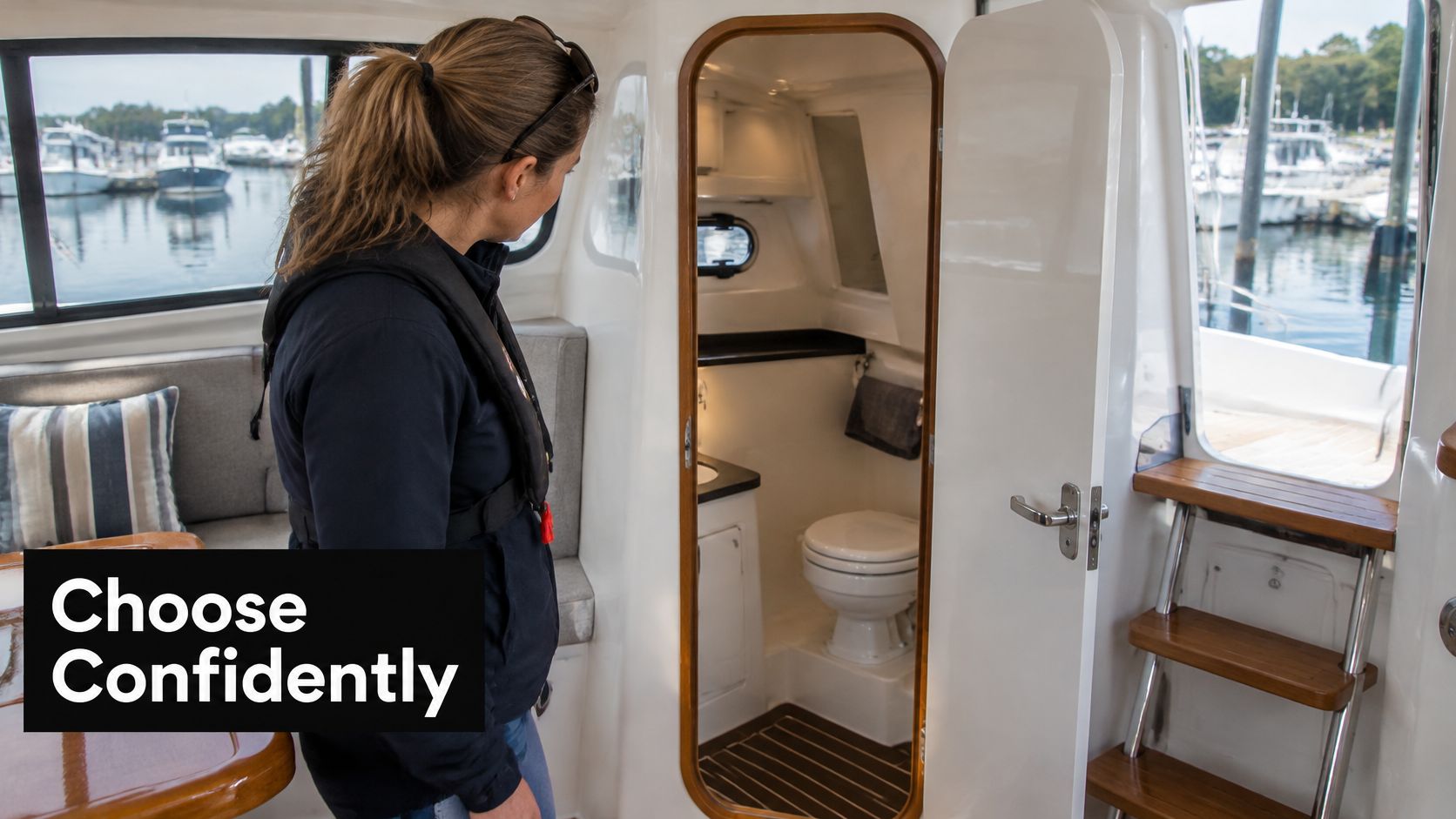
A boat restroom is a compact working space, not a shore-side bathroom. Start at the door: check that it closes securely and gives the person inside real privacy. Inside, you may find a small sink with a fresh-water tap, the toilet, a ventilation fan, and a hook or narrow cabinet for a bag. On many charter yachts, the head is about the size of a small closet, so a crowd will need to take turns.
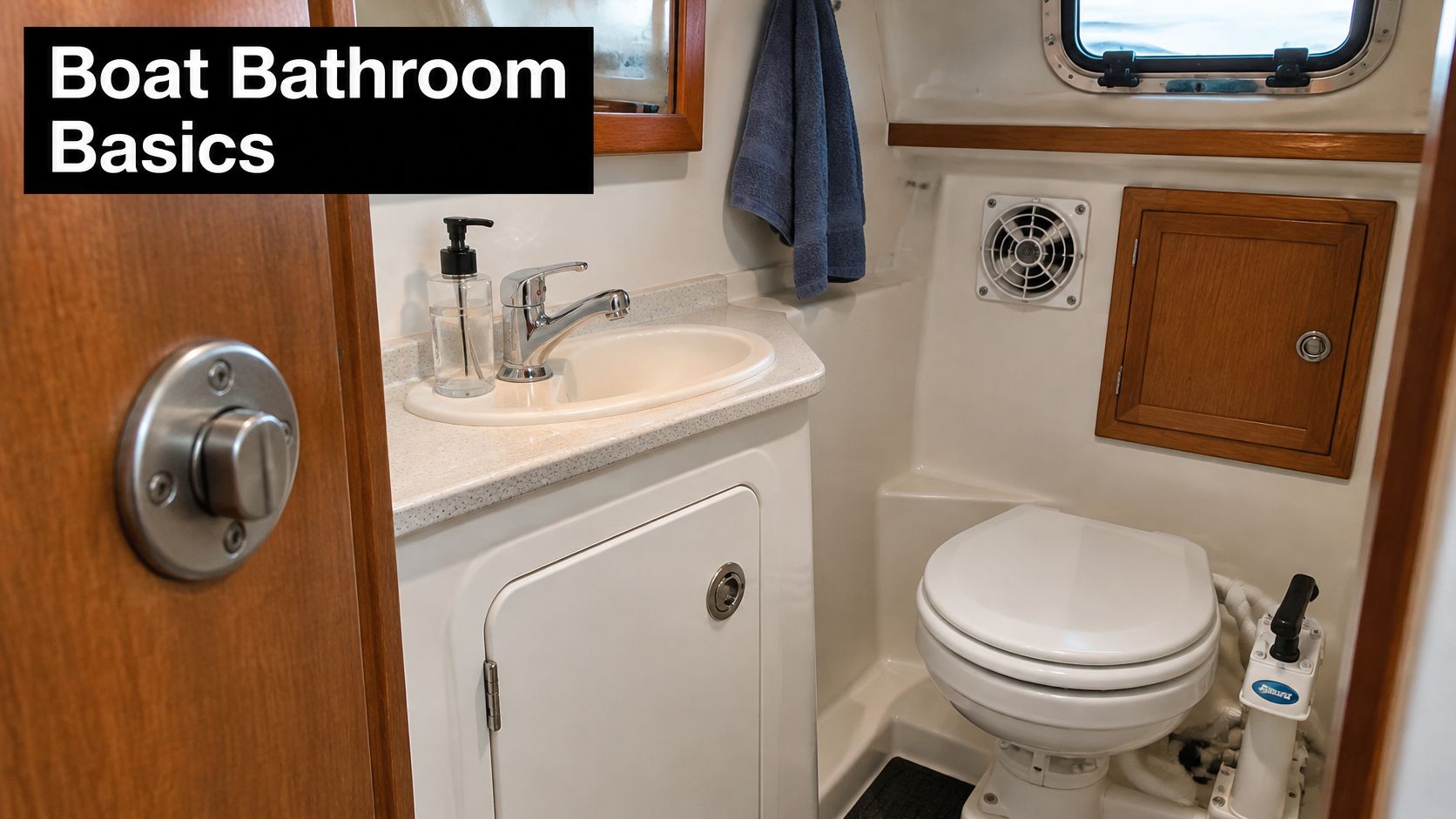
Hand soap, tissue, and a waste bin are sensible basics to look for, but don't assume towels will be supplied. Bring a small towel, plus a dry bag for phones and wet clothing. Showers are more likely on larger cabin boats and houseboats than on day-trip yachts, and an onboard shower doesn't necessarily work like the one at home.
Odor control comes down to ventilation and upkeep. A vent moves air out of the cabin, while a fan or open hatch can help when the boat is sitting still in the sun. On a full boat, frequent use puts more demand on the holding tank, so capacity and pump-out timing matter as much as the cleanliness of the room.
What to ask about before the trip
Privacy and capacity are linked. One enclosed head shared by a crowd can create a queue, so plan a restroom break during a long outing rather than assuming everyone can pop in whenever they want. A restroom can be perfectly clean and still be inconvenient if too many guests need it at once.
Keep the toilet for what the operator says it can handle. Wipes, paper towels, and feminine products can clog marine plumbing, even when a product is marketed as flushable. Follow the posted instructions, and ask the crew if anything is unclear.
It also matters whether you're looking at an installed marine head or a portable toilet. Federal rules treat those categories differently, and an installed toilet must connect to an operable, certified sanitation system. The EPA's vessel sewage FAQ explains why a toilet that flushes doesn't automatically mean waste can legally be discharged overboard. Ask what type of restroom is aboard, how the system is secured on an inland lake, and where waste is pumped out.
A good boat restroom should feel clean, dry, quiet to use, and easy to find from the deck. Before you confirm a reservation, make sure the setup suits your group rather than relying on one word in a listing.
How Boat Waste Systems Work and Why They Matter
A marine toilet is part of a waste-management system, not just a comfort feature. The U.S. Environmental Protection Agency's recreational boaters guide estimates that approximately 1.5 million recreational boats with installed toilets operate in U.S. waters and collectively generate more than 3.5 billion gallons of sewage each year. Under Section 312 of the Clean Water Act, a vessel with an installed toilet must have an operable, U.S. Coast Guard-certified Marine Sanitation Device, or MSD.
The basic choice is between treating sewage onboard before an allowed discharge and keeping it in a holding tank for pump-out. The system type matters, but local water restrictions matter too. For example, federal rules prohibit sewage discharge in freshwater lakes, reservoirs, and certain other waters, making containment and responsible pump-out especially important on an inland lake.
| System type | How it handles waste | Discharge allowed | Vessel length |
|---|---|---|---|
| Type I | Treats waste before discharge | Limited, subject to EPA effluent limits | 65 feet or shorter |
| Type II | Treats waste before discharge | Limited, subject to EPA effluent limits | Any length, typically larger vessels |
| Type III | Holds waste in a tank, no treatment | No discharge, pump-out ashore | Any length |
Type I and Type II systems are flow-through treatment units. Type I is for vessels 65 feet or shorter; vessels longer than that generally use Type II or Type III systems. A Type III system doesn't treat sewage. It stores waste in a holding tank until the operator can arrange a pump-out ashore.
Why tank management matters on a busy boat
For a crowded party boat, a holding tank offers a predictable approach: contain waste onboard and manage the pump-out. The trade-off is that tank levels rise with use. More guests and a longer trip make the operator's capacity planning and pump-out schedule more important, especially if the boat is full.
Ventilation is another practical part of the setup. The federal effluent standards for marine sanitation devices cover treatment requirements, while Maryland marine guidance cited in the research recommends placing holding-tank vents at least 24 inches from openings into accommodation spaces. Good vent placement helps keep tank gases from entering the cabin.
Practical rule: Ask whether the head is a treatment system or a holding-tank system, and whether the operator has a pump-out schedule suited to the passenger count and trip length.
On a rental, the operator handles pump-outs. Guests can help by using the head as shown and keeping wipes, paper towels, and other prohibited items out of the toilet. Those simple habits protect the plumbing and help keep the restroom usable for the whole group.
Lake Travis Rules That Shape Your Restroom Plans
On Lake Travis, plan around a contained restroom system and follow the crew's instructions. A comfortable outing also means respecting the lake's rules for equipment, movement, and safe positioning. Guests don't need to manage the boat's sanitation or cleaning procedures, but a little preparation makes the captain's job easier.
Texas Parks and Wildlife tells boaters to clean, drain, and dry boats, trailers, livewells, bait buckets, and other gear before moving to another water body. The agency says draining water is required by law, and possessing or transporting zebra mussels is illegal. The Texas Parks and Wildlife Lake Travis guidance explains these steps as part of preventing invasive mussels from spreading between waterways.
For rental guests, the operator handles the vessel and its equipment. You can still help by not bringing bait, water-filled containers, or aquatic gear from another lake, and by keeping waste contained in the boat's designated facilities. If you're planning to visit more than one water body, leave cleaning and draining procedures to the operator and follow their directions.
Let the captain manage the water
Safe maneuvering affects where the boat can go and how it can approach a swimming area, dock, shoreline, or neighboring vessel. Texas Parks and Wildlife advises personal-watercraft operators to stay 50 feet from other personal watercraft, vessels, people, shorelines, stationary platforms, and other objects unless traveling at headway, or idle, speed. The agency also says operating a boat in a way that creates a hazardous wake or wash is unlawful, as described in its boating safety guidance.
A captain must account for those conditions when choosing a route, speed, and place to stop. Tell the operator whether your group wants to swim, enjoy music, sightsee, or settle into a quiet cove, then let the captain choose an appropriate anchorage. Pontoons can go to Hippy Hollow, but yachts do not, so share that destination preference when you discuss the plan. You can also review the zero-discharge policy before your outing.
A professionally managed trip combines onboard comfort with responsible lake practices. You bring your group and your plans; the crew handles the vessel, its procedures, and the navigation decisions needed to carry them out safely.
How to Choose and Confirm a Boat With a Restroom
Use this checklist to match the boat to the group before you pay. Each question helps prevent a common mismatch: a small head for a crowded full-day party, a deck layout that doesn't suit the activity, or a restroom listing that turns out to mean a portable unit.
Count guests and set a restroom plan. One enclosed head may suit a smaller half-day group better than a crowd spending a full day aboard, because people will need to take turns. Decide in advance whether the group is comfortable sharing a compact space.
Match trip length to the boat. A compact cabin boat can work for a half-day outing, while a larger yacht is more comfortable for a full day with a crowd. Think about how much time everyone will spend onboard, not only the departure and return times.
Choose the right deck and activity layout. Swimming, music, and a sundeck call for room to move and relax; a quiet-cove outing calls for a captain who can select a suitable place to stop. Tell the operator what matters most so the boat and plan fit the day.
Confirm what “restroom” means in the listing. Ask whether it's an enclosed head or a portable toilet and whether the space is private to that boat. A clear description avoids surprises once the group is aboard.
Check who handles the boat. At Lake Travis Yacht Rentals, every boat is captained, so guests don't have to drive, steer, anchor, beach, or tie up. A designated captain also removes the need for a guest to take on boating while intoxicated concerns.
Ask about captain qualifications. Lake Travis Yacht Rentals' boats are captained by its own staff, with no exceptions; captains are licensed, background checked, and drug tested regularly.
Reserve early for weekends and holidays. If your date matters, choose the boat and confirm the booking before your group's preferred options are gone. Use this guide to choosing the right boat to compare the trip's main priorities.
Get the restroom details in writing
Before you finalize your plans, get clear answers to these four questions and save them in your booking notes:
Is the restroom an enclosed head or a portable toilet? This tells you what level of privacy and comfort the group should expect.
How is the system secured on an inland lake such as Lake Travis? Confirm that the crew operates the system in line with the lake's discharge restrictions.
Where is waste pumped out? Knowing the operator has a pump-out plan gives you a clearer picture of how the boat manages waste.
How many guests can the restroom handle per trip, and when will the crew plan breaks? This helps you coordinate restroom stops with the group's size and schedule.
Save the boat name, passenger count, date, and confirmed restroom type with your reservation details. Once those seven planning checks and four restroom questions are settled, your group can focus on the celebration. For more ways to match the boat to your plans, use the guide above before you finalize your choice.
Book a Lake Travis Yacht With a Private Restroom
If an onboard restroom is essential, choose a yacht. All Lake Travis Yacht Rentals yachts have private restrooms, and every yacht is captained. The captain handles the driving, navigation, and anchoring, while your group enjoys the day on the water. Tell the crew whether you want a lively stop or a quieter cove, and they can plan around your group's priorities.
Pontoons and tritoons generally don't have restrooms, so choose the Luxury Yachts category if your group needs one. Check the restroom details on the specific listing before booking, especially if your plans include a long outing or a large group. That way, you're choosing the space and amenities that work for your celebration, rather than hoping a broad listing label means what you expect.
The booking process is straightforward:
- Visit laketravisyachtrentals.com and open the red “Check Availability and Pricing” tool.
- Select Luxury Yachts if you need a restroom, or choose Double-deck Pontoons with Slides or Regular Pontoons if you don't.
- Choose the specific boat that fits your group and the day you're planning.
- Enter your passenger count.
- Select your date, confirm the restroom details in the listing, and book.
A private restroom can make a long celebration more comfortable, but the right boat also needs to suit your guest count, activities, and preferred atmosphere. Once you've confirmed those details, you can get excited about the lake instead of worrying about the logistics.
Bachelor and bachelorette parties, birthdays, and corporate outings fill quickly on good-weather weekends. Reserve your Lake Travis yacht now and keep the celebration on the water.
Lake Travis Yacht Rentals offers captained yachts with private restrooms, plus party boats for groups that don't need an onboard bathroom. Visit Lake Travis Yacht Rentals to check availability, choose a boat that fits your plans, and book your Lake Travis outing.